
Festivals as Engines of Transformation: Banyuwangi’s Cultural-Led Revival
How did festivals transform Banyuwangi into a thriving tourism destination and symbol of post-pandemic resilience?

Sponsored by
Sponsored by
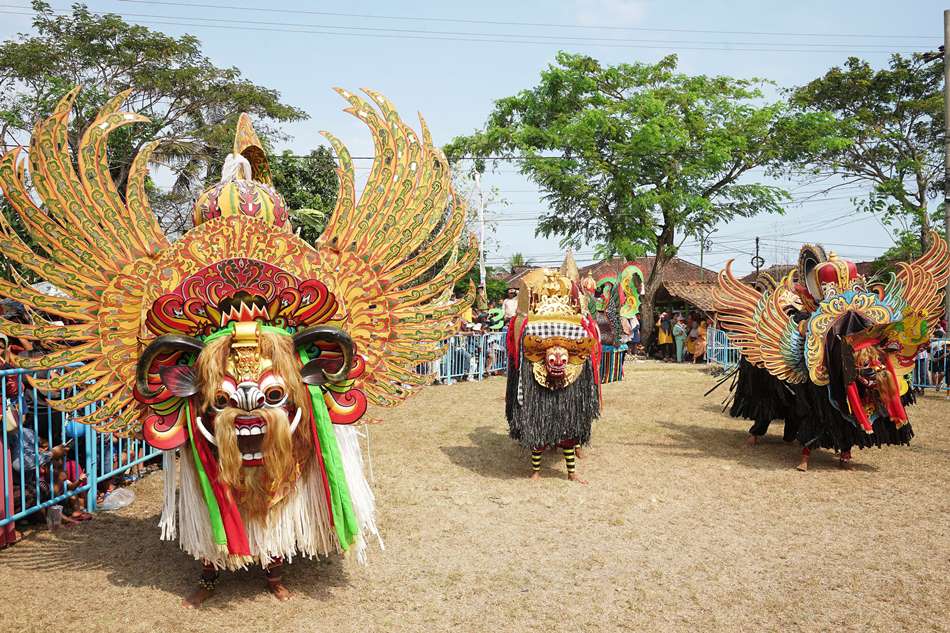
Image source: Pawarta Jawa Timur
At the eastern tip of Java Island, Banyuwangi was once known primarily as a gateway port to Bali. Over the past decade, however, that image has changed dramatically. Through a development strategy centered on cultural festivals, the Banyuwangi local government has transformed the region into one of Indonesia’s most innovative tourism destinations. This article tells the story of how festivals have evolved beyond mere entertainment events to become drivers of local economic growth, platforms for cultural expression, and symbols of post-pandemic recovery.
Since the early 2010s, Banyuwangi has developed an annual festival calendar aimed at stimulating a culture and tourism-based local economy. Under the leadership of Regent Abdullah Azwar Anas (2010–2021), festivals such as Kuwung and Gandrung Sewu became more than cultural performances; they served as instruments of cultural diplomacy and regional promotion. Within seven years, the number of visitors increased from approximately 800,000 in 2011 to more than five million in 2018 (Sodiqin, 2019).
Banyuwangi’s success has become an important case study of how local governments can leverage their unique advantages, including Osing cultural heritage, geographical distance to Bali, and supporting infrastructure such as ports, airports, and railways. Another key factor was the local government’s initiative to provide safe spaces for cultural expression, even facing pressure from conservative groups. In this regard, Banyuwangi demonstrates that social and economic transformation can begin from the festival stage.
However, this progress was challenged by the COVID-19 pandemic. Beginning in 2020, mobility and public gatherings were restricted. Festivals were cancelled, and the tourism economy came to a standstill. Yet it was precisely from this period of hardship that Banyuwangi emerged with renewed energy. Data show that the Banyuwangi Festival calendar resumed with 55 events in 2023 and expanded to 79 events in 2024 (Ikhwan, 2023). Visitors also returned in significant numbers: nearly three million tourists visited Banyuwangi in 2022, while international arrivals increased substantially throughout 2023 (Antara, 2023).
One of the most visible symbols of Banyuwangi’s post-pandemic revival is the planned revitalization of Asrama Inggrisan, a historic complex dating back to the British colonial period. In the nineteenth century, the site functioned as an important node within the global submarine cable network. Strategically located facing the town square where many festivals are held, the complex is planned to be redeveloped into a hotel, museum, and meeting venue, combining historical heritage with contemporary tourism development (Fauziyah & Afifa, 2023). This initiative illustrates how festivals are not merely cultural stages but catalysts for broader economic development and heritage preservation.
These projects are not only about tourism; they also reflect a process of social reimagining—how communities reinterpret their history and identity through cultural events. One international initiative, for example, was designed to connect Banyuwangi with Broome in Western Australia through digital performances involving Indigenous communities. Although the project was ultimately cancelled due to the pandemic, it demonstrated the potential of festivals to serve as bridges between cultures.
Banyuwangi experience shows that festivals can become powerful instruments of social and economic transformation when developed strategically, inclusively, and sustainably. Investment in cultural programming, community participation, protection of cultural expression, and integration with infrastructure and historical heritage have all contributed to its success. While the COVID-19 pandemic temporarily halted the rhythm of festival activities, it did not diminish their spirit. Instead, Banyuwangi demonstrated remarkable resilience: its festival sector recovered more quickly than many others and became a foundation for broader regional development.
Amid the challenges of a rapidly changing world, Banyuwangi’s story teaches us that regional development can begin on a stage filled with music, dance, and local stories that are given the opportunity to flourish. When communities are empowered to express themselves creatively, they do more than create performances—they build the future.