
Cleaner transport futures begin with better energy planning
Researchers explore how Mexico could decarbonise road transport by 2050 through cleaner energy, smarter infrastructure, behavioural change and long-term climate planning.

Sponsored by

Sponsored by
A study involving Universidad del Caribe (UNICARIBE) and other universities explores how Mexico could decarbonise its road transport sector by 2050 through electrification, clean fuels, infrastructure investment and behavioural change.
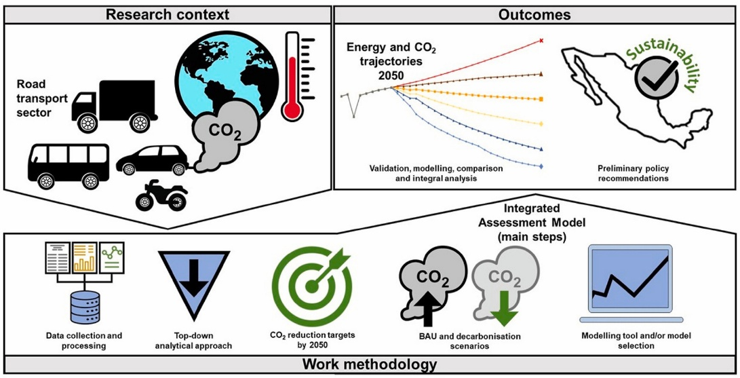
Researchers from the Dominican Republic, Mexico, Ecuador and the United States have developed long-term energy scenarios to assess how Mexico can move towards a low-carbon road transport system.
Published in Renewable and Sustainable Energy Reviews, the study examines one of the most urgent challenges in climate mitigation: reducing carbon dioxide emissions from fossil fuels in the transport sector. Using Mexico as a case study, the research proposes an integrated assessment methodology to evaluate sustainable energy transition alternatives for national road transport.
The study models six possible futures, ranging from a business-as-usual scenario to a net-zero emissions pathway. These scenarios consider environmental, socio-economic, technological and governance dimensions, allowing the researchers to compare how different combinations of clean energy, public policy, infrastructure development and social behaviour could shape the country’s transport emissions by 2050.
The findings show that transport decarbonisation cannot rely on a single solution. A sustainable transition would require a sharp reduction in fossil fuel consumption, greater use of electricity from renewable sources, the gradual introduction of biofuels and hydrogen, and a broader transformation in how people and businesses use transport systems.
The research also highlights the importance of public policy and investment. Clean technologies need supporting infrastructure, reliable data and coordinated decision-making from government, industry and society. Without these conditions, emissions could continue to rise under a business-as-usual pathway, increasing the environmental pressure of Mexico’s transport sector.
For Latin America and the Caribbean, the study offers a valuable framework for countries facing similar challenges: growing mobility demand, dependence on fossil fuels and the need to align transport systems with climate goals. Its scenario-based approach can support evidence-informed planning and help policymakers identify realistic pathways for sustainable mobility.
By contributing to this international research collaboration, UNICARIBE strengthens its role in applied research on energy transition, climate action and sustainable development, connecting academic knowledge with the long-term environmental priorities of the region.
Read the full article: https://www.sciencedirect.com/science/article/abs/pii/S1364032125000140