
Pioneering women’s health research in the United Arab Emirates
A pioneering study in Dubai is laying the groundwork for a biobank dedicated to advancing research on women’s health
Sponsored by Mohammed Bin Rashid University of Medicine and Health Sciences

Sponsored by
Sponsored by
Addressing gender disparities in healthcare requires a systematic approach to building research capacity and commitment to long-term investment. Above all, it requires action through projects that gather relevant data to inform equitable approaches and clinical practice.
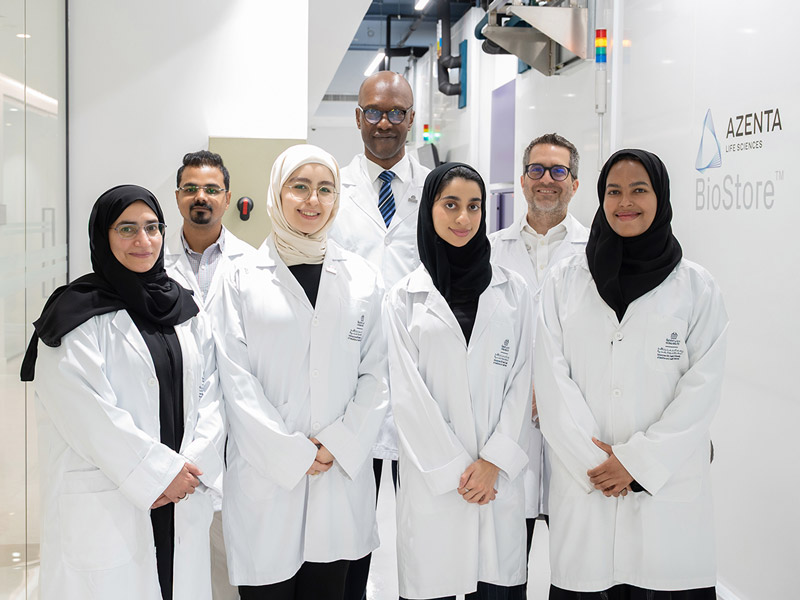
With an integrated network of hospitals and primary care centres working in lockstep with Mohammed Bin Rashid University of Medicine and Health Sciences (MBRU) in the United Arab Emirates (UAE), Dubai Health is conducting the Dubai Women’s Health Study to determine the feasibility of establishing a biobank dedicated to women’s health conditions.
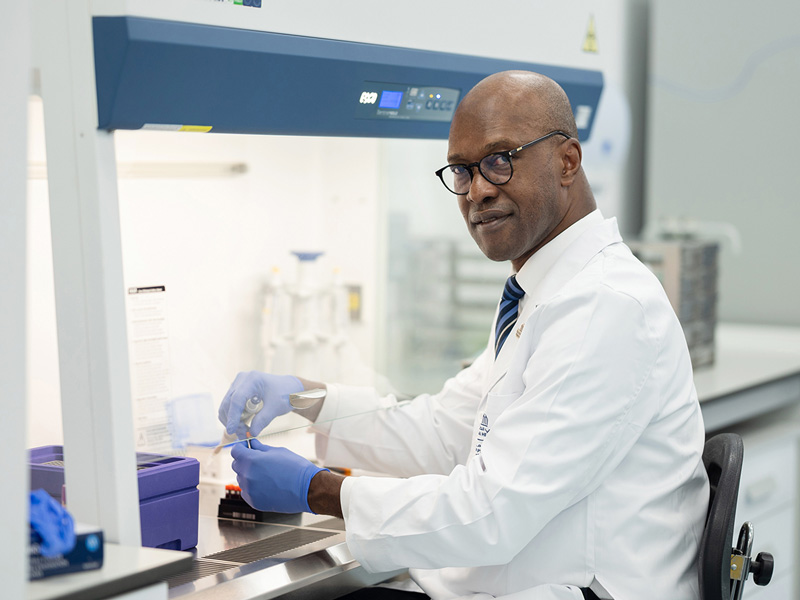
Aligned with the UAE’s national policy for improving women’s health, the biobank will be designed to serve as a resource that can influence regional and global healthcare. “It will help us close gaps in women’s health research,” says William Atiomo, chair of clinical sciences and professor of obstetrics and gynaecology at MBRU. “It will encourage global collaboration and help us move from reactive medicine to prediction and prevention.”
The project will initially focus on four health conditions: polycystic ovary syndrome, endometriosis, endometrial cancer and preeclampsia. Once feasibility is established, the goal is to expand it into a comprehensive resource on women’s health. The UAE presents many structural advantages to achieve this. With residents from different countries across the world, it offers a diverse population for research. The success rests upon a multidisciplinary team of academics and clinicians working together to recruit patients and collect samples and nutrition data to be stored in the biobank.
“We have an excellent team here,” says Asiyah Shafi, project coordinator at MBRU. Buy-in from patients is critical. Recruitment began in 2025, and initial results show that 89 per cent of the people who were approached agreed to take part. “The public is very interested,” adds Shafi. “They’re happy to see that we’re putting women’s health at the forefront because we know it has been underrepresented and under-researched.”
The more data the biobank can collect, the greater its research potential. When the project is scaled up sufficiently, researchers can examine the data using AI and create models that facilitate proactive interventions. However, a key challenge will be to prevent bias in predictive algorithms while analysing data from diverse populations. Atiomo believes that the culture of positivity and empowerment at MBRU and Dubai Health makes it possible to overcome the various hurdles associated with such an unprecedented initiative.
The next step is exploring ways to scale the biobank, streamline processes through digital integration and create a sustainable model that is led by physicians. The benefits could be felt for generations to come. “We’re helping accelerate and streamline research and discovery,” says Shafi. “That’s key. Women’s health is something that we really need to be looking at. These discussions and projects help get the word out.”
Find out more about Mohammed Bin Rashid University of Medicine and Health Sciences.