
From Dubai to Dunedin: insights from a multi-centre clinical study on dental implants
An international research collaboration between two universities in Dubai and Dunedin is putting patient experiences first, with ongoing clinical trials yielding significant insights into how dental implants can be improved
Sponsored by Mohammed Bin Rashid University of Medicine and Health Sciences

Sponsored by
Sponsored by
Dental implants can be a complicated and costly procedure. Some patients might require a bone graft to accommodate an implant, extending recovery time and increasing the cost of their treatment. The individual biomechanics of different implant designs further complicate the picture. While dental science has made huge progress in improving patient outcomes, oral implantology still has many unanswered questions – and an international research collaboration between the Mohammed Bin Rashid University of Medicine and Health Sciences (MBRU) in the United Arab Emirates and the University of Otago in New Zealand hopes to find answers.
Supported by the International Team for Implantology (ITI), the collaboration operates under Dubai Health, which plays a key role in providing an integrated academic and clinical environment. The multi-centre approach allows researchers to run clinical trials on diverse patient populations and validate their findings.
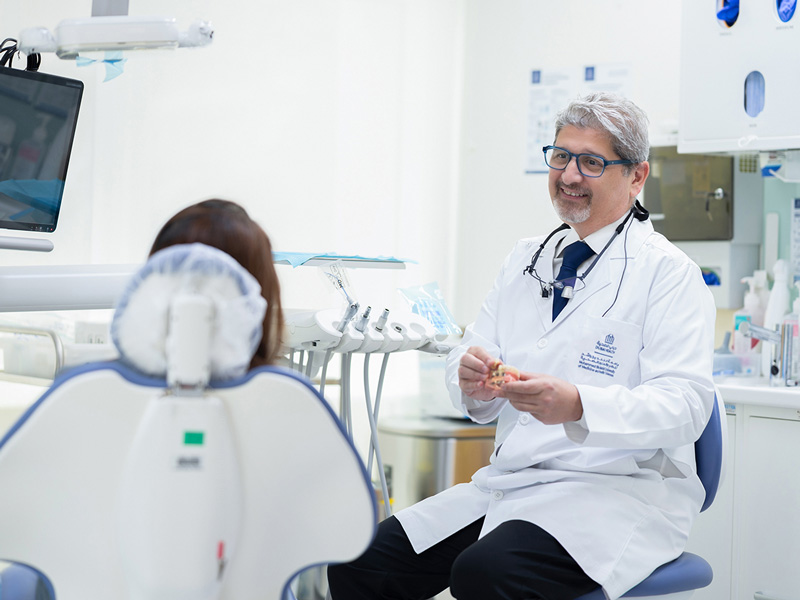
Momen Atieh, an ITI fellow and professor of periodontology and chair of oral diagnostics and surgical sciences at Hamdan Bin Mohammed College of Dental Medicine at MBRU, says the research has already yielded significant findings. “We’re not looking at the findings only in terms of a clinician deciding what a good outcome is,” he says. “We’re asking patients about their post-operative experience in general. We use a visual analytics scale and quality-of-life assessment tools.”
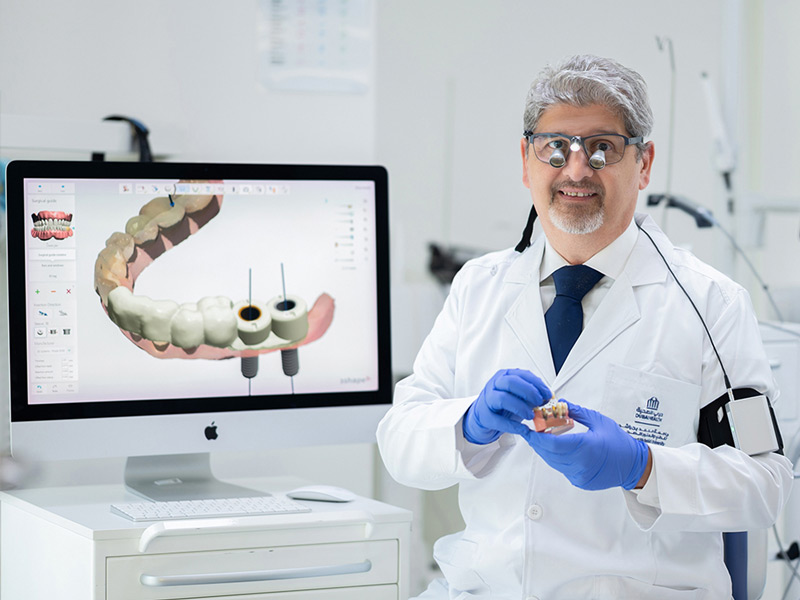
Patients at the Dubai and Dunedin campuses were selected by similar criteria. Patients needed to be healthy or have managed conditions, and each required replacement of a single missing posterior tooth. The research group compared patient outcomes between standard implants and narrow-diameter implants that could hypothetically minimise bone grafting. “Patient-reported outcomes could be different across different geographical locations. That’s the beauty of having this research network.” Atieh says.
Atieh’s patients are now in their third year of study with zero reported complications, including implant fractures. A similar clinical trial in Zurich reported a relatively high fracture rate. Atieh believes the difference in implant biomechanics could be a factor, and this is another reason why he wants to maintain momentum on the multi-centre project. More time with patients can give his team more insights into how their implants perform.
“If I could keep that follow-up going on up to the fifth year or more, that’s a big win for me, my research and all my colleagues,” Atieh says. “Clinicians and patients both want answers. When a patient sits in your chair, they want to know how long that implant will help them chew their dinner every day.”
Find out more about Mohammed Bin Rashid University of Medicine and Health Sciences.