
Helping the health sector rethink AI integration
As AI reshapes medical training, embedding digital literacy in curricula is vital for building sustainable and holistic healthcare
Sponsored by JSS Academy of Higher Education and Research

Sponsored by
Sponsored by
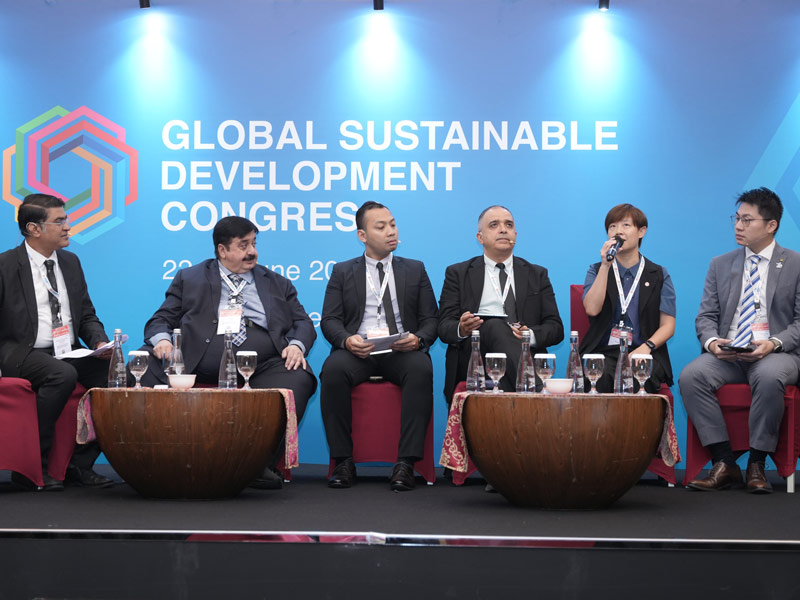
With digitalisation recently given renewed impetus by the widespread adoption of AI, medical science must adapt to new paradigms around accessibility, collaboration and sustainability. A panel discussion – held in partnership with JSS Academy of Higher Education and Research (JSS AHER) in India – at the 2026 THE Global Sustainable Development Congress, explored how institutions could balance technological advancement with human values in health education.
JSS AHER has a particular focus on health science. “We are contributing towards the social development of the people locally,” said the university’s pro chancellor, Suresh Bhojraj. “We are looking at how our university can shape education, its students and future citizens in the right direction.”
AI can be used to make sustainability initiatives within a university campus more effective, said Aditiya Wicaksono, associate director of global health at Qure.ai. Using AI tools to handle heavy analytics and clinical pathways also enables healthcare practitioners to focus more on maintaining ethics and communication with patients.
At many universities, AI adoption is limited to creating an elective module around the technology. Nazih Khaddaj Mallat, vice-president of Al Ain University in the United Arab Emirates, questioned whether designing a standalone AI course is likely to deliver results. AI should be integrated into the existing curriculum, he said.
Paulina Wong, associate professor and head of the Division of Science at Lingnan University in Hong Kong, echoed this point. “AI should not only be a tool but a system that helps public health practitioners make better decisions and convert data into preventive measures,” said Wong.
“When we started to look at the Sustainable Development Goals as part of our education, research and outreach, that became a way of the university’s functioning itself,” said Prashant Mayasandra Vishwanath, dean of research at JSS AHER. “Being a health sciences university, our focus was naturally on good health and well-being.”
According to Chin Pong Ho, assistant lecturer and Chinese medicine practitioner at Hong Kong Baptist University, communication can be a major barrier to interdisciplinary work that could lead to more human-centric AI output. “We are developing an AI translation platform to create a common language between healthcare professionals,” he said. Hong Kong has deployed an electronic healthcare record system that is shared among medical practitioners to make cross-disciplinary communication more effective.
With regulations often lagging behind technological developments, governments have a role to play in lowering barriers to pedagogical innovation. “In Indonesia, the Ministry of Health has established a health regulatory sandbox,” Wicaksono said. “This platform evaluates incoming AI and telemedicine technologies from regulatory, ethical and safety perspectives before full deployment, ensuring equitable access within existing regulatory frameworks.”
Universities must ensure AI advancements bridge geographic and economic divides rather than making advanced medicine an exclusive privilege that only a few can afford, said Bhojraj. Accessibility and equity remain JSS AHER’s primary focus. “If you want to bring sustainability across the world, it should be accessible to everyone,” he concluded.
The panel:
- Suresh Bhojraj, pro chancellor, JSS Academy of Higher Education and Research
- Chin Pong Ho, assistant lecturer and Chinese medicine practitioner, Hong Kong Baptist University
- Nazih Khaddaj Mallat, vice-president, Al Ain University
- Prashant Mayasandra Vishwanath, dean of research, JSS Academy of Higher Education and Research (chair)
- Aditiya Wicaksono, associate director of Global Health, Qure.ai
- Paulina Wong, associate professor and head, Division of Science, Lingnan University
Find out more about JSS Academy of Higher Education and Research.