
Harbin Institute of Technology Co-hosted 2025 BRICS Engineering Congress and Released Initiative to Launch Federation of Engineering Institutions of BRICS (FEIBRICS)


Sponsored by

Sponsored by
The 2025 BRICS Engineering Congress took place from 24 to 26 April in Shenzhen. The event was organized under the guidance of the Chinese Society of Engineers (CSE) and hosted by Harbin Institute of Technology (HIT), Guangdong Association for Science and Technology and Heilongjiang Association for Science and Technology. The Initiative to Launch Federation of Engineering Institutions of BRICS (FEIBRICS), the Shenzhen Declaration and other significant outcomes were released during the Congress.
XI Ru, Deputy Director General of the Department of International Cooperation and Exchanges of the Ministry of Education (MOE), China, JIANG Yuyang, Deputy Director of the Standing Committee of the Shenzhen Municipal People’s Congress and President of Shenzhen Municipal Association for Science and Technology, Mustafa Shehu, President of the World Federation of Engineering Organizations (WFEO), LUO Hui, Executive Secretary and Director General for International Affairs of China Association for Science and Technology (CAST) and Vice Chairperson and Joint Secretary General of Chinese Society of Engineers (CSE), and CHEN Jie, Chairman of the University Council of HIT and Academician of Chinese Academy of Engineering, were in attendance at the Opening Ceremony and address. HAN Jiecai, President of HIT, has co-published the Initiative to Launch Federation of Engineering Institutions of BRICS (FEIBRICS).
The opening ceremony was graced by the presence of the Vice President of HIT, SHEN Yi. HUANG Yudong, Vice President of HIT and President of the HIT Shenzhen Campus, was present at the related activities. SHUAI Yong, Vice President of HIT, presented a keynote report. ZHOU Daya, Executive Deputy Secretary-General of Chinese Society of Engineers (CSE), Director General of Center for Professional Training and Services of China Association for Science and Technology (CAST-CPTS), presided over the opening ceremony. The proposed President of the Federation of Engineering Institutions of BRICS (FEIBRICS), Academician HE Xiaodong of the HIT's School of Astronautics, presided over the closing ceremony and signed the Memorandum of Understanding on the Establishment of the BRICS Engineers' Competence Building Center (Harbin, China) on behalf of HIT, and released the Shenzhen Declaration.
XI Ru stated that the FEIBRICS, led by HIT, possesses significant disciplinary advantages, extensive experience in international cooperation, and strong resource integration capabilities. It will provide an excellent platform for BRICS countries to share educational resources and collaborate on talent development. It is hoped that all parties will turn consensus into action, turn vision into reality, and build the Federation into a platform for digital education cooperation among BRICS countries, a model for industry-education integration, and a foundation for the development of the Young Engineers Program. This will contribute to creating a new chapter of complementary advantages and shared development for BRICS nations.

XI Ru's address
JIANG Yuyang has stated that Shenzhen's reputation for boldness, openness and inclusiveness aligns closely with the collective development goals of the BRICS nations. Both sides will further strengthen consensus, integrate resources, and work hand-in-hand to advance technological innovation in the engineering field through extensive exchanges and cooperation. This will help nurture new forms of productivity and promote the mutual integration and interoperability of technical standards with practical measures. Together, they will build a new ecosystem of engineering cooperation that is more equitable, inclusive, and sustainable, making engineering technology an even more valuable asset in driving economic and social development.
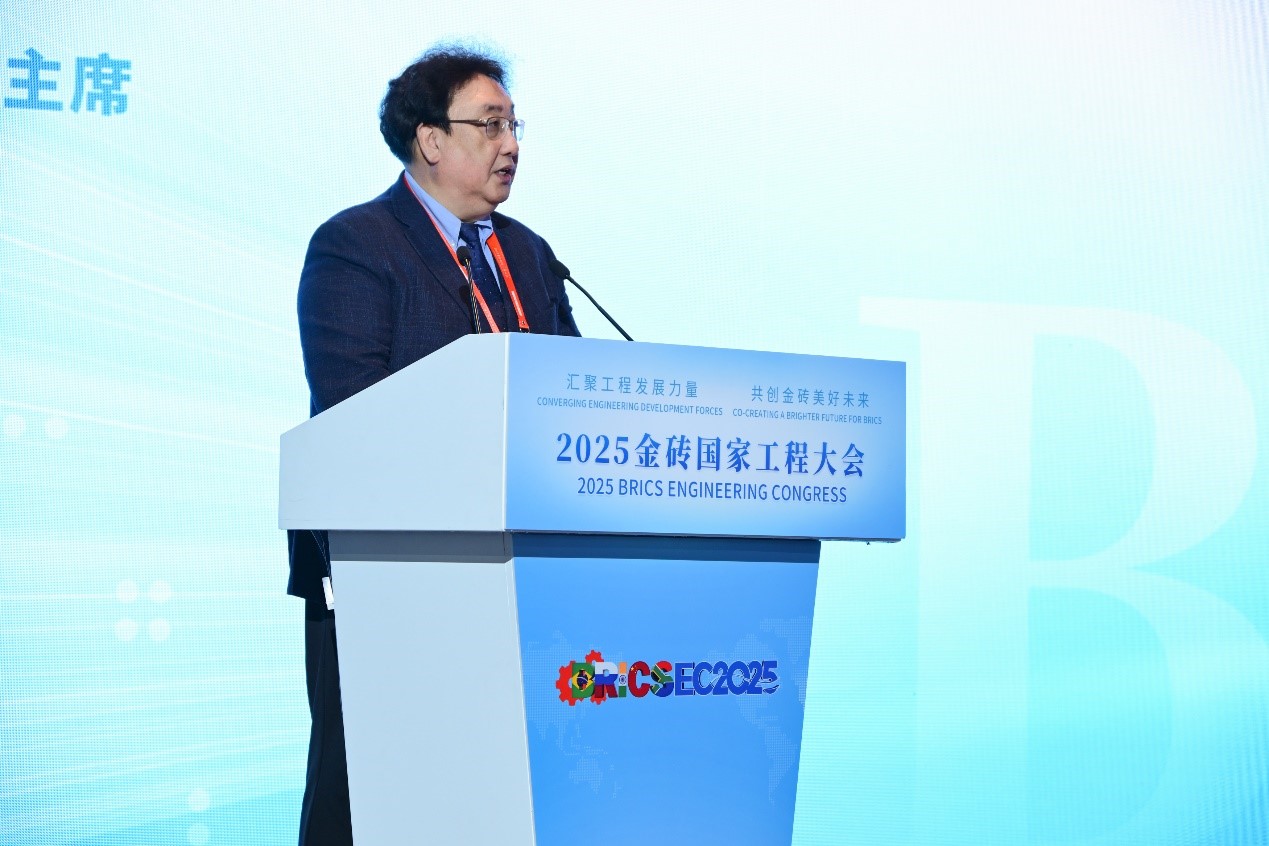
JIANG Yuyang's address
Mustafa Shehu stated that the Congress provides an important platform for professionals in the engineering field from BRICS countries to exchange ideas, and it holds significant importance for promoting the integrated innovation and development of engineering technology among BRICS nations. He expressed hope that the experts and scholars present would strengthen mutual trust, share insights, and help foster the growth and development of young engineers in BRICS countries. He emphasized the need to gather powerful forces to drive technological innovation in the engineering field, improve the overall research capabilities of BRICS nations, and ultimately contribute to making BRICS a pioneer force for driving the reform of global governance.
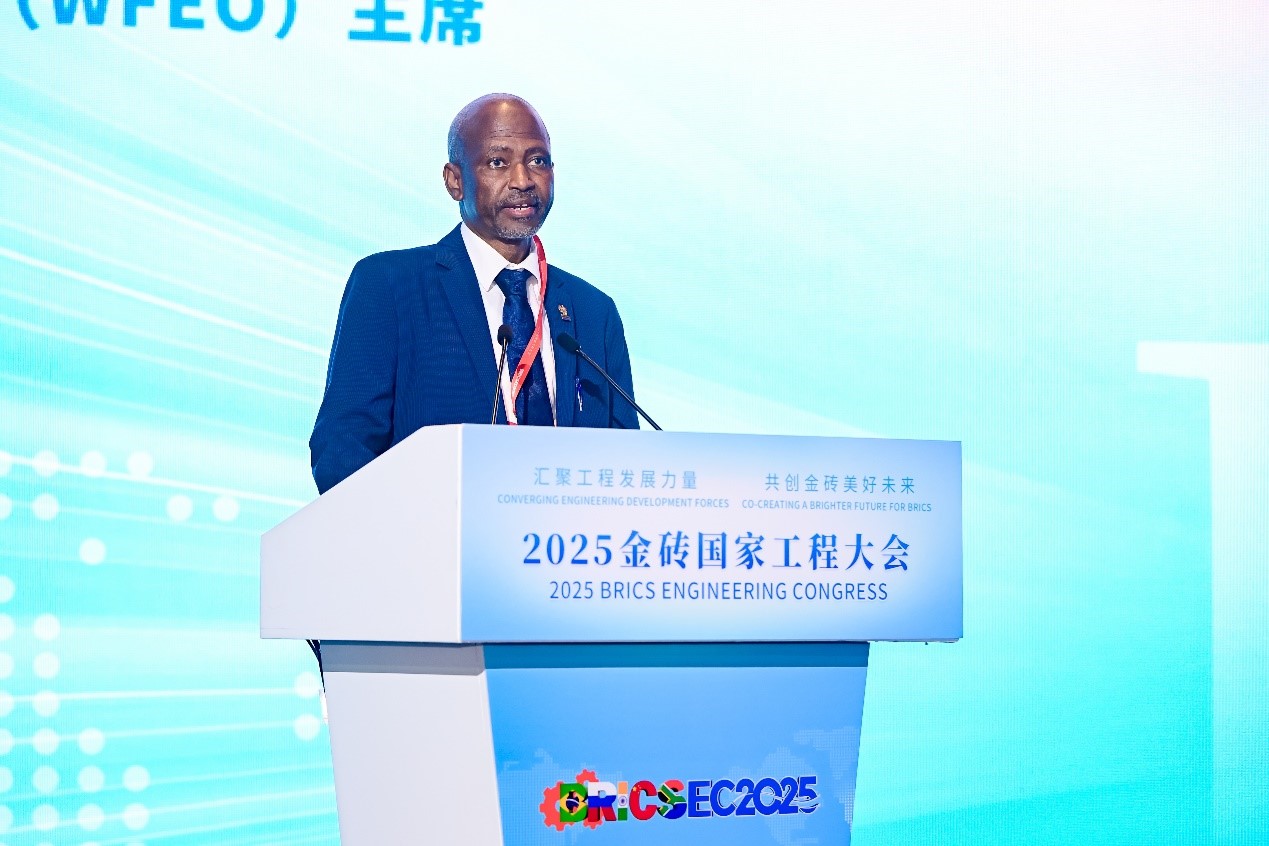
Mustafa Shehu’s Address
LUO Hui expressed hope that the BRICS Engineering Organization will strengthen cooperation in the field of engineering and technological innovation, accelerate the transformation and industrialization of engineering achievements, and empower various industries with engineering technology innovation to contribute to high-quality economic and social development. She also hoped that the BRICS nations would take this Congress as an opportunity to further leverage their respective advantages and deepen cooperation in areas such as engineering education, technological innovation, and talent development, in order to jointly address global challenges and work together to write a new chapter of cooperative development.
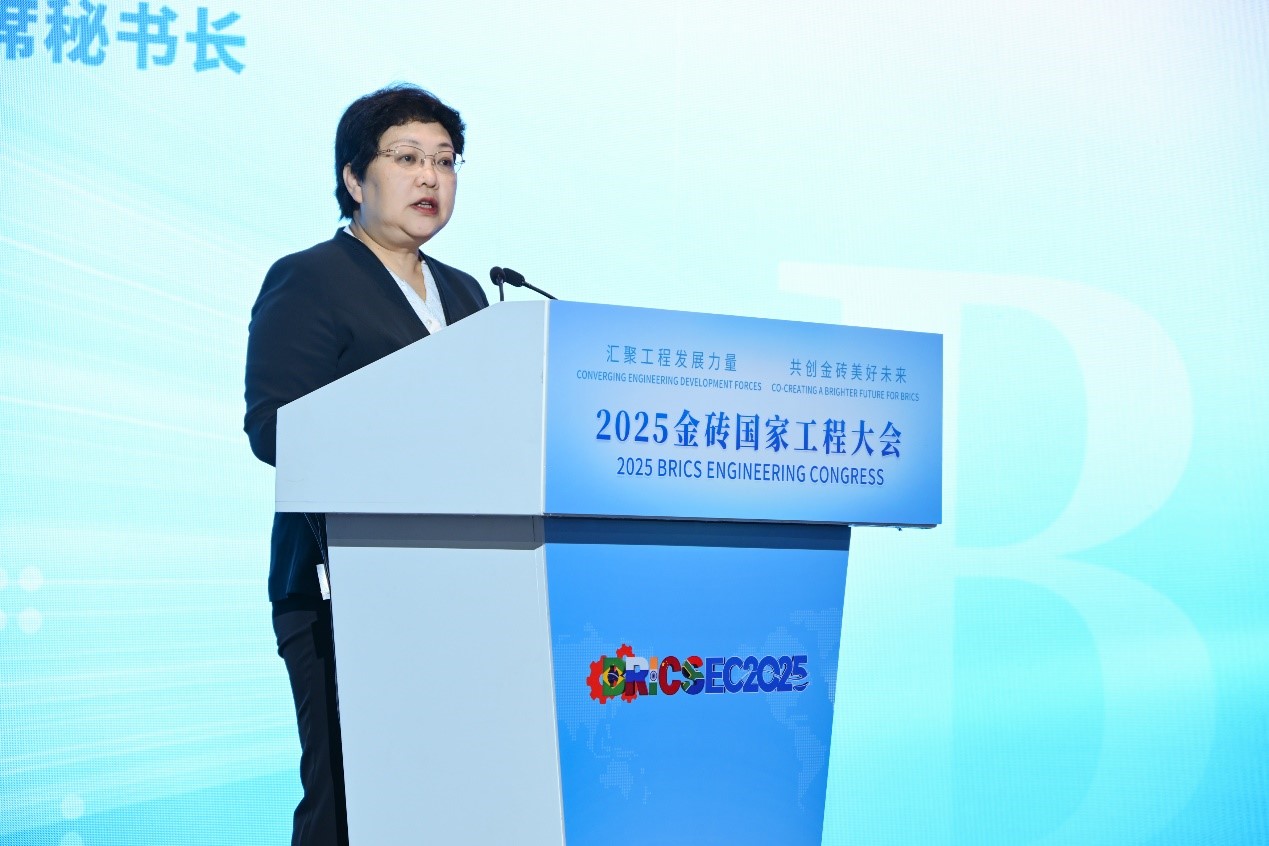
LUO Hui’s Address
CHEN Jie expressed the hope to engage in in-depth exchanges with engineering organizations, universities, and enterprises from BRICS countries as well as other regions around the world, to jointly explore effective strategies for cooperative development, build broader consensus, and actively promote comprehensive and practical cooperation. HIT would fully leverage its prominent advantages in engineering education, scientific research, and innovation to actively promote the establishment and development of the FEIBRICS. HIT would work together with all parties to establish a long-term mechanism for exchange and cooperation in the engineering field among BRICS countries, and would actively advance the construction of the BRICS Engineers' Competence Building Center (Harbin, China). This will provide strong support for enhancing the professional skills and international competitiveness of engineers in BRICS nations and contribute HIT's solutions and strengths to the global innovation and development of the engineering industry.
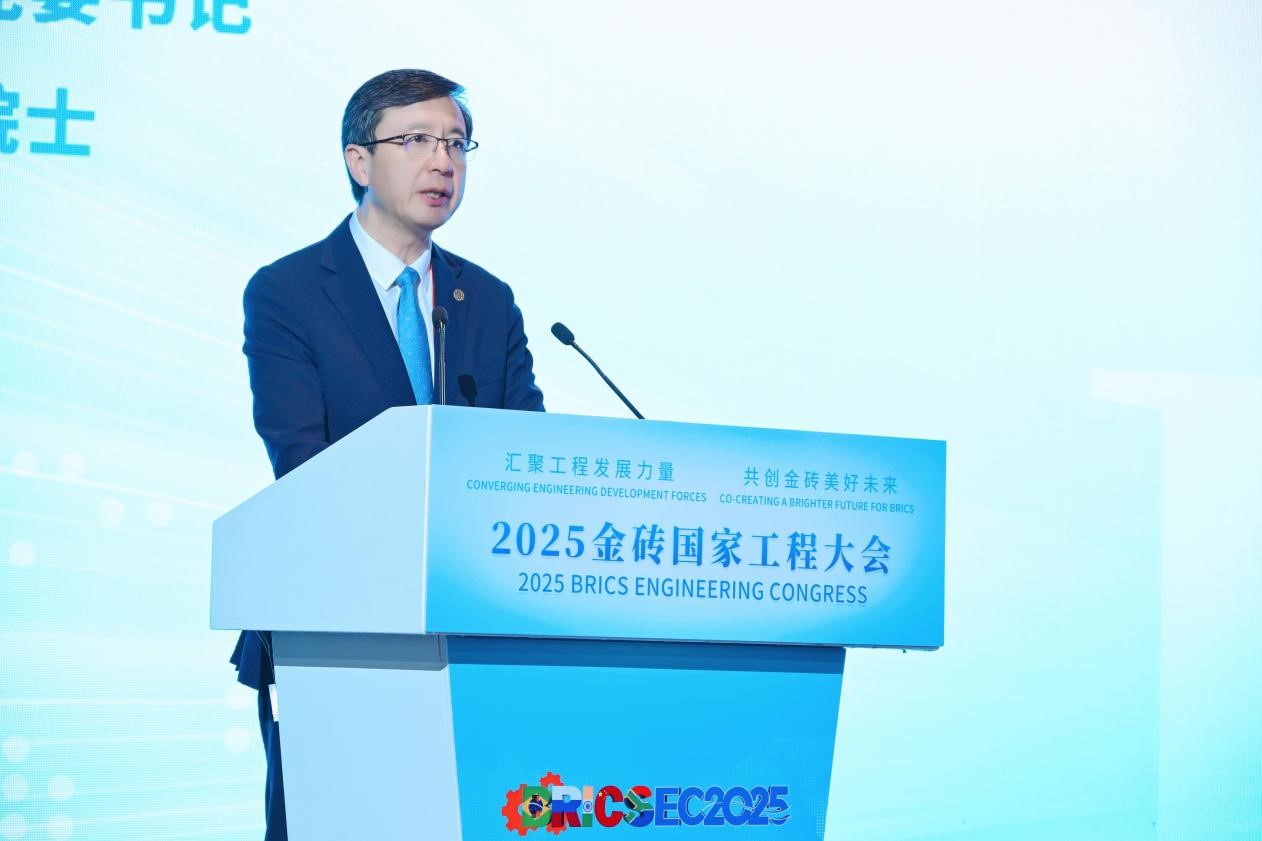
CHEN Jie’s Address
The Initiative to Launch Federation of Engineering Institutions of BRICS (FEIBRICS) was launched by the HIT, Center for Professional Training and Services of China Association for Science and Technology (CAST-CPTS), the Russian Union of Scientific and Engineering Associations (RUSEA), and the Brazilian Federation of Association of Engineers (FEBRAE), together with 48 engineering organizations, scientific and technological associations, universities, and enterprises from BRICS countries. The initiative calls on all sectors in the global and BRICS engineering fields to embrace the principles of openness, inclusiveness, cooperation, and mutual benefit, to work together in advancing the innovation and development of engineering education, fostering engineers' competence and continuous professional development, and writing a new chapter in engineering governance among BRICS countries. It aims to contribute wisdom and strength to the prosperity and development of BRICS nations and to the creation of a more just, fair, inclusive, and beneficial global engineering governance system. The Secretariat of the FEIBRICS is located at Harbin Institute of Technology.
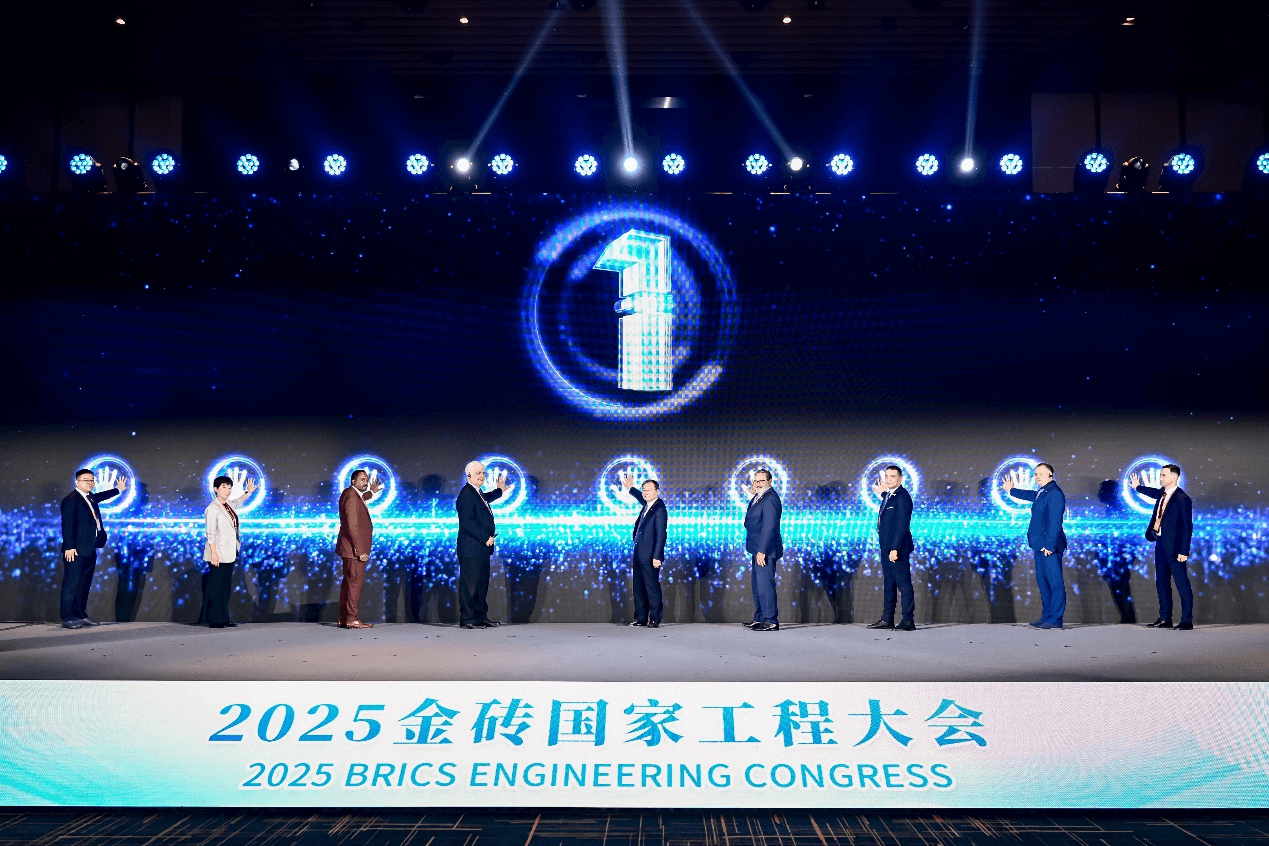
HAN Jiecai and others jointly released the Initiative to Launch Federation of Engineering Institutions of BRICS (FEIBRICS).
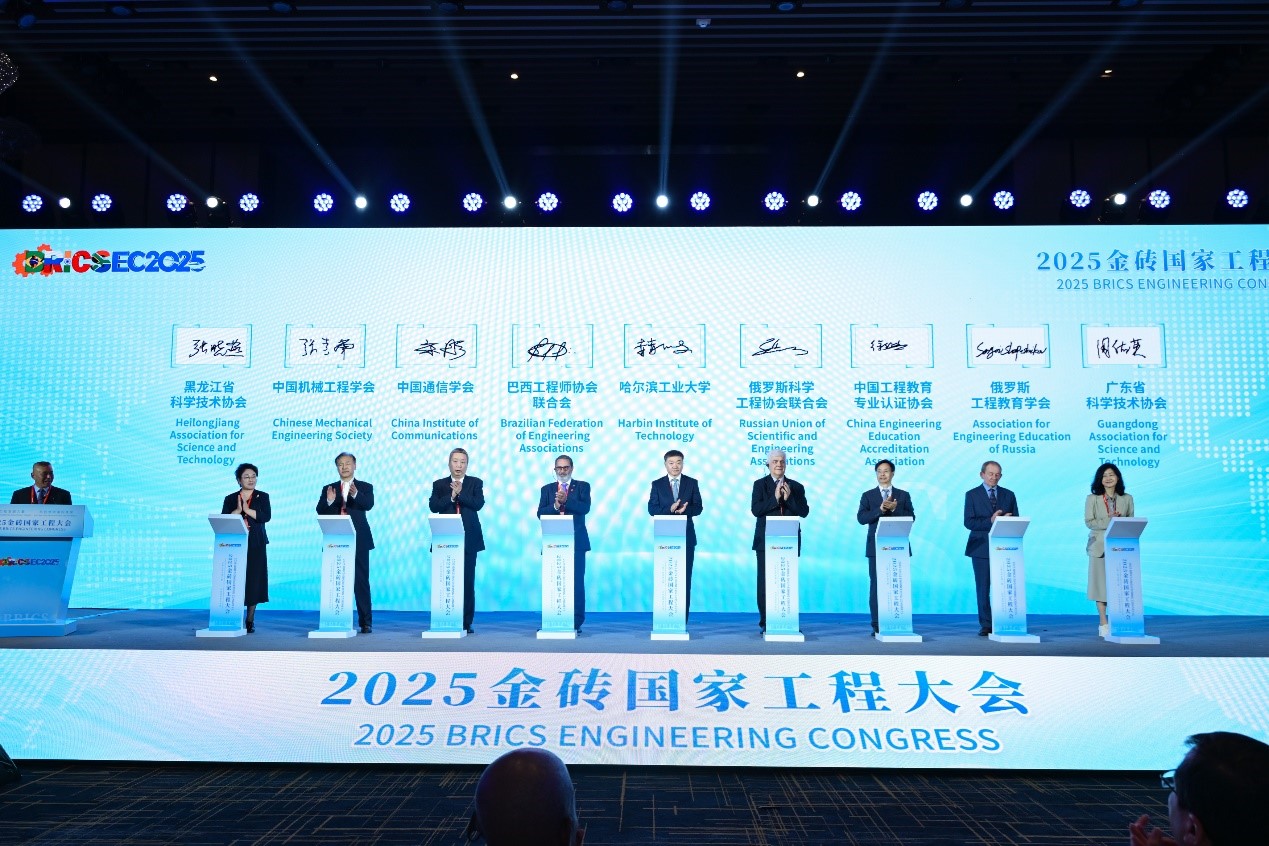
HE Xiaodong signed the Memorandum of Understanding on the Establishment of the BRICS Engineers' Competence Building Center (Harbin, China)
The Shenzhen Declaration was initiated by the Secretariat of FEIBRICS and unanimously approved by its member units. The Shenzhen Declaration states that the engineering organizations of BRICS countries will work together to build an efficient and pragmatic cooperation mechanism, strengthen cooperation with global or regional engineering organizations, and promote the integration and interoperability of engineering technology standards. This will facilitate the professional development and value realization of engineers, lead trends in engineering practice and technological innovation, and comprehensively enhance the engineering capacity building of BRICS countries, jointly creating a prosperous "Greater BRICS" framework.

Release of Shenzhen Declaration
In the keynote report session, SHUAI Yong delivered a report titled “Exploration and Practice of Competency-based Engineering Education-Strategic Upgrade for the New Pattern of BRICS Cooperation”, sharing Harbin Institute of Technology's approach to innovation in engineering education and international cooperation.
CHENG Hongbo, Full-time Vice Chairman of Guangdong Association for Science and Technology, and Chairman of GBA Federation of Engineering Organizations, gave a presentation titled "Converging Technological Forces in the Bay Area to Advance BRICS Engineering Cooperation," outlining a blueprint for closer cooperation between the Greater Bay Area and BRICS countries.
ZHANG Xiaoyan, Vice Chairman of Heilongjiang Association for Science and Technology, delivered a presentation titled "Hand in Hand, Together We Paint a New Vision for Engineering and Technological Cooperation Among BRICS Nations," exploring the cooperation prospects between Heilongjiang Province and BRICS countries.

SHUAI Yong presented the report
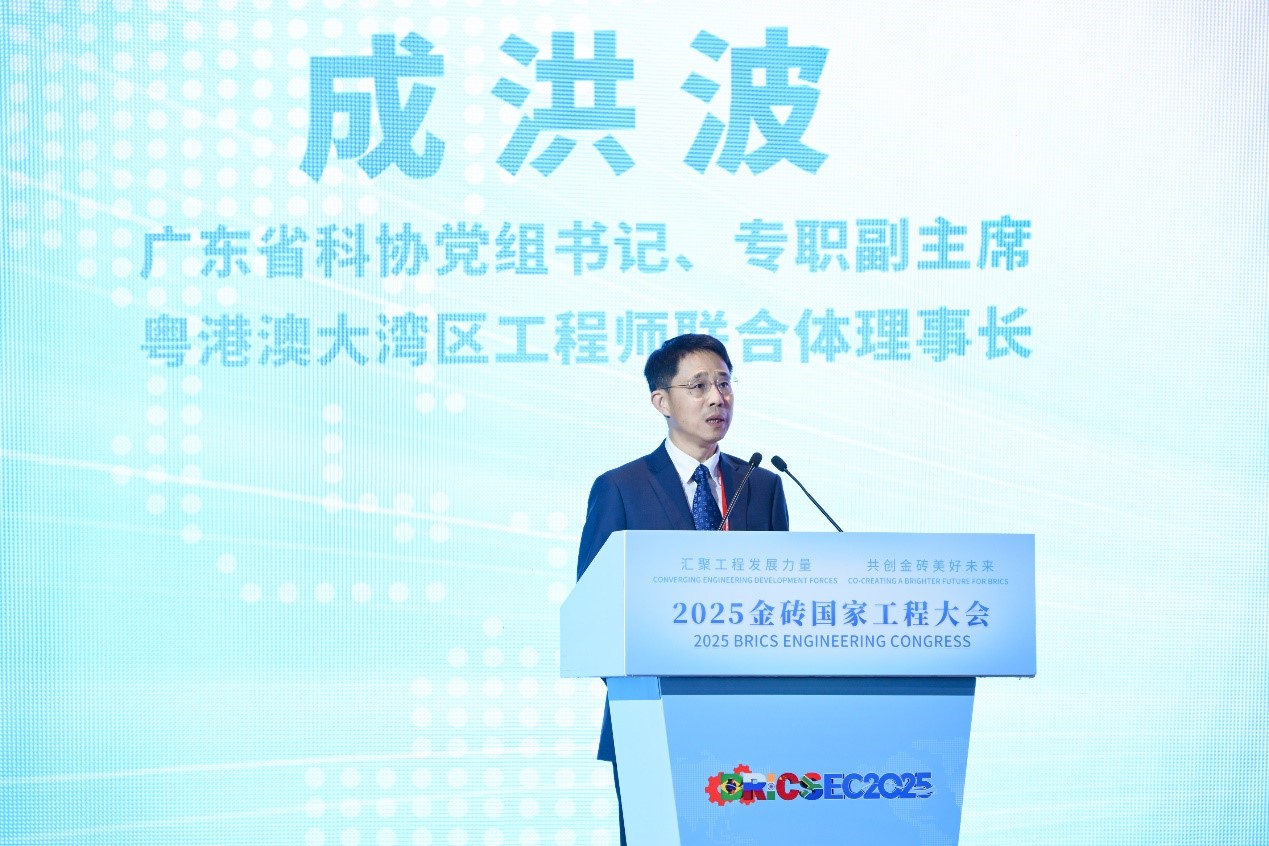
CHENG Hongbo presented the report
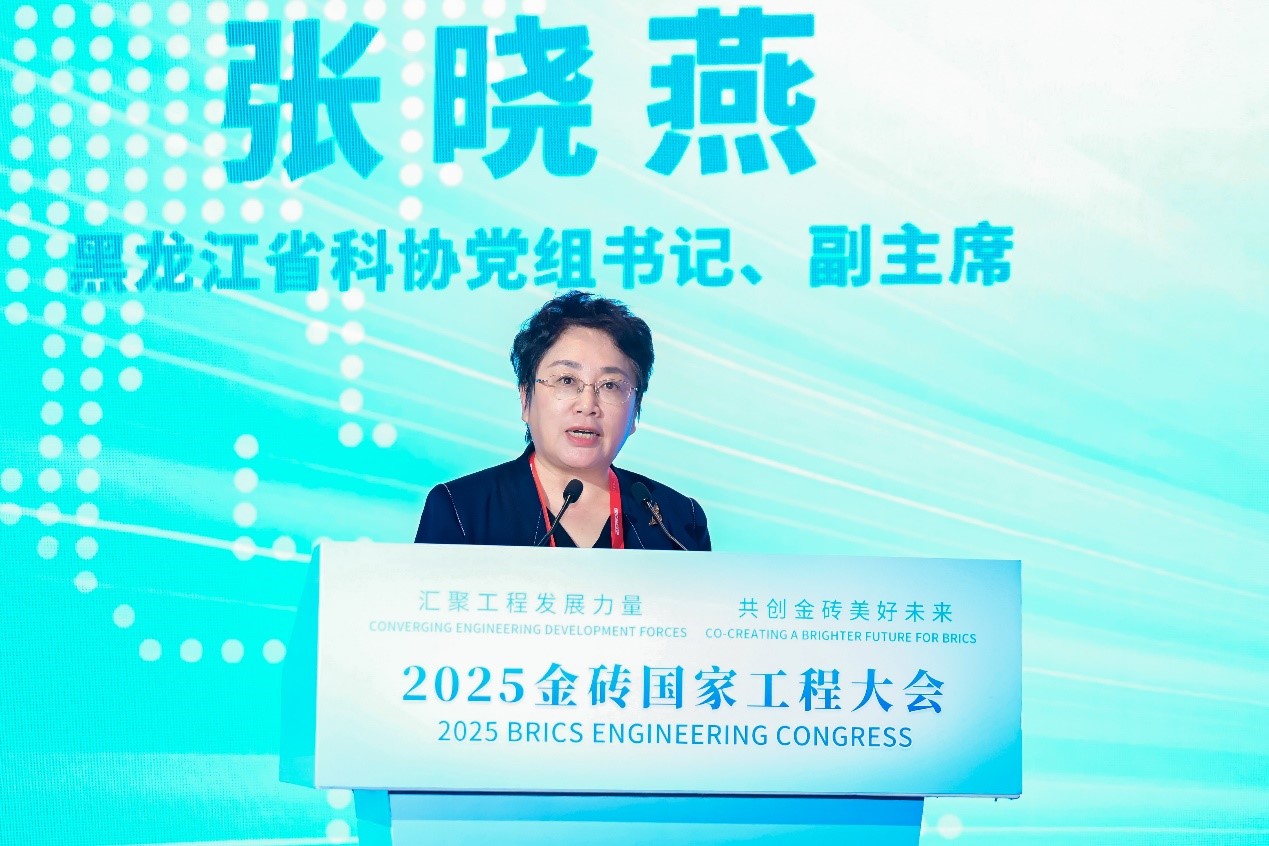
ZHANG Xiaoyan presented the report
In the technical report session, WU Kai, Chief Scientist of Contemporary Amperex Technology Co., National Outstanding Engineer, Sergei Korshunov, Vice-Chairman of the Russian-Chinese Friendship Association, the winner of the 2024 Chinese Government Friendship Award, former Vice-Rector of Bauman Moscow State Technical University, and Su Quanke, the chief engineer of the Hong Kong-Zhuhai-Macao Bridge project, the recipient of the first "National Distinguished Engineer" title, the vice chairman of the Greater Bay Area Engineers' Joint Body, and a professor at the Hong Kong University of Science and Technology (Guangzhou) delivered technical presentations.
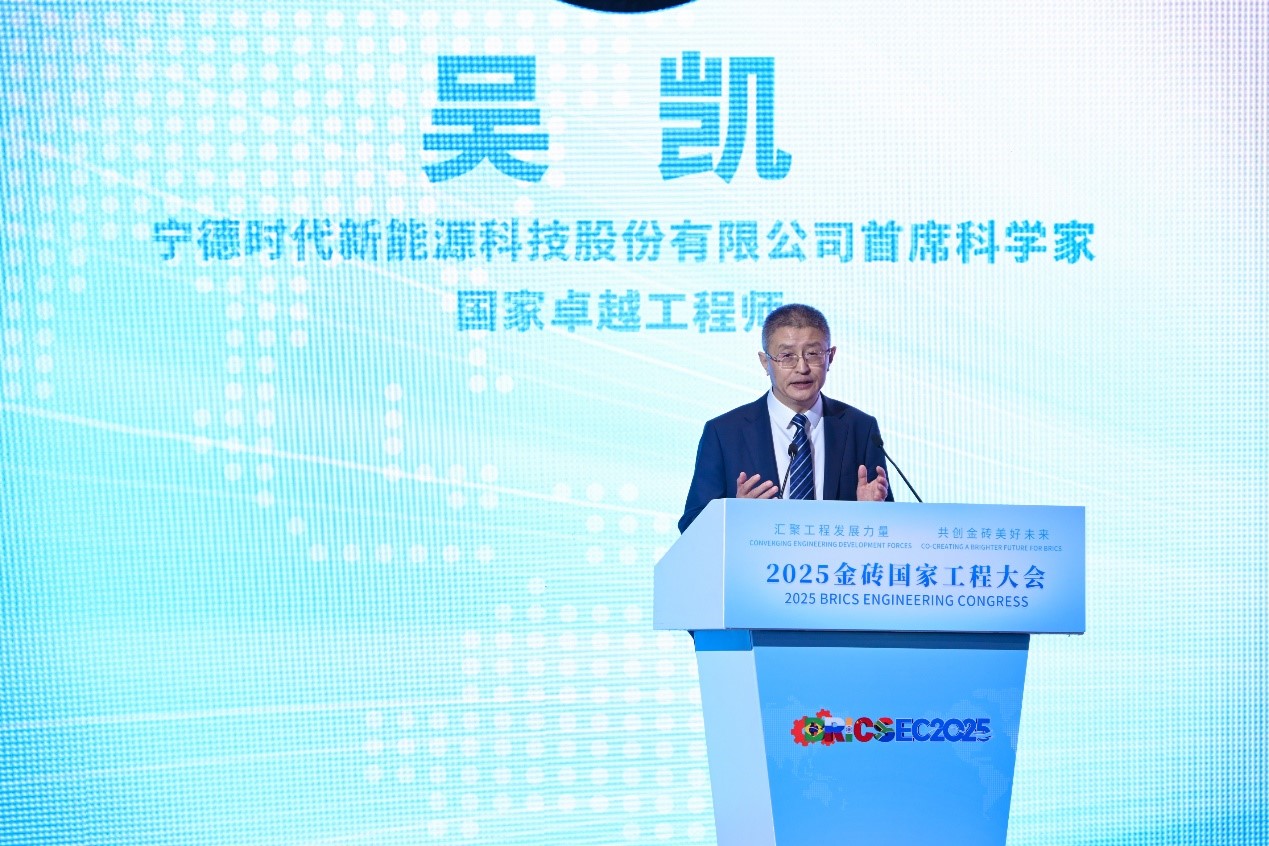
WU Kai presented the report
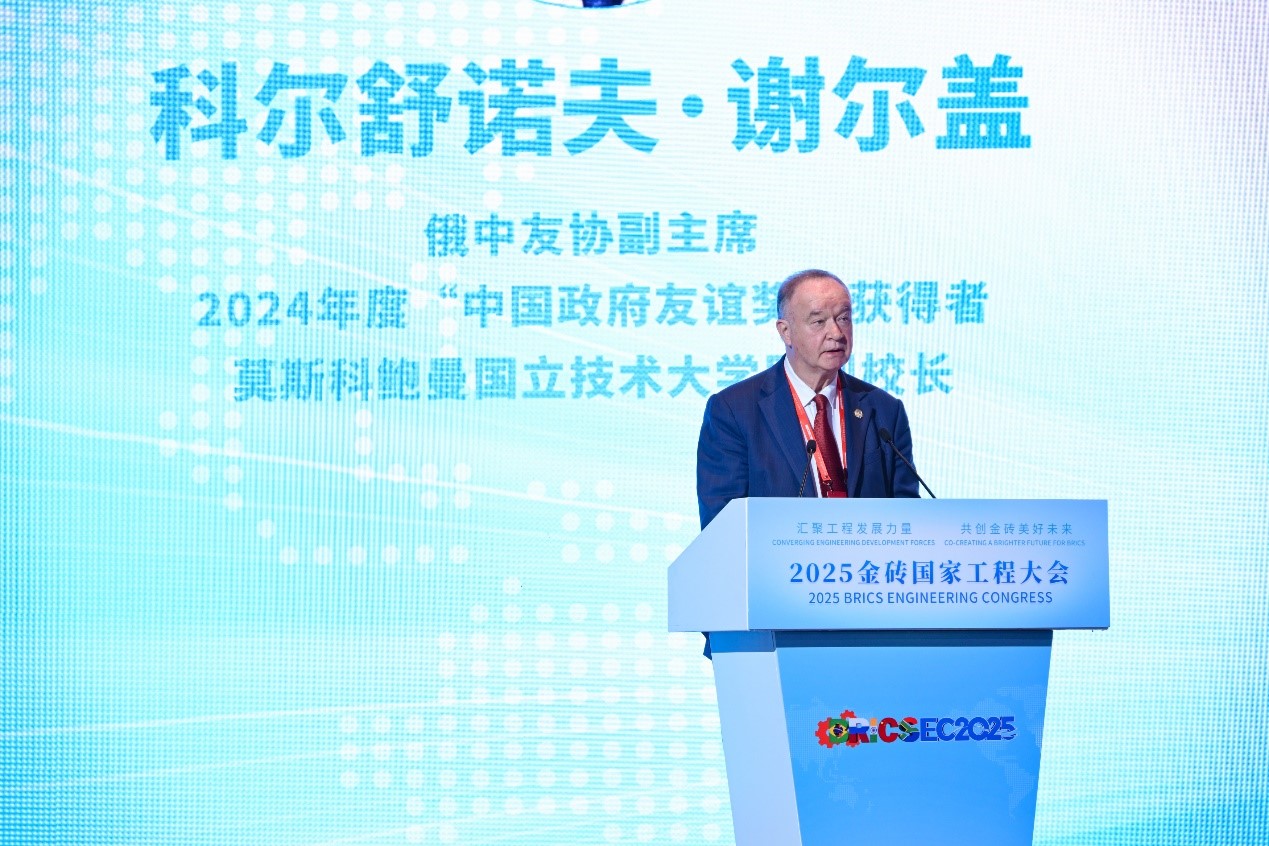
Sergei Korshunov presented the report

SU Quanke presented the report
During the opening ceremony, three round table dialogues were held, focusing on topics such as the construction and development of engineering education in BRICS countries, competency standards and mobility of engineer, and the continuing professional development of engineer (CPD).
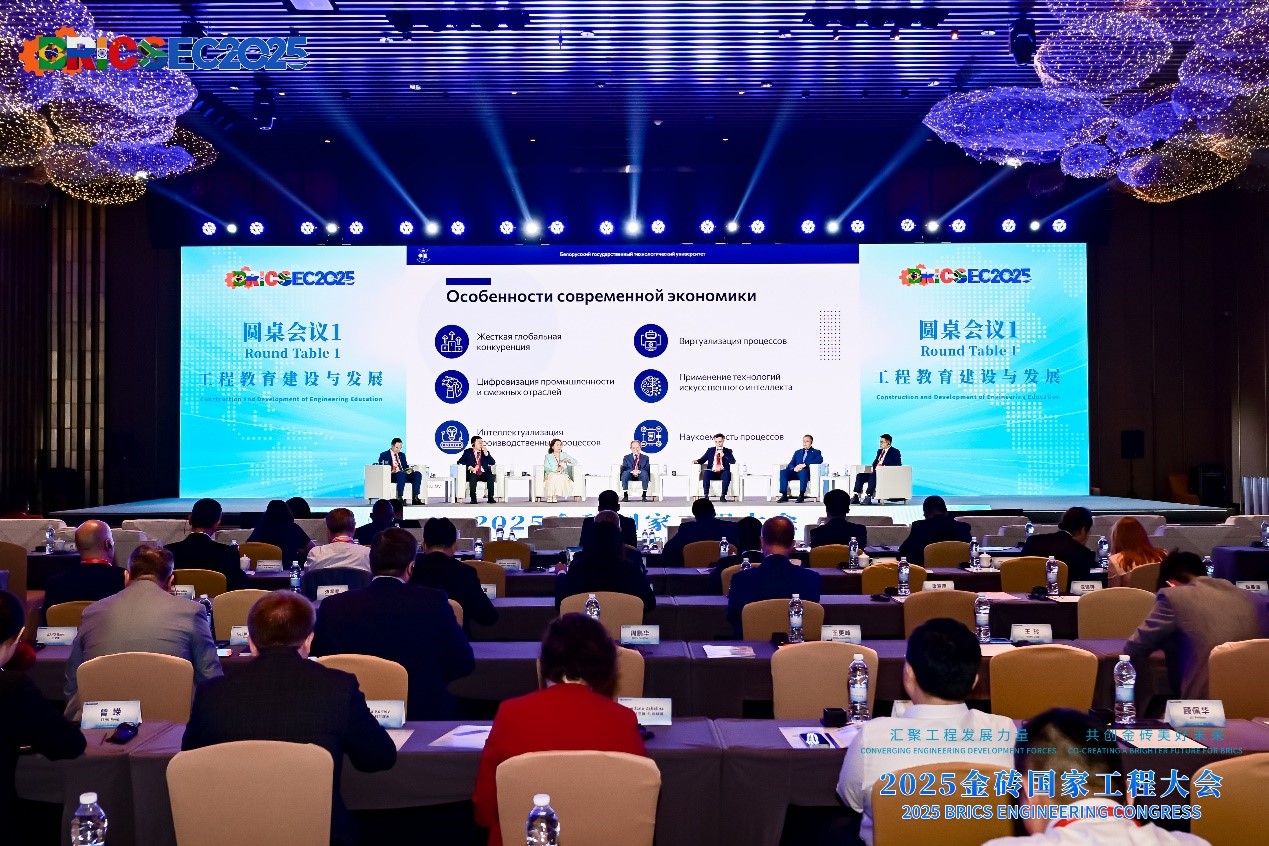

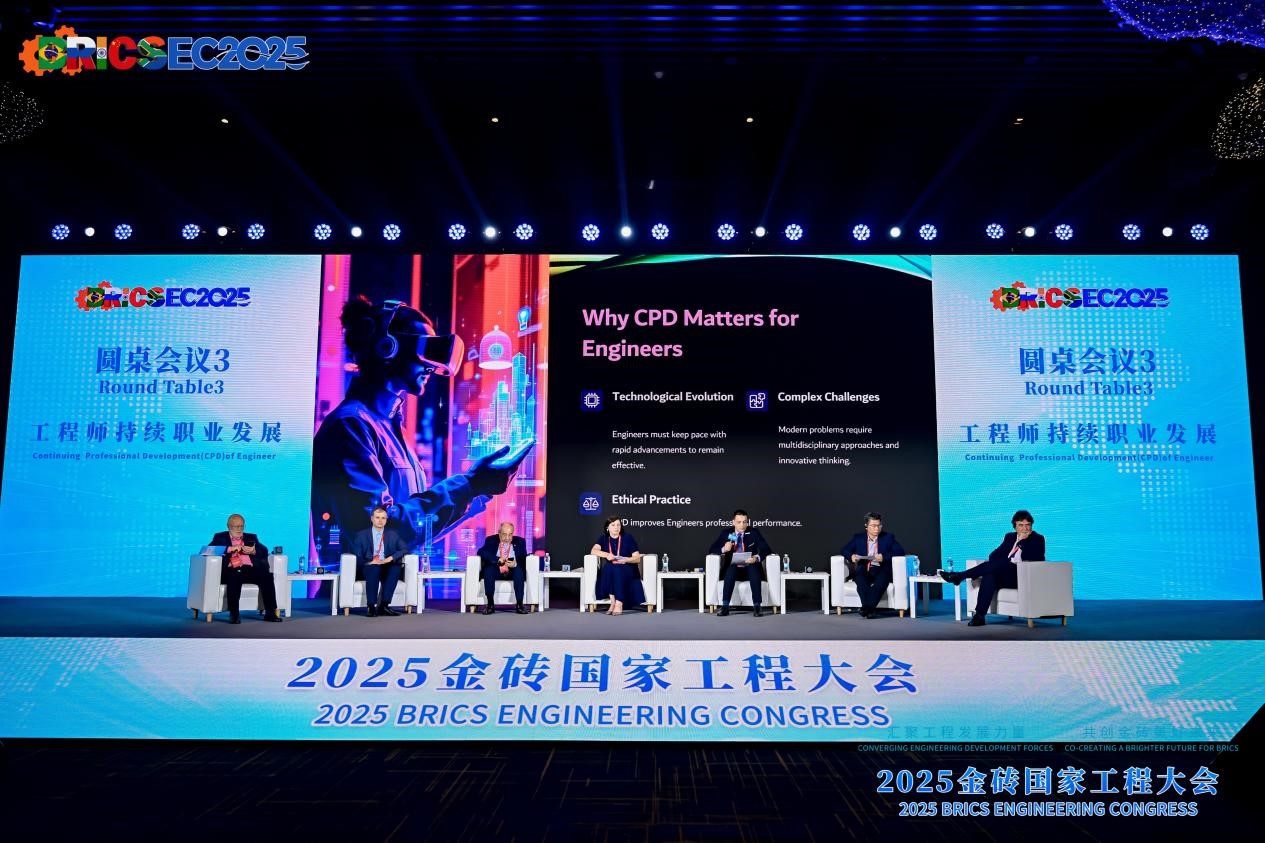
Round table dialogues
During the Congress, CHEN Jie met with Sergei Drukarenko, Vice Chairman and First Secretary of the Russian Union of Scientific and Engineering Associations (RUSEA). The two sides had in-depth exchanges on promoting the establishment of FEIBRICS, joint talent training and mutual visits of teachers and students, and other aspects of cooperation. XI Ru and HE Xiaodong attended the meeting.

CHEN Jie met with Sergei Drukarenko
President HAN Jiecai met with Anatoly Nikolaev, Rector of North-Eastern Federal University. The two sides discussed further strengthening of communication and exchange.
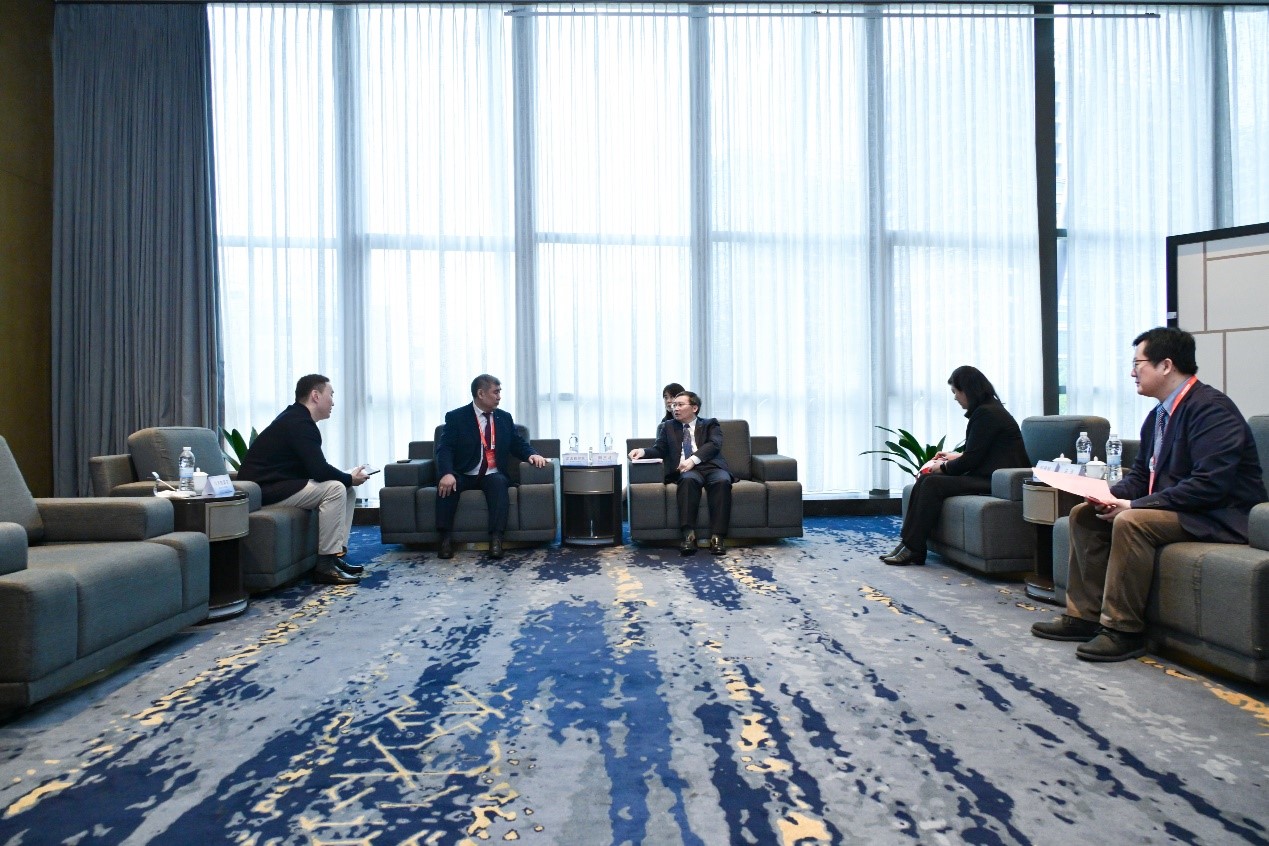
HAN Jiecai met with Anatoly Nikolaev
More than 200 representatives of engineering organizations, societies, universities, enterprises and governments from BRICS and BRICS partner countries attended the opening ceremony.