
The human stakes of hope: Bina D’Costa on protecting children in conflict
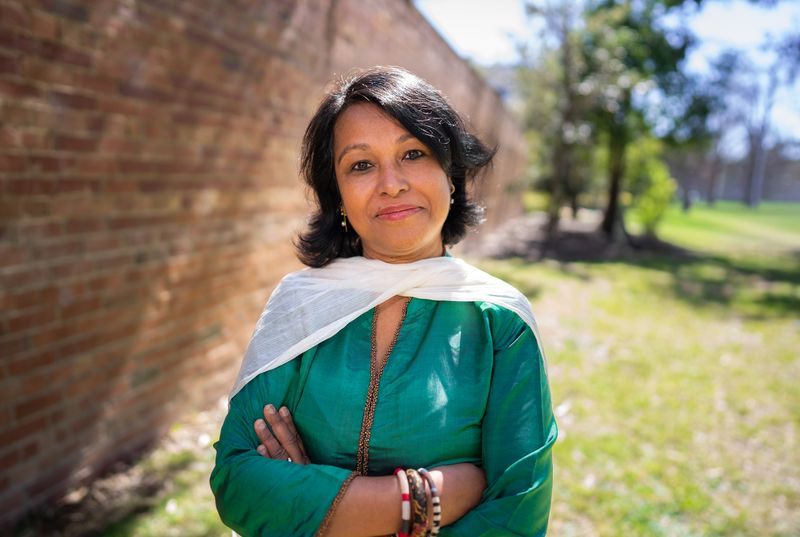
Professor Bina D’Costa from the Coral Bell School of Asia Pacific Affairs at The Australian National University (ANU) researches how to protect people affected by conflict and displacement. Her work with children in global emergencies asks what it takes to keep a future possible.

Sponsored by
Sponsored by
In a refugee camp, a small child told Professor Bina D’Costa, “There is no hope.”
It’s a hard thing to hear from someone whose life should still be full of possibilities. Those words became the title of D’Costa’s new book, On the Other Side of “There Is No Hope”, and they capture the urgent, human focus of her research at The Australian National University (ANU).
“We live in a world where I do not know how young people find any hope,” she says.
Children never be left to navigate violence, displacement and uncertainty on their own. D’Costa’s research in global humanitarian emergencies looks at how well this responsibility is met and where children are still at risk.
Protecting a vulnerable future
D’Costa’s current research looks at child protection in global emergencies, including early and child marriage, exploitative labour, sexual abuse, trafficking and smuggling. These harms often persist across generations, reminding us that vulnerability is not confined to a single emergency or point in time.
Her earlier scholarship has already had an impact. Her research with survivors of sexual violence in Bangladesh, Sri Lanka and Myanmar has been used in justice mechanisms and has informed thinking about government support, including demands for redress.
For the past decade, with support from Australian Research Council grants, she has focused on refugees, migrants, and asylum seekers. Her time leading UNICEF’s migration and displacement research at the UNICEF Office of Research-Innocenti impacts how she approaches this work.
“It is always driven by my interaction in the field and work with victims and survivors,” she says.
Listening to children shows whether the systems meant to keep them safe are really meeting their needs. D’Costa brings that knowledge into international relations and law to understand how children become vulnerable and how protection can be improved.
For children, protection is about more than their immediate safety. Choices made during an emergency can shape how much of their childhood they carry forward.
The care behind the questions
Researchers also have a duty to protect children when asking them to share their stories. A child who has faced violence should not be put at greater risk by participating in research.
D’Costa always puts children’s best interests first, following the principle of “do no harm”. A child’s wellbeing comes before anything the research might achieve.
This care stems from what D’Costa calls “a political philosophy of empathy”. It asks researchers to think carefully about their responsibilities to the people whose stories define their work. In emergencies, when so much is already beyond a child’s control, the way researchers listen, analyse and represent those narratives matters. If hope needs a foundation, empathy is where D’Costa starts building it.
She has developed a feminist, intergenerational and intersectional approach that is now widely used in international relations. It looks at how gender, age and different types of inequality affect people’s experiences of violence and protection. This helps researchers move beyond broad categories such as ‘refugees’ or ‘survivors’ and understand the different realities within them.
At ANU, her PhD students and research fellows add their own expertise to these questions. She believes this exchange is key to what the research can accomplish.
“Our whole group has made an impact collectively,” she says.
Reasons for hope
International relations often bring to mind talks between countries or issues of national power and national interest. D’Costa, however, focuses on what these decisions mean for the people whose safety is at stake.
“It is individuals who make the discipline work,” she says.
At ANU, she works with scholars who know a great deal about Asia and the Pacific, including the regions’ cultures, histories and languages. This knowledge helps guide research into the communities affected by conflict and the support they need.
D’Costa says Foreign Affairs and Trade, Home Affairs and other government departments often come to her team for research and advice. That appetite for knowledge, and the willingness to understand people’s experiences and translate them into policy responses, is a measure of hope.
“There is a real hunger to understand and do the right thing,” she says.
Australia’s humanitarian work and involvement with the United Nations means that understanding people’s experiences can impact decisions about their support and protection. For children, these choices can affect them well into adulthood.
Her hope extends to the future of the work itself. D’Costa believes some of it will continue to make a difference “long after I am gone”. By working with younger generation of scholars and early career researchers, she knows these questions will continue to be explored by people with fresh ideas and perspectives.
The child’s words are still in the title of her book. But the book, like her research at ANU, is about what lies on the other side of them – those who have been lost, those who have survived and the ways their experiences continue to inform questions of justice and protection, alongside a new generation of scholars carrying that work forward.
For the children she studies, protection is where the hope begins.
Find out more about Bina D’Costa and the Coral Bell School of Asia Pacific Affairs at The Australian National University.