
Common ground: Frank Jotzo is making net zero work for Australia’s economy
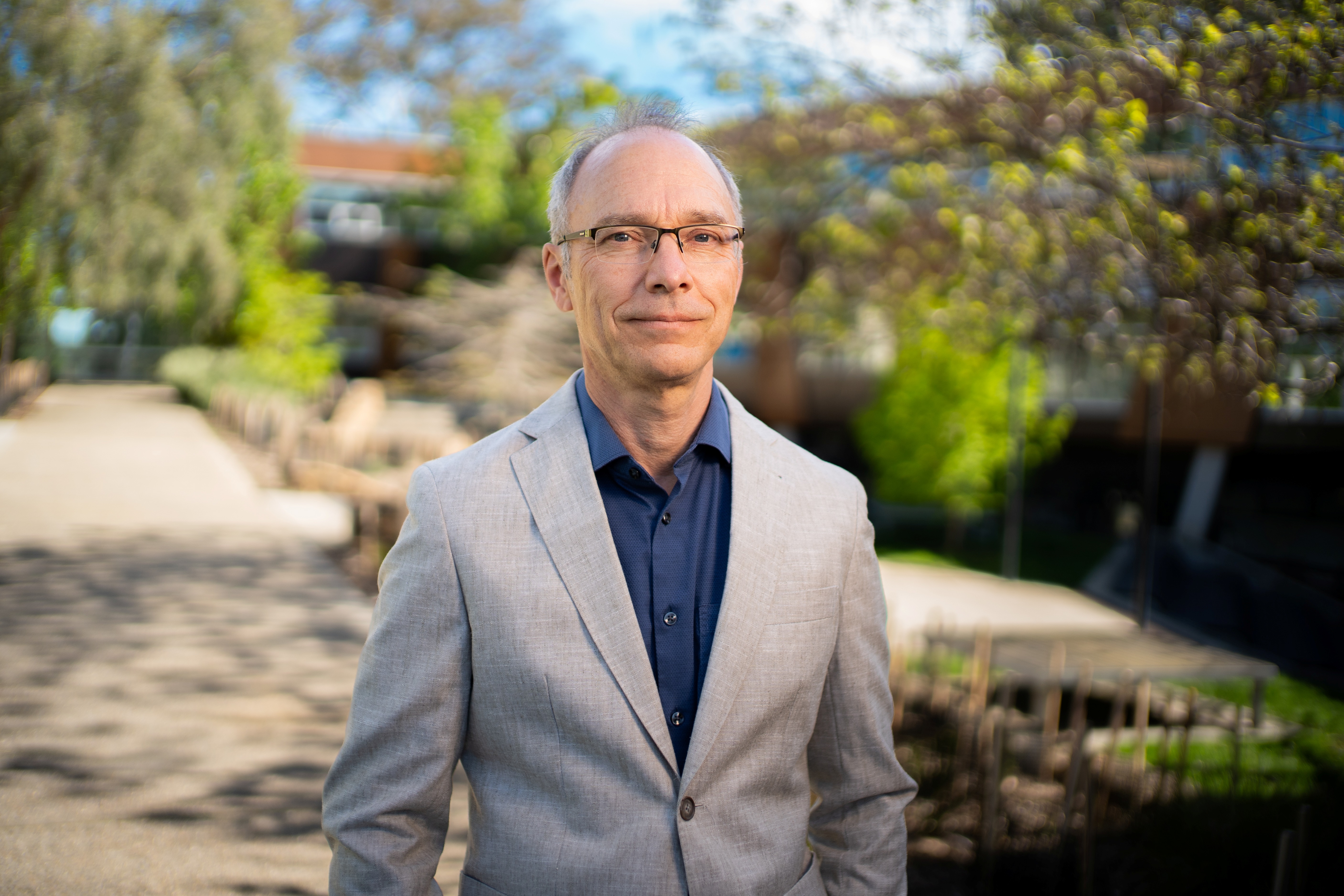
Professor Frank Jotzo and his colleagues at The Australian National University (ANU) Centre for Climate and Energy Policy are asking how economies can keep people in work and prospering as emissions fall towards zero. His research into green iron puts that to the test in one of Australia's most important industries.

Sponsored by
Sponsored by
How do we cut emissions without losing the work, wages and opportunities people depend on? Every country working towards net zero has to find an answer. For Professor Frank Jotzo, an economist and academic at The Australian National University’s (ANU) Crawford School of Public Policy, finding ways for economies to keep prospering as emissions fall is the focus of his research.
Heavy industry is where this gets tested. Electric cars and renewable energy help us picture change, but it's harder to imagine what it means for the industries that make steel and other materials, and the workers who rely on them.
"In industry, we're still figuring out what it might look like," he says.
Jotzo finds this uncertainty exciting. It means there is still time to determine what cleaner industries could look like, and how to make sure that there will be economic benefits.
The promise in ore
Australia is by far the largest global exporter of iron ore, having around 29% of the world’s reserves. This position makes the future of steelmaking an economic question for the country as well as a climate question. If the industry moves towards cleaner production, the work done before ore reaches a steel mill could change too. Steel making accounts for over 7% of global emissions so it needs to be part of a global climate solution.
At the ANU Centre for Climate and Energy Policy (CCEP), led by Jotzo, researchers are exploring the production of green iron in Australia for steel production in Japan, Korea, China and other surrounding countries in Asia. This idea uses two of Australia’s strengths: iron ore and renewable energy. However, these strengths don’t guarantee that a green iron industry will emerge.
There are questions about production costs, the price buyers will pay and competition from countries with different costs and levels of government support. Jotzo’s team is studying these issues. They’re also working with top universities in China and Japan, where local industry knowledge helps them understand how future supply chains could work.
The economic dimension of such research sometimes gets overlooked. When Jotzo tells people he works on climate change, they often think his work is mainly about the environment. “Our work is fundamentally about restructuring the economy so that environmental concerns can be met while maintaining a strong and healthy economy,” he says.
What this new economy will look like is still uncertain. Choices about investment in large industrial precincts and new technology may take decades, but the research to guide them needs to start now. Green iron gives Jotzo’s research team a clear way to explore what Australia could produce, who might buy it and which policies could help create a cleaner industry.
From research to the policy room
Some of Jotzo’s work is shared with decisionmakers through published research, while some happens in private meetings. “Quite often, I sit down, usually with some team members, with decision-makers, to talk them through findings that might help shape policy thinking,” he says. “That is one the ways we work towards impact at the public policy school.”
Recently, Jotzo led Australia’s Carbon Leakage Review for the federal government, which looked at how industry can cut emissions while still competing with overseas producers. This policy issue is closely linked to the iron ore question. Cleaner industrial processes will not spread far if businesses cannot afford to use them or sell their products.
Jotzo also understands that climate policy must deal with urgent government priorities, especially amid cost-of-living concerns. The security of essential goods is also important and front of mind. He believes researchers and policymakers can find where cleaner production can meet these needs, instead of expecting climate action to get attention by itself.
For Jotzo, it means “pushing the envelope in policy design and implementation towards more ambitious and more economically sound approaches to decarbonisation”.
He is careful not to claim all the credit. “We (CCEP at the Crawford School of Public Policy) would never claim that we were the ones who pulled something off solo,” he says. “But we certainly have a valid claim to having been among the people and organisations who have made a difference.”
A new green future
Australia might become a major exporter of green iron, but that will depend on decisions still to be made by governments, producers and steelmakers in the region. Jotzo’s role is to help make these choices clearer while there’s still time.
“Now is the time for universities to have a palpable impact on how industrial decarbonisation will be done in the future,” he says.
At ANU, this means testing what is possible, learning from partners in the region and bringing evidence into policy discussions. Green iron is one possibility among many and behind every possibility are people: the workers and communities who rely on heavy industry and the households feeling the cost of living pinch. For Jotzo, the excitement lies in helping Australia make choices that deal with climate change while keeping those people working and prospering.
Find out more about Frank Jotzo, the Centre for Climate and Energy Policy and the Crawford School of Public Policy at The Australian National University.