
Investigating insects with tomorrow’s scientists
Entomologists at Adelaide University are discovering new insect species – and inspiring the next generation of Australian scientists.

Sponsored by

Sponsored by
Insects play a vital role in sustaining life on Earth. By pollinating plants, they keep ecosystems in bloom and provide food for countless species. According to the Food and Agriculture Organization of the United Nations (FAO), around 75% of global food crop types depend on pollinators. Yet as habitat loss and climate change advance, insects like bees, butterflies and moths are under threat. The FAO says pollinator populations are declining, with an estimated 40% of bees at risk of extinction.
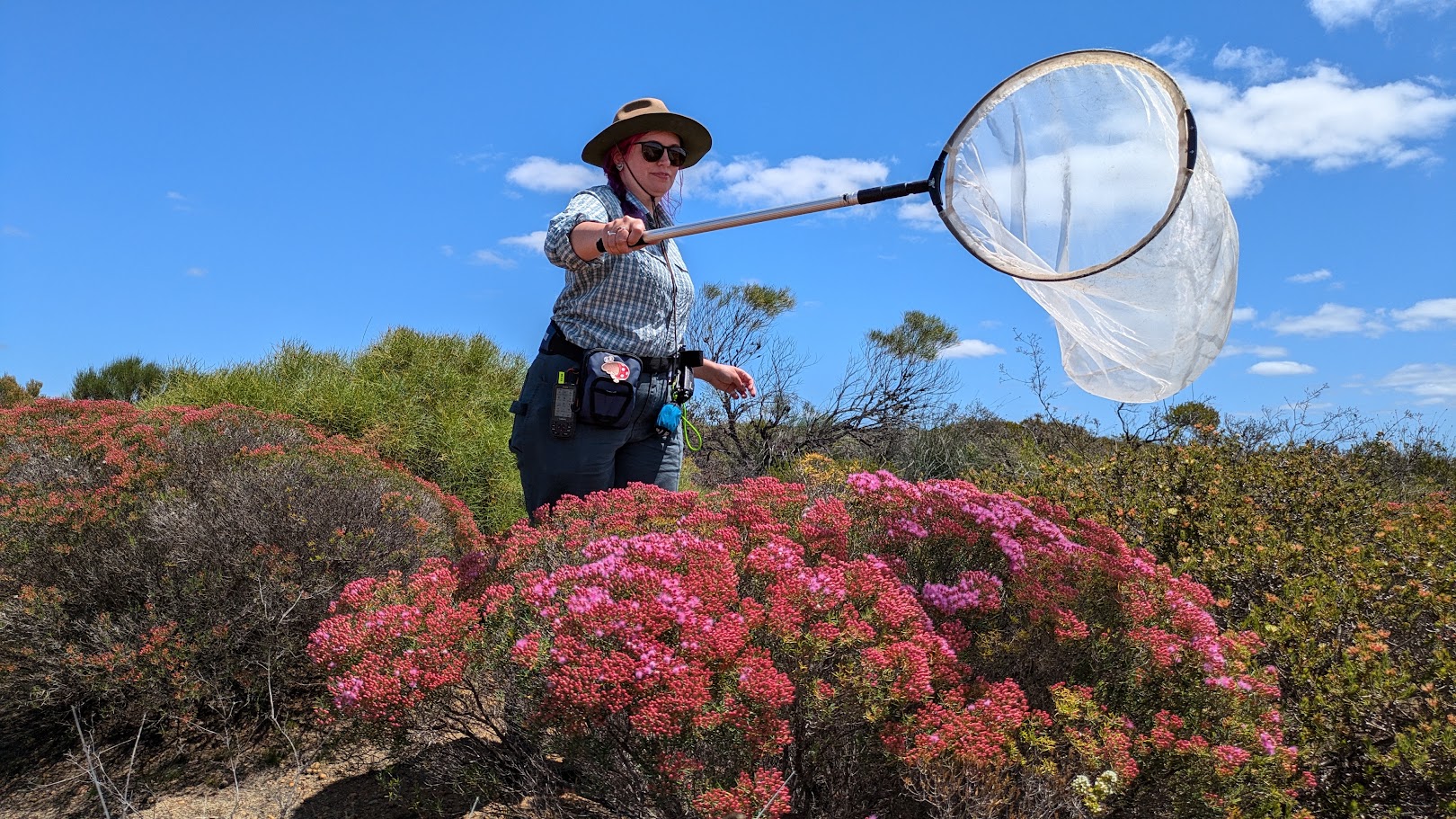
To help monitor this trend, Adelaide University researchers are on a mission to gather crucial data on insects in Australia. Their Eureka prize-winning citizen science project, Insect Investigators, has documented thousands of insect species around the country with the help of an unexpected cohort – local school kids.
“Knowing how many insect species are here, where they live, and how to identify them is the first step to being able to conserve and use them effectively,” says Dr Erinn Fagan-Jeffries, the entomologist and taxonomist who leads the project.
According to Dr Fagan-Jeffries, 70% of the insects in Australia are still unknown to science. Insect Investigators works to address this gap in knowledge – while empowering helping hands of all ages in discovery.
The researchers organised for regional school students around the country to set up Malaise traps, a professional entomological trap designed to capture flying insects. They visited the schools along the way to run sessions on the scientific process and its application to Australian biodiversity. Students collected the bugs, preserved them in alcohol and sent them to the Insect Investigators team, where they were sorted and sequenced by taxonomists.
The project resulted in 55,000 DNA barcodes of Australian arthropods added to public databases, and 10,000 different potential species identified. The taxonomists described 17 new species, including never-before-named blowflies, pseudoscorpions, parasitoid wasps and bee-flies. Insect Investigators then reengaged the schools so the students who had discovered them could be involved in the naming process.
“Students think of the best names!” says Dr Fagan-Jeffries. “It was a scientific success. We documented thousands of insect species from parts of the country that are normally really difficult for us to get to for surveys.”
And there was another important outcome beyond the discoveries: student engagement.
In surveys taken after participating in Insect Investigators, students expressed an intention to continue engaging in insect and nature-based activities. Teachers were engaged too, indicating they plan to include insect and taxonomy-related topics in their curriculum.
For Dr Fagan-Jeffries, who holds a Master of Science Communication Outreach alongside her PhD, the community outcomes were just as rewarding as the scientific. She says it was energising to see so many school students spend time in nature, track meaningful long-term data, engage with real scientists, and be part of exciting discoveries.
“I love seeing school students connected with the environment and the land,” says Dr Fagan-Jeffries. “Young people are often really curious and ask the best questions. We need that curiosity and passion to continue into the future.”
On the horizon
All the specimens collected through the Insect Investigators project now reside in museum collections and will be used by researchers for decades to come. The Insect Investigators team will continue working through the data and publishing their findings.
Insect Investigators is proof that citizen science can make a real difference – and has an important place in the future of science. New technologies are making it easier every day for the average person to contribute, including through identification apps on smartphones. More and more, meaningful conservation efforts can happen from our own backyard.
Dr Fagan-Jeffries hopes there’s more community insect investigations moving forward.
“I think everyone deserves the opportunity to connect with their local biodiversity, and we need everyone on board to help document it properly.”