
Improving outcomes for preterm infants
Adelaide University researchers are helping more premature babies survive, with fewer complications.

Sponsored by

Sponsored by
According to the World Health Organization (WHO), more than 13 million babies are born preterm every year, representing roughly 1 in 10 births worldwide. These premature babies are at a much higher risk of complications affecting their lungs, brain, learning, speech and development. The WHO says these issues remain the leading cause of death for children under five.
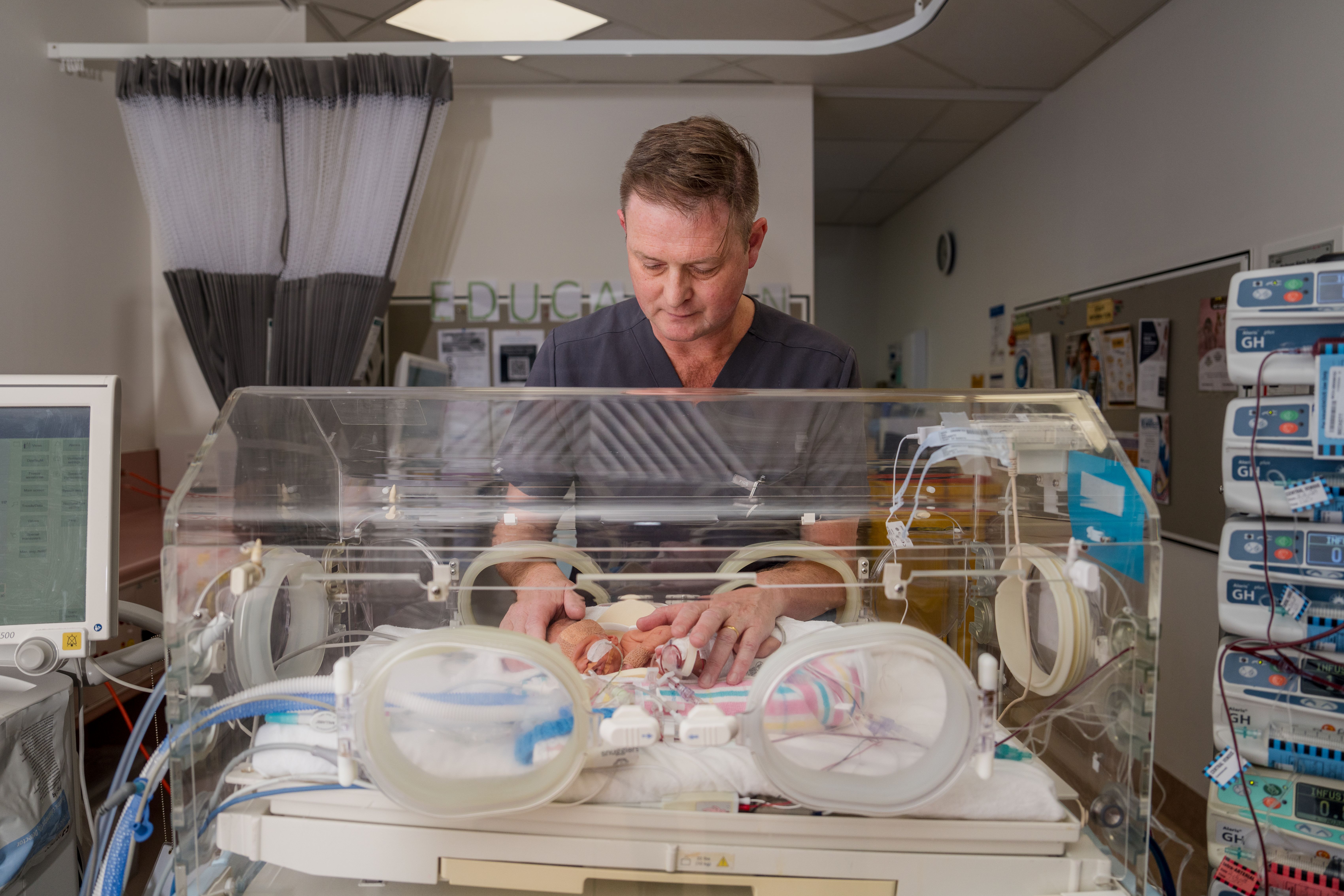
New and bold approaches to care are needed in the space – which is exactly the work of Professor Michael Stark, Deputy Director of Clinical Research at Adelaide University’s Robinson Research Institute (RRI). Professor Stark leads RRI’s Neonatal Medicine research group and Neonatal Services at Adelaide’s Women and Children’s Hospital. The multidisciplinary research group is working to understand preterm complications, find better solutions, and put those solutions into practise, using lived experience to guide their approach.
“We have a number of research streams, with a common goal of improving survival following preterm birth, free of long-term neurodevelopmental complications,” says Professor Stark.
The Neonatal Medicine research group has had great success to date, with one of their implementation projects reducing early brain injury by 40% in some of their most vulnerable infants. To achieve this, the team partnered with the Joanna Briggs Institute to create evidence-based “neurodevelopmental care bundles” for preterm babies.
The group also has a clinical focus in transfusion medicine, which has led to an international collaboration with Australian Red Cross Lifeblood. Together, they’re developing novel approaches to transfusion in high-risk preterm newborns, with trials running across Australia and the United Kingdom. This research aims to minimise transfusion-related complications, illness and death during the neonatal period.
Another key area of the team’s clinical research is understanding oxygen physiology. The group is studying how oxygen reaches and supports developing brains, with the goal of preventing early brain injury and improving long-term learning and development.
Professor Stark is also involved in a formalised research relationship with the Indigenous Literacy Foundation. As partners, they’re rolling out a program focused on the use of parental voice, where parents record stories to be played for their babies when they can’t be present in the nursery. The program aims to improve neurodevelopment, speech and language skills in infancy.
The parental voice program is a great example of parent-informed research, where meaningful partnerships are established between researchers and families. For Professor Stark, this two-way exchange is crucial.
“The most important questions to be answered are defined by those with lived experience of preterm birth,” he says. “Consumer involvement is essential to the process of clinical practice improvement and change, so a large part of a clinical academics role now is therefore community engagement.”
Working directly with patients helps keep the team’s research focused in the right direction. Professor Stark is emphatic about the benefits of this holistic approach.
“It is an undisputed fact that research-intensive clinical units, led by University staff and with infrastructure support, result in better outcomes for our patients.”
On the horizon
The Neonatal Medicine research group has an ambitious pipeline of research still to come. The team are part of an Australia-wide perinatal research collaborative, who’ve recently gained large-scale funding for preterm infant care.
Professor Stark is also working to inspire the next generation of health scientists. Through the Robinson Research Institute, he is part of an initiative called the Future in Focus scholarship. The program allows senior school students to learn directly from researchers –and even join them in the high-pressure neonatal unit to get first-hand experience.
Professor Stark and the Neonatal Medicine research group will continue encouraging future medical leaders, exploring novel avenues to help preterm babies thrive, and prioritising the voices of those with lived experience.