
Green Hydrogen: pioneering a path to a carbon-free future
Adelaide University researchers have achieved a first in innovative Green Hydrogen technology.

Sponsored by

Sponsored by
The industries of steel, cement, and chemicals generate more than 30 percent of the world's greenhouse gas emissions, making them significant contributors to climate change. In Australia, much of our economic security relies on these sectors and associated exports, making us a key player in the race for industrial decarbonisation. Fortunately, Adelaide University researchers are leading the way in novel production of hydrogen—which releases no carbon dioxide when used as an energy source, paving the way for a greener future.
In a first for Green Hydrogen technology, Sparc Hydrogen has launched the Sparc Hydrogen Advanced Research Pilot (SHARP), which will contribute greatly to the global effort to deliver scalable, low-cost, renewable hydrogen. Having now successfully produced sustained hydrogen generation, the pilot plant from Sparc Hydrogen—a joint venture between Adelaide University, Fortescue Limited and Sparc Technologies—is a test bed for photocatalytic water splitting (PWS), a pioneering approach to hydrogen production using a solar reactor that eliminates any reliance on electricity and significantly reduces infrastructure requirements.
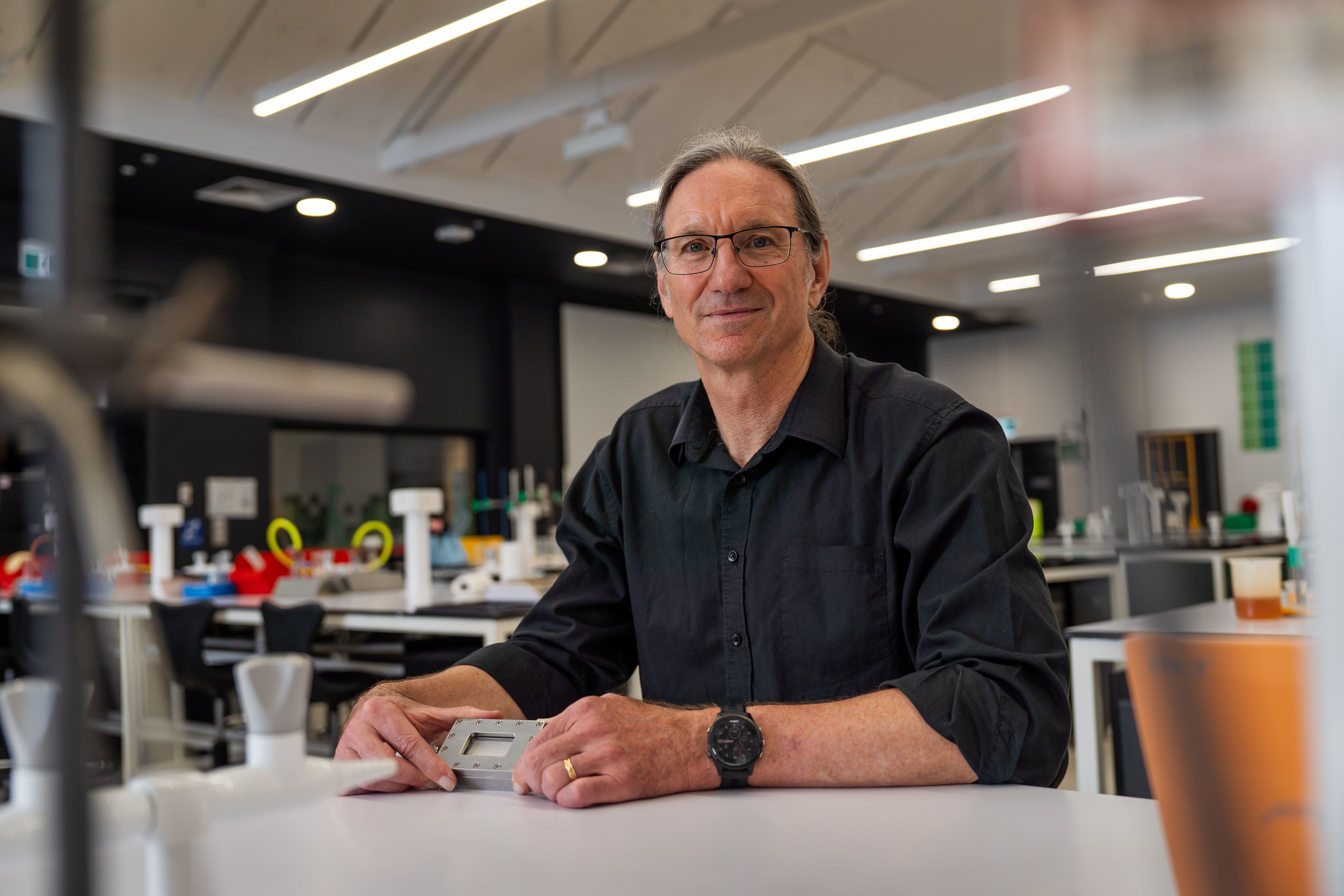
The research group behind the project, led by Adelaide University Professor of Chemistry Greg Metha, first produced hydrogen in 2021 using PWS, which uses only sunlight, water and a photocatalyst in the solar reactor. PWS is a novel alternative to the current process for producing green hydrogen, a method called electrolysis, which is prohibitively expensive because of the high cost of electricity and equipment.
With fossil fuel-derived hydrogen still substantially cheaper to produce, there’s no financial incentive for existing users of hydrogen to switch or for prospective users to go green. But Professor Metha says PWS will change that by providing green hydrogen that’s more sustainable and affordable.
“We've not only proven that it's possible to produce hydrogen from water this way, but we've also amplified the catalytic reaction in our reactor, enhancing its performance," says Professor Metha.
“We believe SHARP will be the only end-to-end hydrogen production system demonstrating photocatalytic water splitting in a concentrated solar field.”
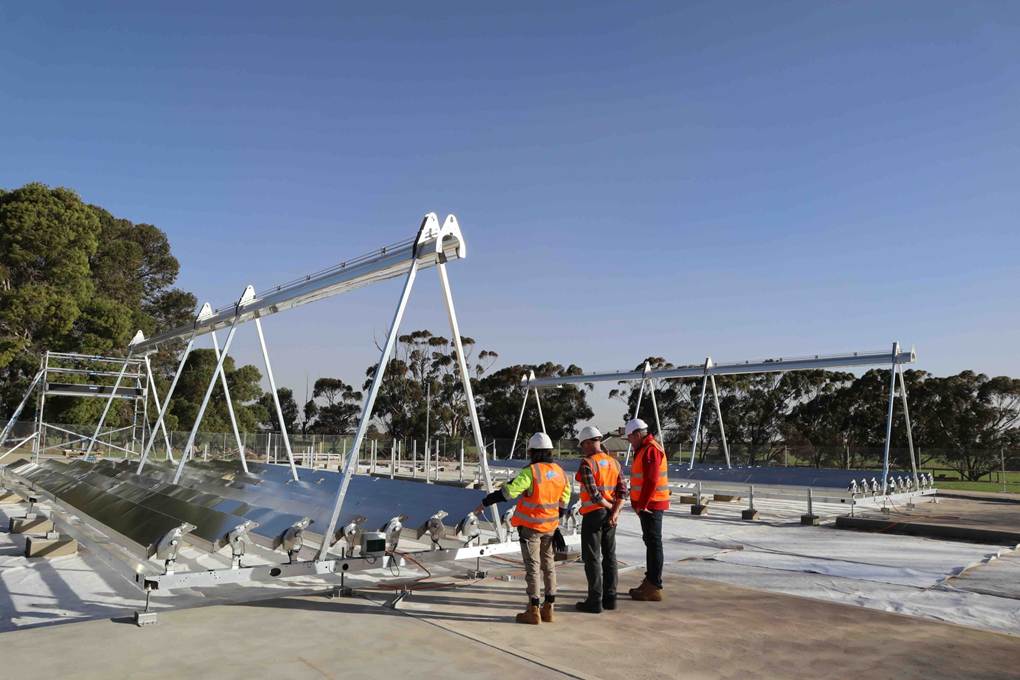
The team looks forward to scaling up this technology and establishing themselves as global leaders through the pilot plant.
“We’re one of very few groups progressing this game-changing technology globally, and development of the pilot plant at the Roseworthy campus will firmly establish our position as world leaders in PWS,” says Sparc Technologies’ Managing Director Nick O’Loughlin.
Now that the pilot plant has commenced, Sparc Hydrogen will move to further expand its modular, scalable hydrogen production system to a commercial level suitable for a variety of use cases. PWS is an emergent field, and Sparc Hydrogen is making significant contributions as both producers of affordable green hydrogen and developers of photocatalyst materials. International collaboration in this area is very strong; the team has signed a collaboration framework agreement with another leader, Shinshu University in Japan, and has materials from other groups under testing.
The advancements in hydrogen production serve as a powerful testament to how innovation can accelerate the transition to a carbon-neutral world—with Adelaide University’s research playing a pivotal role in this global shift.