ADVERTISEMENT
Universities are underused national security assets in the AI era
MI5 warnings that AI could ramp up biological threats should prompt a rethink of how the UK government views the sector, says Dan McCluskey
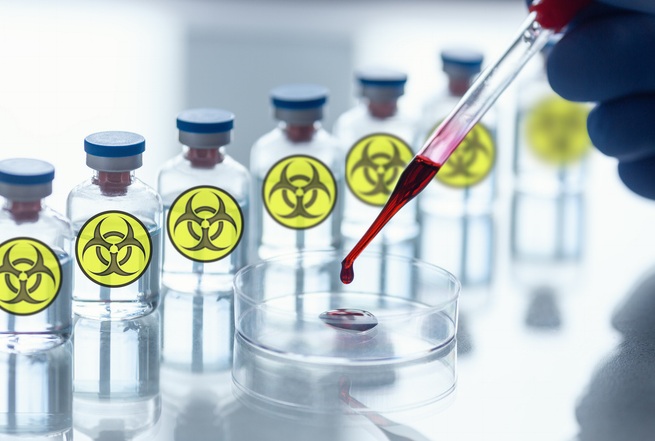
Source: автор/Getty Images
The UK spends billions on defence, intelligence and national security. Yet one of its most valuable strategic assets is rarely discussed in those terms: its universities.
When we think about national security, we tend to picture troop numbers, military alliances, weapons systems and nuclear deterrence. Increasingly, however, security depends on many things beyond the purview of the Ministry of Defence: the ability to anticipate emerging threats, develop new technologies quickly and draw together expertise from across multiple disciplines.
Recent warnings from MI5 director general Ken McCallum about AI’s potential to transform the biological threat landscape deserve particular attention. Covid-19 demonstrated how rapidly biological threats can disrupt lives, economies and public services. Officially responsible for more than seven million deaths worldwide, the pandemic highlighted the importance of surveillance, early warning and rapid response capabilities.
These things are even more important now. While the misuse of AI to create biological weapons has not yet materialised, its potential to accelerate the development of new threats concerns security agencies around the world.
Yet technologies capable of detecting airborne biological agents in real time remain relatively underdeveloped. During the pandemic, PCR and lateral flow tests proved invaluable but they were mostly reactive. We need large-scale environmental surveillance systems capable of identifying pathogens before widespread infection occurs.
ADVERTISEMENT
That is what we are developing at the Biodetection Technologies Hub, a £13.5 million consortium led by the University of Hertfordshire, alongside Cranfield University and the universities of Leeds and Manchester. Working with the MoD, researchers have developed advanced bioaerosol detection systems capable of identifying biological threats rapidly and accurately.
Importantly, the benefits extend well beyond defence. Technologies originally developed for security applications have already helped agricultural industries detect wheat pathogens that threaten up to 20 per cent of yields annually. Similar approaches are being adapted for use in healthcare, food production, transportation and public infrastructure.
This reflects a familiar pattern. GPS, satellite navigation and the internet all emerged from defence-related challenges before transforming civilian life. Biodetection technologies may prove no different, strengthening preparedness while delivering wider societal benefits.
But in the case of biological threats, detection technology alone is not enough. National preparedness requires expertise across biological sciences, engineering, data science, artificial intelligence and environmental monitoring.
Fortunately, the UK does not lack scientific expertise. World-leading capability exists across universities, government laboratories and industry. The problem is that these strengths are often dispersed across institutions, funded through separate programmes and only intermittently connected to national priorities. Universities are among the few places where multidisciplinary capability already exists on single sites.
Across the sector, universities are already contributing to national and global resilience in different ways. The University of Oxford’s Pandemic Sciences Institute is developing diagnostics, treatments, vaccines and disease control tools designed to improve preparedness for future outbreaks. At Imperial College London, more than 120 research groups are working across disciplines to strengthen pandemic preparedness, from disease modelling and surveillance to vaccine development and public health response.
Meanwhile, researchers across the University of Cambridge’s biosecurity and pandemic risk initiatives are bringing together scientists, policymakers and industry to better understand and prepare for emerging biological threats, including those amplified by advances in AI.
ADVERTISEMENT
All this demonstrates that the UK already possesses a distributed network of expertise, facilities and talent capable of contributing to national resilience. What is missing is a more systematic way of connecting that capability to national priorities and emerging threats. If future security challenges increasingly depend on scientific capability, universities must become a more deliberate part of national resilience planning.
This does not mean turning universities into extensions of government. Their independence remains one of their greatest strengths. But it does mean recognising that higher education institutions possess capabilities that are difficult to replicate elsewhere: long-term research capacity, specialist facilities, multidisciplinary expertise and the ability to develop the next generation of scientists, engineers and technologists.
A practical starting point would be a standing national resilience partnership, bringing together universities, security agencies, defence organisations, public health bodies and industry. Such a mechanism could identify emerging threats, map capabilities across the sector and rapidly assemble multidisciplinary teams around specific national priorities.
Universities should also be more routinely involved in technical scenario planning and resilience exercises. Bringing researchers into these discussions would help identify capability gaps earlier and focus research effort more effectively.
Just as crucially, it would strengthen relationships before the next crisis occurs – whether that emerges from nature, human error or malicious intent.
Dan McCluskey is professor of aerosol biodetection technology and dean of the School of Physics, Engineering and Computer Science at the University of Hertfordshire. He is also president of the UK and Ireland Aerosol Society.
Read more about

Related articles
Featured jobs
ADVERTISEMENT