ADVERTISEMENT
Ukraine’s universities are in survival mode – but corruption still thrives
Recent police raids underline that Ukraine’s longstanding culture of embezzlement appears to be bombproof, says Ararat Osipian
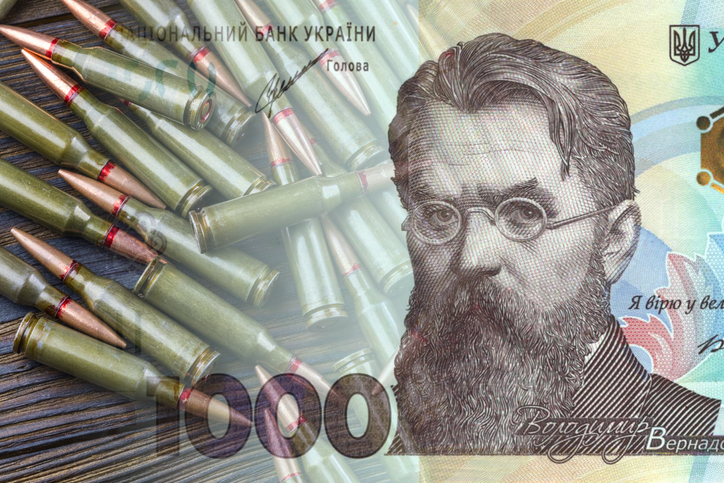
Source: Anton Petrus/Getty Images
Ukraine’s war with Russia may have entered its fifth year in February, but its war with corruption is far longer-running – and even harder to win.
The country is standing strong against the foreign aggressor thanks to the heroism of its defenders in the trenches. However, it is still failing to prevent many of its citizens from surrendering to their worst instincts when it comes to financial propriety.
Our political leadership continuously underestimates the threat corruption poses to Ukraine’s statehood as a whole, as well as to its different sectors, including higher education. The latter’s leaders are still busy collecting bribes and embezzling state money even as the missiles still threaten their campuses and the drones kill their alumni.
That said, official concerns about the number of ghost students – so-called dead souls – in Ukrainian universities resulted at the end of March in dozens of searches of the offices and residences of some top university administrators. These searches, conducted jointly by the police, prosecutors and state security services, marked the beginning of a higher education audit that is looking for an estimated £600 million in misused funds.
In the course of the action, the law enforcement agencies exposed embezzlement by a well-known Kyiv university. The Kyiv University of Culture allegedly submitted artificially inflated student numbers to the ministry in 2022 and 2023 – the first two years of the full-scale Russian invasion – in order to claim the funding that is allocated to each student. Local media pointed the finger at, among others, the institution’s just-retired ex-rector, Mykhailo Poplavsky, who has been the most recognised Ukrainian university leader for decades.
ADVERTISEMENT
Some of the money in question, without any doubt, comes from the World Bank. In late 2021, the bank finally came to the aid of Ukraine’s higher education sector with a project called “Ukraine Improving Higher Education for Results”, aimed at improving efficiency, quality assurance and transparency. The project came with an approved $200 million (£148 million) loan and in April 2022, right after the start of the aggression, about $90 million of that was disbursed instead as emergency relief, to cover stipends for university students.
Before alleging ghost students and fake enrolments en masse, it would be good to know the real number of college students in the country. But “real student” is not a straightforward concept in Ukraine either. At present, higher education institutions are filled with “students” who merely pay their tuition fees, in exchange for being listed on the university roster. As long as they pay, they stay, even if they attend no classes and sit no examinations – let alone pass any.
Some of the students-in-name-only are dodging the draft (from which students are exempt). Others genuinely need a diploma – but, given the widespread absenteeism, the institutional displacements and the mockery of mass online education, students are given a degree after four years regardless of their attendance.
Some of those online classes are never even held, never mind attended. The “ghost professors” supposedly responsible for delivering them may have fled abroad. Others are judges, prosecutors and other state bureaucrats who have been put on the payroll simply to claim the salary without any expectation that they should earn it.
Just recently, the Ministry of Education and Science outlined the Procedure for admission to higher education institutions in 2026. Higher education institutions, it announced, will be allowed to admit students based not only on the results of Ukrainian standardised tests but also on similar tests done in about three dozen other European countries. In best Soviet traditions, the order also presents the endless list of specialised degrees that universities may offer, including “work safety” and “publishing and typography”.
The need for such overly narrow specialisations remains unknown. The need to allow tests taken in other European countries, by contrast, is obvious: it is an attempt to facilitate the enrolment of Ukrainian students who live as refugees in the EU. Yet it is not clear that the concession is really necessary. In reality, Ukraine’s truly catastrophic demographic trends – a decline in the birth rate exacerbated by huge emigration, including among its youth – mean that its higher education institutions are ready to enrol anyone, with tests or without. They even advertise that fact to prospective students.
In short, Ukrainian higher education at present is characterised by an endless number of big and small problems with no viable solution at hand as long as the war continues – as it seems likely to do for many more years. It would be naive to expect a clear development strategy and meaningful institutional improvements while colleges and universities remain in survival mode, hoping for state budget funding and hunting for international grants.
ADVERTISEMENT
Perhaps the Kyiv University of Culture is just another example of a university drifting in that mode. Maybe Poplavsky is not so much villain as visionary. Yes, significant amounts of the misappropriated money apparently went into his pocket, but in Ukraine, universities and their top administrators are to a large extent one and the same thing.
The search for survival has washed away the already thin historical distinction between the public and the private, the institutional and personal. In that sense, an opportunity to help your university to survive is, at the same time, just another opportunity to embezzle.
Ararat Osipian is founding fellow of the New University in Exile Consortium at the New School, New York. He was a fellow of the Petrach Program on Ukraine at the George Washington University and Sustaining Ukrainian Scholarship fellow at New Europe College Institute for Advanced Study.
Read more about
Related articles


Featured jobs
ADVERTISEMENT