Medical professionals possess specialist knowledge that distinguishes them from laypeople. The same is true of police, lawyers and other professions. Yet few would argue that only doctors may investigate medical misconduct, that complaints against the police can only be investigated by other police, or that it is no business of those who use or rely on banks to ask questions if they fail.
Expertise is indispensable, but it does not confer exclusive jurisdiction over professional standards in institutions accountable to wider publics. Why should publicly funded universities be any different?
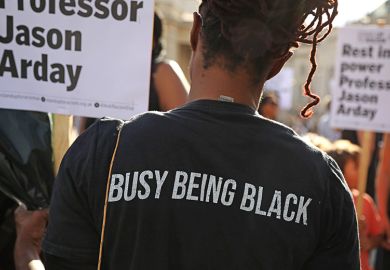
The aftermath of the Jason Arday affair has evoked harsh criticisms of intense media coverage. Yet this was how allegations concerning plagiarism and data, questions about scholarly quality and recruitment, and institutionally promoted biographical claims came to wider attention. Earlier attempts to raise concerns about the scholarship through academic channels had not resolved them. It is hard not to interpret some of the many attacks on the media from academics as a commonplace defence of a patch against outsiders.
Some forms of plagiarism can be identified without specialist disciplinary knowledge; placing passages beside one another can demonstrate it convincingly. Minor citation errors do not establish that everybody plagiarises to a comparable extent. Inadvertent mistakes are not the same as deliberate passing off of others’ work as one’s own.
In my experience of adjudicating academic misconduct, panels have generally excluded members of a student’s home department, in part to reduce possible bias. I have adjudicated cases in politics, economics and psychology, even though none of these are my primary discipline. The relevant competence was evidential and procedural.
Sociologist Thomas Gieryn’s concept of “boundary-work” helps explain how sections of academia can become siloed and defend their territories against both other disciplines and outside scrutiny. Professional boundaries can protect genuine expertise, but equally defend authority and resources against outsiders. What matters is what exactly is being protected.
Andrew Abbott’s sociology of professions is useful here because specialist expertise does not amount to complete jurisdiction over the work in question. Professions possess specialist knowledge but also make claims to control particular work, which are negotiated before legal, workplace and public audiences. The question is whether the expertise invoked genuinely bears upon the judgement at issue, or whether professional status is being invoked simply to enlarge jurisdiction beyond what the expertise can justify.
In an earlier Times Higher Education article, Abhishek Saha and I argued that academic freedom should not be restricted to a scholar’s supposed core expertise. Interdisciplinary enquiry requires researchers to cross boundaries, acquire unfamiliar knowledge, and bring distinct methods to bear upon problems. Their arguments should be judged by their cogency and rigour, not by the department to which the authors belong or the type of PhD they have.
A concern with standards asks whether the outsider’s argument is sound. Territoriality begins when the response is instead that the outsider has no business making it. Academia can be less concerned with adding to knowledge than protecting power, reputations and self-validating networks.
There is a further paradox that occurs in fields which purport to challenge inherited hierarchies of knowledge. Cultural studies, popular music studies, ethnography, oral history and participatory research have all, in different ways, taken seriously the knowledge and testimony of ordinary people rather than treating academics as its sole custodians. Yet professionalisation can create new hierarchies of its own.
A study by Hettie Malcomson of Mexican danzón aficionados describes a historian imploring an informed amateur not to question him at a conference, for fear his authority might be undermined. The aficionado consented and corrected him in private instead; the historian welcomed the amateur’s knowledge, but less so his judgement.
Nathan Young and Ralph Matthews similarly found Canadian aquaculture experts more receptive to lay participation when they retained control over knowledge than to independent lay interpretation of expert claims. Are non-academics welcome when supplying information, but regarded as overstepping once they begin assessing the conclusions academics draw from it?
The closure of some fields can be reinforced by political commonality. I have argued elsewhere that scholarship must not be dissolved into politics. Research into inequality or social justice is entirely legitimate; allowing the desirability of particular conclusions to outrank evidence and argument is not. It is in the latter situation that the input of outsiders who do not inhabit the same milieu or share the same assumptions may be most valuable.
The case of Arday may be exceptional in its scale, and of course its personal consequences, but nonetheless raises serious questions about the wider viability of internal academic self-correction. So far as is publicly known, the scholarly issues later scrutinised by the media were first raised within academia in 2023 by Dave Harris and Martyn Hammersley (see here for Harris’ files containing overwhelming evidence for Arday’s plagiarism), who approached the author, his university, the awarding institution and the relevant journals. Harris was reported to the police for his pains, as was journalist Jack Grove, and publication of the journalistic investigation was delayed for a period as a result of a Carter-Ruck letter.
Liverpool John Moores University investigated the allegations concerning plagiarism in Arday’s PhD but did not uphold them, attributing the problems to “honest and reasonable error”. The institution had reputational interests at stake (including possible implications for confidence in its doctoral assessment more generally), making independent scrutiny especially important; insufficient detail about the investigation’s scope and reasoning has been published to permit this. Cambridge initially declined to investigate the allegations concerning a 2018 paper, on the grounds that the research predated his appointment.
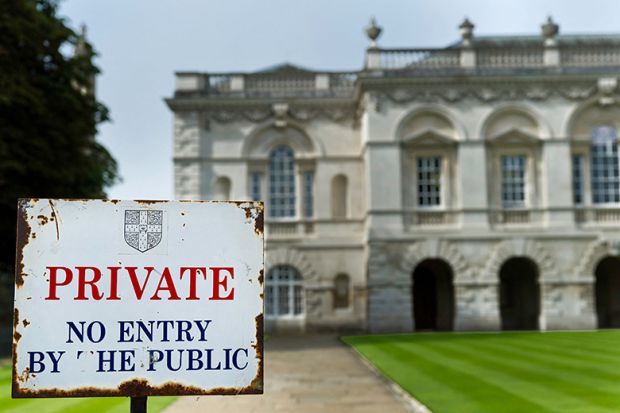
Universities are recipients of public money, confer valuable credentials which create value in wider non-academic fields, and actively promote their academics as authorities on public issues. They cannot invoke academic expertise when projecting authority into public life, then invoke the same expertise to resist public examination of the basis for that authority.
Nor is internal investigation the answer to every question, any more than in other institutions and fields. Peer review and disciplinary procedures are indispensable, but they are processes, not guarantees of truth. Universities are not disinterested parties and could hardly fail to consider the implications for their own reputation when scrutinising work for which they awarded degrees, or appointments they celebrated. This does not necessarily imply dishonesty but underlines the need for independence and transparency.
For these reasons, the Office for Students should play a role in the audit of academic-misconduct procedures, to assess their independence, consistency, treatment of complainants and comparability between cases involving students and staff. It should draw upon advice from the UK Research Integrity Office, or this body could itself acquire an audit function. And the regulators themselves must also be subject to legal and public scrutiny. Where scrutiny has been found wanting, the answer is to make it better, rather than insist on institutional immunity.
When academics seek to preclude external commentary, we should ask whether the real concern is the integrity of knowledge, or the protection of professional pride and intellectual vanity from unwelcome challenge.
Academic freedom protects scholarly inquiry from improper direction; it does not place academics’ work or institutions beyond external accountability. Autonomy for universities is not synonymous with immunity from wider examination.
Ian Pace is professor of music, culture and society at City St Georges, University of London, working with the department of sociology and criminology and the School of Policy and Global Affairs. He is also university advisor on interdisciplinarity. He is writing in a personal capacity. A longer version of this piece is available on his Substack page.
Register to continue
Why register?
- Registration is free and only takes a moment
- Once registered, you can read 3 articles a month
- Sign up for our newsletter
Subscribe
Or subscribe for unlimited access to:
- Unlimited access to news, views, insights & reviews
- Digital editions
- Digital access to THE’s university and college rankings analysis
Already registered or a current subscriber?