Chinese First Quasi-axisymmetry Stellarator Project

The Plasma Physics Team is devoted to the study of controlled magnetic confinement fusion. The team, based mainly on the Institute of Fusion Science (IFS), has signed a collaborative agreement in year 2017 with National Institute for Fusion Science (NIFS), Japan, to jointly construct the Chinese First Quasi-axisymmetry Stellarator (CFQS) in SWJTU, China. The IFS is the “Research Base of Magnetically Confined Plasma Physics and Engineering” approved by the “International Scientific and Technological Cooperation Base in Sichuan Province” in 2019.
Smart adhesive via magnetic actuation

Smart adhesives possess a wide range of applications owing to their reversibly and repeatedly switchable adhesion in transfer technology. Despite recent advances, it remains a technical and scientific challenge to achieve strategies for rapidly tunable adhesion in a non-contact manner.

Combining the disciplines of mechanics and applications, the group led by Professor Xiangyu Li from Southwest Jiaotong University has developed and designed a smart adhesive. The adhesive has the excellent performance of switching adhesion rapidly, reversibly, and reproducibly.

Serre presentations and Serre-Lusztig relations for i-quantum groups

A quantum symmetric pair consists of a quantum group and its coideal subalgebra (called an i-quantum group). A quantum group can be viewed as an example of i-quantum groups associated to symmetric pairs of diagonal type. Serre presentations, Serre-Lusztig relations (also called higher order Serre relations), and braid group actions are basic tools to study quantum groups.

Key technology and application of new generation traction power supply system for rail transit

As the only power source for electric locomotives in rail transit, the safety and reliability of the traction power supply system directly affect the quality and safety of transportation. The main problems of current traction power supply technology in China include uncontrollable power quality, discontinuous train power supply, and difficulty in identifying faults, etc.

Fundamentals of vehicle–track coupled dynamics

A framework was conducted to investigate the dynamics of overall vehicle–track systems with emphasis on theoretical modelling, numerical simulation and experimental validation by Prof. Zhai’s group at the school of Traction Power State Key Laboratory in Southwest Jiaotong University. This research was supported by National Natural Science Foundation of China (NSFC) and National Basic Research Program of China (973 Program).

AutoDwell

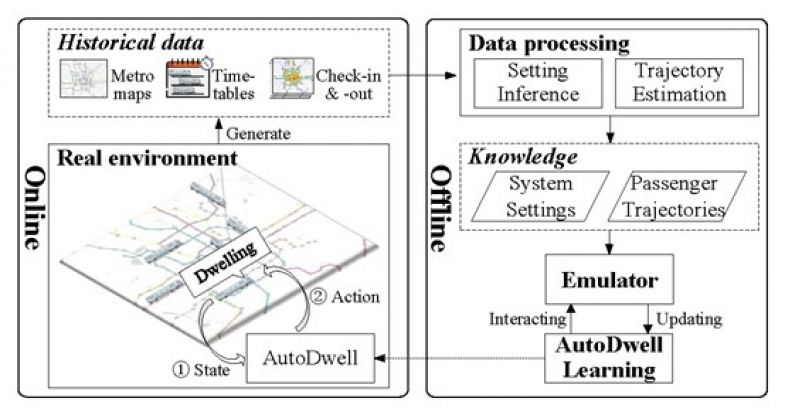
Research conducted by Zhaoyuan Wang has proposed a fine-grained, safe, and energy-efficient strategy to improve the efficiency of metro systems by dynamically scheduling dwell time for trains.

System framework

Promoting carpool for sustainable transportation

The past decade brought two major innovations to transportation: connected and autonomous vehicles (CAV) and transportation network companies (TNC) such as Uber and Lyft. The transformative impacts of these innovations have already been felt around the world, and are expected to continue to reshape the transportation industry. In the not-so-distant future, a significant portion of passenger trips may be served by CAVs, of which many would be shared through TNCs. Such a vision projects considerable benefits for the safety, efficiency, and accessibility of travel.

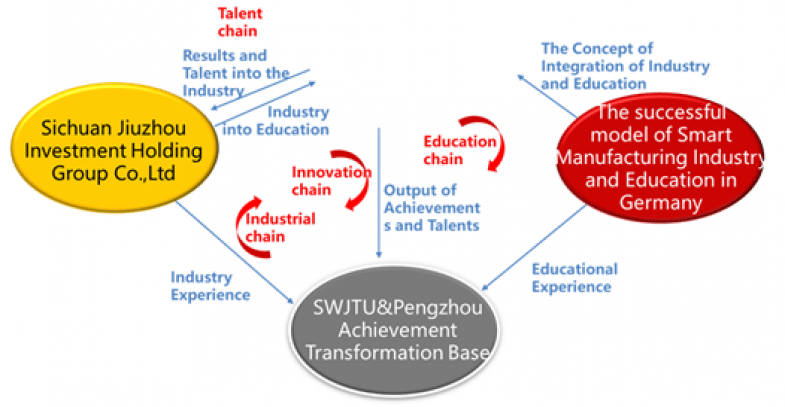
An intelligent manufacturing team won 40 million RMB funds for industry and education integration construction

 A team led by intelligent manufacturing scientist Guofu Ding has received a 40 million RMB (US$5,956,000) grant to further research and building into intelligent manufacturing technologies that can improve manufacturing efficiency and quality. Awarded by the Sichuan government, the funding will support the team’s work over two years.