Australia’s government is coming to the aid of the students most disadvantaged by its latest visa policy changes, by fast-tracking the processing of applications from people forced overseas to get visas to finish their courses.
Canberra may also change its method of assessing the financial resources of student visa applicants, amid unprecedented rejections of applications from South Asia.
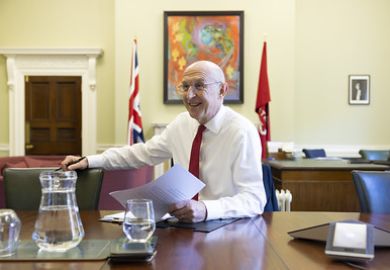
But “the intent of the changes won’t be watered down”, warned assistant international education minister Julian Hill, who flagged more action – including the suspension of international student recruitment at some institutions – to tackle the misuse of student visas as de facto work or migration tickets.
Hill said public universities had helped incite a crackdown that he estimated would cost them around A$2 billion (£1.05 billion) this year, due to an 18 per cent decline in their international student commencements.
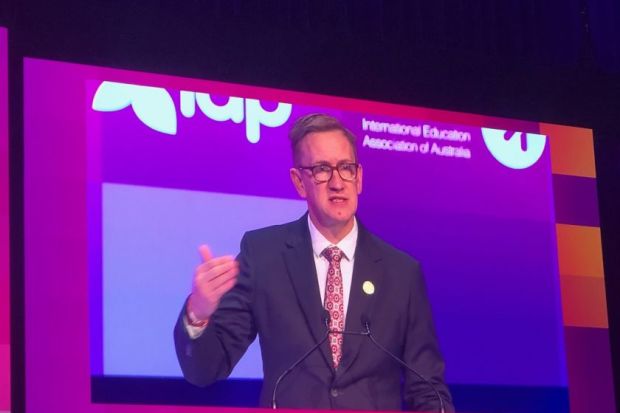
“Frankly, I would have preferred universities to have put forward more students who meet visa requirements,” he told the Australian International Education Conference. “That [lost income] hurts domestic students, staff and research.”
He said the impacts would have been worse under policies proposed by the opposition and One Nation, such as the opposition’s plans to abolish temporary graduate visas.
“It is…in Australia’s national interest to try before we buy in the labour market and have a chance to retain the cream of the crop, to give employers a chance at these highly skilled graduates,” he said. “Our aim is not to tank Australia’s sector, as some other nations such as Canada chose to do.”
But Hill said new rules requiring renewals of most student visas to be conducted outside Australia were “necessary” to curtail the growth in “permanently temporary migrants” who “hop from visa to visa” despite having little realistic prospect of permanent migration.
“[We want] to restore the norm that when you come to Australia for a temporary purpose…you do the thing you’re here for, and then you leave before your visa expires,” he said. “When Australians visit another country, they don’t believe they have a right to hop from visa to visa for years or decades and game other nations’ appeals and court systems. Neither should guests in our country.”
The new rules have particularly affected students who switched institutions and ran out of time to finish their courses before their visas expired. Under a newly established “triage” system, Hill has instructed his department to give the “absolute highest priority” to applications submitted offshore by students seeking visas to complete their degrees.
The aim is to process “complete straightforward applications” within five days, he said. Applicants should provide “clear evidence” that they are “genuinely progressing with their new provider”, Hill advised.
The government is also allowing students to apply for extension visas of up to a year, from within Australia, if they return to their original institutions to complete their courses.
But the conference heard that inflexible visa provisions within constantly changing policy settings were causing students a lot of problems. Shubh Barik, a doctoral candidate at UNSW Sydney, said a friend had been denied a two-month visa extension to complete some research after submitting her doctoral thesis.
“That research article is now going to be delayed two months, three months, four months,” he told the conference. “Maybe by that time, the…same research will be published somewhere else. There should be…flexibility to continue research even after your doctoral thesis submission date.”
Melly Arias, a postgraduate at Kaplan Business School, said overseas students wanted to “comply with the rules” but struggled to stay abreast of the rapid changes. “It’s really hard for international students…to choose a pathway because the rules might change tomorrow,” she said. “That uncertainty really affects international students.”
William Nguye, a UNSW teaching undergraduate who arrived in Australia as an international high school student, highlighted the “sacrifice” his Vietnamese parents had undergone to finance his eight years of study abroad. “You can imagine how many houses they had to sell…to afford my education here,” he told the conference. “I’m not visa-hopping, by the way.”
Hill acknowledged the pain experienced by students and institutions alike. “We must guard against an overcorrection and not drive away the high-quality students we want and need to attract.”
He said the high rejection rates of visa applications from South Asia were “actively deterring some of the very students we most want…because they’re terrified of a visa refusal that then hurts their chances of being able to study elsewhere”.
But soaring applications from “some of the poorest countries” invited scepticism, he said. “Simply put, there was no way on earth many of the students who…were being put forward could ever repay their student loans without getting a migration outcome.”
Bureaucrats and education sector representatives have drafted new arrangements for students to demonstrate their financial capacity. Those proposals, along with possible updates to the way immigration officials assess whether visa applicants are genuine students, are outlined in a newly released discussion paper.
International Education Association of Australia CEO Phil Honeywood said officials needed to take account of cultural factors when they assessed financial documents. People in many countries are reluctant to disclose their wealth to officials, often for security reasons, Honeywood said.
Hill said he was “actively considering” exercising Section 97 of the Education Services for Overseas Students Act, which empowers him to suspend international student recruitment at targeted institutions, “for the first time ever”.
He also foreshadowed “better regulation” of student transfers between Australian institutions.
Register to continue
Why register?
- Registration is free and only takes a moment
- Once registered, you can read 3 articles a month
- Sign up for our newsletter
Subscribe
Or subscribe for unlimited access to:
- Unlimited access to news, views, insights & reviews
- Digital editions
- Digital access to THE’s university and college rankings analysis
Already registered or a current subscriber?