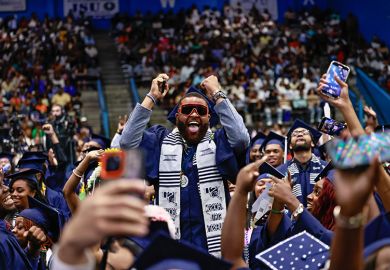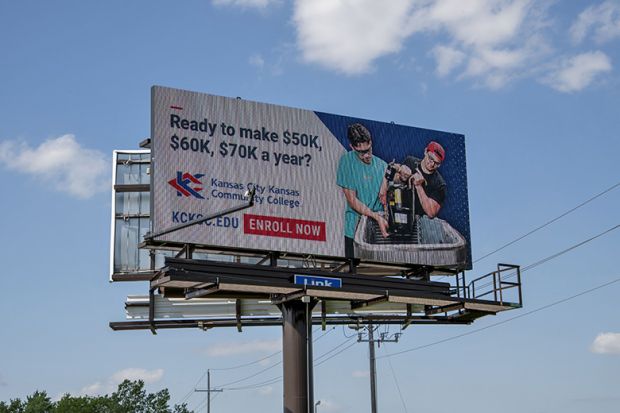
To longtime higher education observers like us, it is striking how hard US colleges and universities are working these days to show that their programmes propel their students towards economic and social mobility. Each institution may hotly insist on its own academic specialness, but most are now singing the same tune: “College is worth it!”
Yet however loudly that tune is being sung, it is evidently not being heard. A Gallup poll released in July revealed that only 38 per cent of Americans have a great deal of confidence in higher education. This is down from 42 per cent a year earlier and from 57 per cent in 2015. Other data show families less confident that their spending on tuition will produce a greater return. A 2025 survey revealed an 18 percentage-point decline in the proportion of families deeming tuition “a worthwhile investment”. And a just-released report from Cornell University highlights employer scepticism of higher education’s value and what that means for the future of the American university.
Why isn’t our message getting through?
Earlier this year, the College Board released Education Pays, a publication it has updated every three years since 2004. Education Pays presents a collection of data from a variety of sources that describe the benefits associated with earning a college degree by delineating differences in the earnings and employment characteristics of US adults with different levels of education. The publication also provides information on health-related behaviours, reliance on public assistance programmes, civic participation, and indicators of well-being for people with and without post-secondary credentials.
The subtitle of the publication – “The benefits of higher education for individuals and society” – makes clear the document’s emphasis. The overarching narrative, whispered more than proclaimed, stresses that American families should feel confident that an investment in college for their sons and daughters is more than a good bet; it is an implied insurance policy against bad life choices.

We single out Education Pays not because it is unusual but because it captures the broader way higher education now tends to defend itself. It is similar to other publications and analyses readily available from research entities and foundations, as well as state and federal agencies. However, the message is oddly out of sync with most Americans – who, by the way, do not have a college degree.
Those Americans are fearful – and data underlines how vulnerable ordinary individuals are to a variety of economic shocks. Most working adults have suffered through decades of stagnating wage growth, combined more recently with high rates of inflation. They have less opportunity than in previous decades to move up from one social class to another. If they are in the lowest income quartiles, it is likely that their children will stay there as well. And the middle class – the vaunted sector of US economic pre-eminence and national pride – is shrinking.
Ironically, these economic realities play out badly for higher education – long the trusted weapon for ameliorating class division. Its presumed cost, worries about lifelong student loan debt, and doubts about the usefulness of post-secondary credentials in the labour market all caution poorer families against reaching for that weapon.
Higher education’s current shared narrative represents a response to such worries, seeking to reassure doubtful high-school diploma holders that the “college premium” remains an ironclad outcome. And this collective effort to articulate higher education’s value by more explicitly connecting its credentials and programmes to career outcomes is understandable. Indeed, critics argue that it is long overdue. Students and their families benefit from increased transparency about what credentials cost, so institutions, especially public ones, must better signal the accountability that policymakers have always demanded.
Yet there’s a potential problem if our rhetoric ties the value of higher education too tightly to individual economic outcomes, in the form of higher wages and all the individual benefits that these bring.
Of course, individual advancement, broadly defined, has always been a part of the post-college equation, despite higher education’s inconsistent ability, until recently, to explicitly link programmes with career outcomes. Even if our undergraduate Philosophy 101 professor urged us to find a meaningful pathway through life – bless her – all of us were more than a little worried about how we would pay our bills after graduation.
The allure of “Go to college, get a better job” is seductive. It has certainly inspired the Department of Education’s proposed prohibition of federal student loans for programmes whose graduates do not consistently earn as much as high-school graduates. But this thinking is limiting for both colleges and students. However well and accurately we articulate the individual benefits of earning a degree, defining higher education as a credential machine for those able and willing to pay to play will not sustain it in the long run.
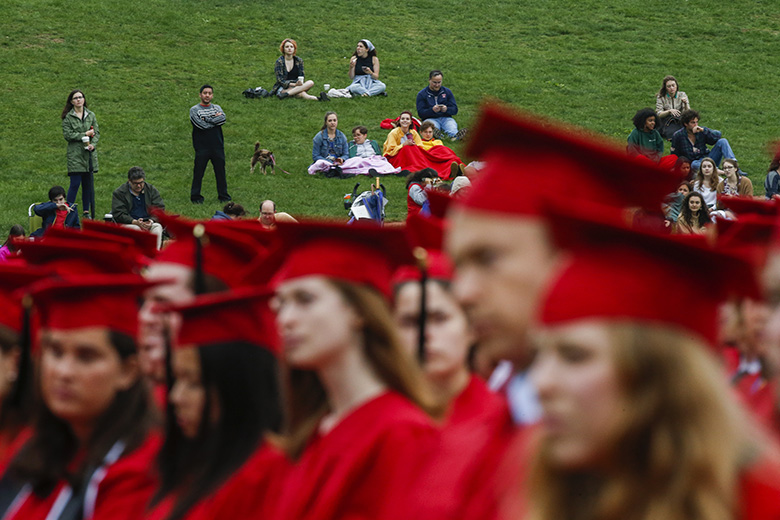
Sustainability depends on broad-based support – from those who do not hold and will never pursue a bachelor’s degree as much as from those who have one. If Americans see college only as a mechanism for individual success, there is no incentive for non-college goers to provide tax support to higher education. Why should I support higher education if the only people who benefit are those who go to college and are likely already more privileged than I am?
So how should we talk about the expansive benefits of post-secondary education?
Not the way we’re doing it now.
Today, the explanations we use to justify the need for widespread support of post-secondary education could not be more off the mark for most Americans. If you look at any of the reports that discuss the value of college, including Education Pays, they often show correlations between a college degree and a variety of beneficial outcomes. For example, if you have a college degree, Education Pays’ datasets confirm that you are more likely to
- Vote
- Stay out of prison
- Remain fully employed
- Send your children to preschool
- Spend time with your preschool children
- Secure health benefits from your employment
- Pay higher taxes
- Be part of a retirement plan
- Volunteer
Even for individuals, some of these benefits are a little incidental or dubious. Do we really believe a person needs a college degree to vote? Did we go to college as insurance against the possibility that we might spend time in the slammer? Is paying higher taxes really a benefit, especially if you are simultaneously paying off your student loans?
Worse, people who do not go to college can only receive such messaging badly. They probably don’t want to hear that democracy risks being undercut by people like them. They are perhaps resentful that graduates get better health and retirement benefits. And we suspect they are more than faintly annoyed to be told that others will be better parents because they went to college.
We need to offer a more compelling story about the fact that graduates of post-secondary education help sustain everyone’s way of life in America – not just their own. We don’t have to look far to offer evidence of this. Colleges train all the teachers who educate our children and all the doctors, nurses and paramedics who treat us when we are sick. It is hard to argue that we will need fewer of these professionals in our ageing future. The airline pilot who got you safely to your recent vacation venue was required to go to flight school, thank goodness. Your local electrician, welder or plumber may not have a bachelor’s degree, but it’s a good bet they attended a local community college to earn a certificate that supports their vocation.
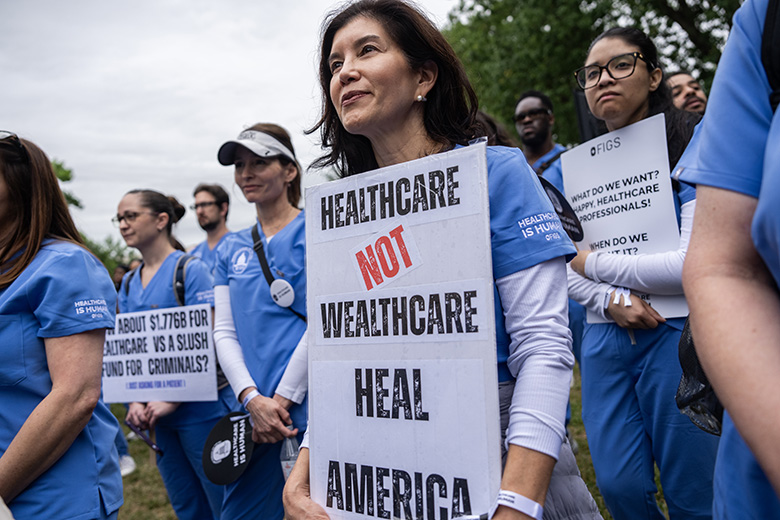
These points may seem obvious, but they are too easily overlooked in an era when universities are seen, in some quarters, not only as excessively expensive purveyors of an earnings promise that may not be kept but also as bastions of a socio-political mindset that looks down on Americans with lower levels of education. As higher education advocates, we need to distance ourselves from the comfortable and self-satisfied notion that college degrees create better people.
We must do far more to emphasise that our purpose is not to extort, divide or sneer but to advance our collective well-being as a nation, both economically and socially, by training the people who build the infrastructure of our nation and foster the communities that sustain our social fabric: the engineers who build our roads and bridges, the pharmacists who fulfil our prescriptions, the accountants who do our taxes, and the mechanics who fix our cars. The list goes on and on.
Yes, education pays and individuals do well over the course of their lifetime as a result of graduating college. But this lifting up of individuals is only possible because of the tax contributions and support of all Americans. If we neglect to convince all constituencies of that then everyone will ultimately suffer for it.
Stephen J. Handel has over three decades of experience in post-secondary education admissions, enrolment, student affairs, and policy analysis. He writes regularly on higher education topics. Eileen L. Strempel served as the inaugural dean of the Herb Alpert School of Music and as a professor of education at the University of California, Los Angeles. Views expressed in this essay do not necessarily represent those of the authors’ current affiliations.
Register to continue
Why register?
- Registration is free and only takes a moment
- Once registered, you can read 3 articles a month
- Sign up for our newsletter
Subscribe
Or subscribe for unlimited access to:
- Unlimited access to news, views, insights & reviews
- Digital editions
- Digital access to THE’s university and college rankings analysis
Already registered or a current subscriber?