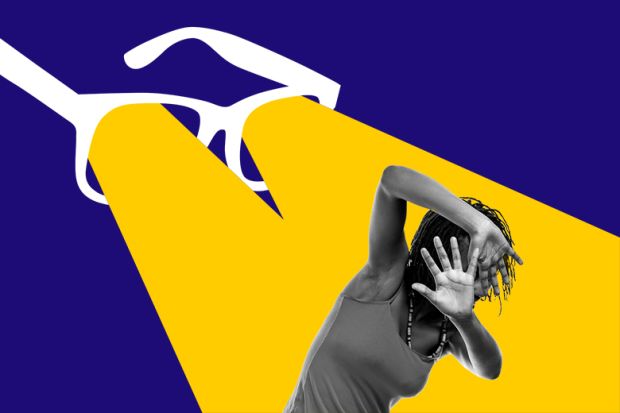
For Andrew Murray, dean of the London School of Economics’ law school, the strangest thing about the rapidly rising popularity of wearable technology is the lack of public backlash.
When Google released its Google Glass headset to the British market in 2015, the product was pulled just seven months later, in response to a tidal wave of concerns around how its integrated video camera might violate privacy laws. “Now, Meta glasses have come out – the same product in many, many ways – and there doesn’t seem to be the same response,” Murray said. “The public response seems to be: ‘This time, we’re willing to do it.’”
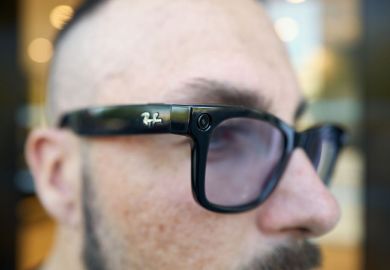
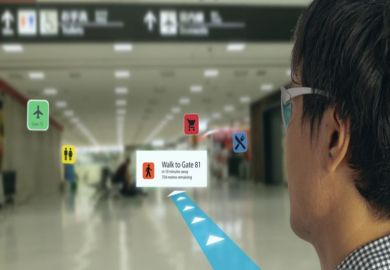
Smart glasses can superimpose information on to a viewer’s field of vision, and they can access apps and communicate with your phone. Some are hands-free while some require touch, and some also respond to voice automation. Most controversially, they can take pictures and record footage, potentially without anyone else knowing that it is happening. And they are becoming ever more common. The global smart glasses market grew by 139 per cent year-on-year in 2025, with a horde of young celebrities and influencers modelling the technology for Meta, one of the major manufacturers.
Murray, a professor of law specialising in new media and technology, told Times Higher Education that regulatory enforcement appears weak when it comes to smart glasses, and he has a particular concern around personal data protection. But, for academia, the biggest issue associated with smart glasses may be a decline in intellectual risk-taking and freedom of expression, Murray said.
“If I’m taking part in a debate on campus and I say something which could be controversial [if heard outside the particular debate’s context] – for example, in discussing the legal framework in war, I mention something to do with Israel and Gaza – there’s a real danger someone could record it and edit the context in which it was said,” he explained. “That makes it really difficult for educators and for everyone.”
Campus spotlight guide: Dealing with division – the polarised university
More broadly, the “very fact of recording changes people’s activity”, Murray said. “It’s a well-known area in surveillance studies. If you’re being observed, you will change your demeanour and activity.”
That is likely to apply to both academics and students, according to Jane Freeland, a lecturer in history and feminism of the 20th century at Queen Mary, University of London.
“When you’re trying to create a space for students to learn and take intellectual risks and all of a sudden you have this potential that they could be recorded without them knowing, it undermines the entire purpose of trying to teach and educate at universities,” she said.
Those whose teaching involves “hot-button issues, whether that’s trans rights or feminism or women’s rights”, could be particular targets for those looking to misuse the technology, Freeland predicts.
In the US, there has already been some high-profile fallout from covert recording in academia. One psychology instructor, Chris Schulte, was fired by Coastal Carolina Community College after footage emerged showing him calling the right-wing organisation Turning Point USA and its assassinated founder Charlie Kirk “racist”.
“Certainly, what we’re seeing out of North America is that these spaces are becoming really politicised,” Freeland said. “So in that context, I think in the UK it is time for us to think about how to prevent that from happening.”
Lynsey Metcalfe, case management officer at the UK-based Free Speech Union, said the pressure group hadn’t yet seen “any direct examples” of covert recording. Nonetheless, she also fears that seminar discussions will become “sterile and unproductive” as smart glasses become more widespread: “At the FSU, we see many cases where students and academics have got into trouble for things they have posted on social media, leaked WhatsApp chats, more conventional recordings and so on. So it is quite possible that any new technology, if widely adopted, would be used by the enforcers of cancel culture [to target academics and students who express views with which they disagree].”

One of the staunchest criticisms levelled at smart glasses is the risk of sexual harassment. In the UK, women have already had to report videos of themselves to the police that were captured by smart glasses without their consent. That is an issue that is likely to rear its head on campuses, too.
Teaching around sexual violence is also likely to be made harder by smart glasses, according to Tanya Serisier, professor of feminist theory at Birkbeck, University of London.
“Teaching and learning around sexual violence, but also issues of sex, sexuality and gender identity, require being able to create spaces where students can speak about potentially difficult or upsetting topics and also where students try to think through or about their own experiences,” she said.
“In these contexts the possibility of covert recording or filming creates possibilities for harassment of staff and students in the way that survivors of sexual violence or harms who are in the public sphere or on social media often experience. So it is a real concern for teaching around these issues even though they are core to many areas: law, criminology, gender and sexuality studies, sociology, media and much of the humanities.”
The ability to contribute fully to intellectual exchange also depends on feeling respected and safe more broadly, Serisier argued.
“It’s been a really common phenomenon in many universities for women, both staff and students, to be graded for ‘hotness’ on social media,” the professor said. “So in this sense it becomes an issue for the full participation of students in education.”
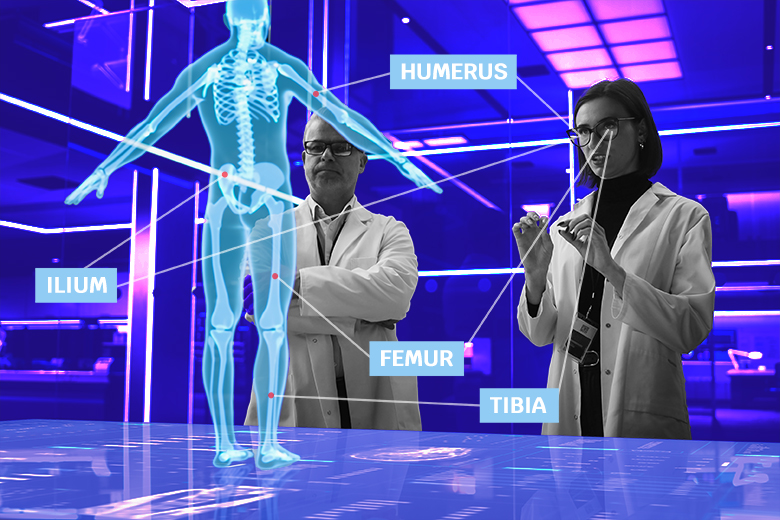
With all this in mind, it may seem surprising that the thought of smart glasses on campus should inspire optimism. But both disability advocates and educational technologists are excited by their potential to improve learning.
In an evaluation published earlier this year, a team at City St George’s, University of London, acknowledged the accessory’s possible contributions to a “surveillance environment” but also reported that smart glasses “could add value” to teaching in “very specific, well-designed use cases”. For instance, “in laboratory, clinical, or technical settings, being able to access information without handling a device could reduce disruption during practical work”. For instance, “research in medical education has shown that smart glasses can enhance procedural training and enable real-time observation of complex tasks, such as surgery.”
But the greatest positive impact of smart glasses is likely to be on those with additional learning needs and access requirements, according to Helen Nicholson-Benn, subject specialist for assistive tech at Jisc, UK higher education’s technology body.
“This is technology that could be really supportive,” Nicholson-Benn said, noting the glasses’ captioning and note-taking capacities. But she worries that media attention around covert recording is making smart glasses “quite a stigmatised technology, [which is] putting disabled users in quite a difficult position as well”.
John Kelly, a regulatory specialist at Jisc, feels that the privacy concerns about the technology are perhaps overblown in a higher education context because they are “something that universities can cope with and can manage”, just as they manage inappropriate use of smartphones.
“The profile of the risks [has] to be raised, but I think there are probably enough laws and regulations in place to deal with it,” he said.
But Murray remains baffled at how society’s toleration of intrusion seems to increase as intrusive technologies advance.
“It’s the same kind of strange acquiescence that leads us to sit in a Tube carriage and allow people to play music with their speakers on,” he said.
“Theoretically, an individual [now] has more freedom to survey than an MI5 operative, which is a scary situation we’ve ended up in. I’m really worried about how deregulated this space is.”
As the technology enters the mainstream, the potential for that to interfere with academic learning is becoming increasingly clear.
Smile, you’re on (hidden) camera! We need to talk about smart glasses on campus
Being now widely available and affordable, smart glasses are soon coming to a campus near you. And that’s a problem, especially as most institutions have spent very little time thinking about the risks this poses.
There are a variety of positive use cases for smart glasses. They can potentially augment learning, especially for practical tuition. They can also be an assistive technology for blind and partially sighted users. Yet they also pose acute challenges to privacy and safeguarding.
Smart glasses look like conventional glasses. And while most reputable manufacturers include small flashing LED lights on their frames to indicate they are recording, cheaper and less reputable providers often don’t. And some deeply disreputable providers offer modifiers to disable the flashing lights or provide stickers to help conceal them.
The covert nature of hidden recording presents obvious ethical concerns. At the most egregious end of the spectrum is the deliberate “ambient capture” of highly sensitive and intimate personal data. And there are specific risks for universities that go well beyond the most obvious risk of cheating and academic misconduct.
Lecture recording has long been an established accommodative feature of university learning design. However, the unlimited scope of covert recording via smart glasses provides new layers of risk that should concern us.
From a learning perspective, in-class participation is already difficult to facilitate. This is often attributed to the perception of psychological unsafety and growing student perfectionism. Good learning happens through encounter and exploration. Mistake-making is part and parcel of that experience. But fear of the total covert capture of all classroom proceedings will only further undermine students’ willingness to risk making a mistake.
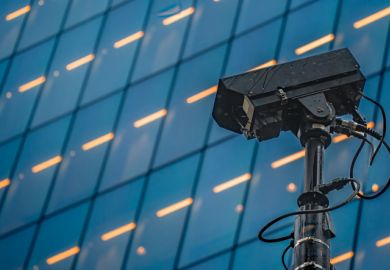
And while what we might call the datafication of the student experience has already been largely completed, technological attendance/engagement tracking systems supplementing lecture capture, plans to integrate additional facial recognition technology into smart glasses could further deepen disquiet around campus surveillance and border politics. Given these glasses companies’ already vast data collection capabilities and their high capacity to link images to faces, names, workplaces, universities and personal profiles, the risks to personal privacy are obvious. This would be especially worrisome if these technologies were repurposed or hacked to target vulnerable communities or discourage political expression.
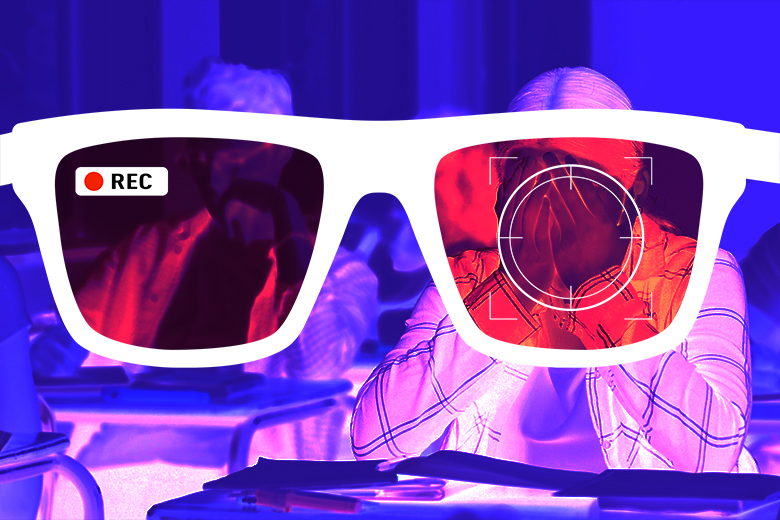
Of course, staff are surveilled too, and the total capture of all staff-student interaction has the potential to turn incidental sociality and conversation into new sources of reputational and legal risk. And not only in the short term: off-the-cuff comments and in-class casual advice would continue to pose a risk years after the event since they could be re-examined at any time by malign actors.
Smart glasses have already been used by students to harass staff and undermine their professional reputations, such as by rage-baiting them on a livestream and provoking them into making controversial comments which can then be mocked. The voyeuristic provocateur streaming genre is already rife among several digital political cultures as the so-called culture wars intensify.
Lastly, and most significantly, the potential total recording of university life, both on and off campus, presents real and new safeguarding risks for the university community at large. There is already significant evidence that covert recording on smart glasses is intensifying the harassment and harm of women online, and schools are already noting how wearables are reshaping and intensifying bullying and harassment. There is no reason to think university students will be spared from the potential expansion of both gendered and non-gendered harassment.
Despite all this, however, strategies to deal with smart glasses use within higher education remain almost non-existent, especially beyond the academic integrity context.
That, of course, is also true of smart glasses use more widely on campus. This needs to urgently change – with the development of a wider pastoral smart strategy an essential first step. If we don’t begin to take seriously these real risks to campus life, we shouldn’t be surprised when our students don’t either.
Kieran Phelan is an assistant professor in human geography at the University of Nottingham.
Register to continue
Why register?
- Registration is free and only takes a moment
- Once registered, you can read 3 articles a month
- Sign up for our newsletter
Subscribe
Or subscribe for unlimited access to:
- Unlimited access to news, views, insights & reviews
- Digital editions
- Digital access to THE’s university and college rankings analysis
Already registered or a current subscriber?