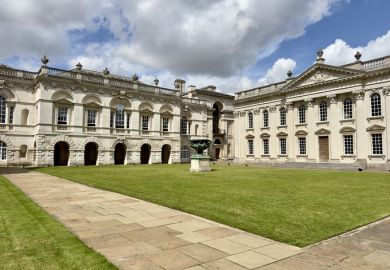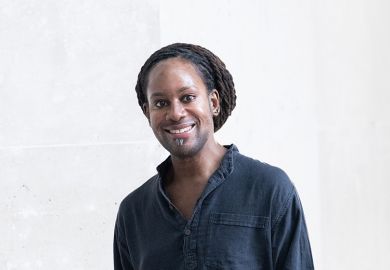
A University of Cambridge “whistleblower” who raised concerns about bullying has won his case at employment tribunal, with vice-chancellor Deborah Prentice among the senior leaders criticised over their handling of the matter.
The bulk of complaints raised by astrophysics professor Wyn Evans were upheld in a judgment released on 10 August.
The academic had claimed he was victimised after raising concerns about the treatment of female staff members within the university’s Institute of Astronomy (IOA).
His tribunal, held in Bury St Edmunds earlier this year, heard how the university had taken “almost two years” to dismiss a grievance later raised against Evans and two other professors by the former IOA director, Richard McMahon.
Evans, who stood to be Cambridge chancellor in an election last year, was disadvantaged despite making “protected disclosures” under the Employment Rights Act, the tribunal concluded.
Although the judgment is careful to note the tribunal has neither the authority nor the ability to “conduct a public inquiry into alleged bullying or misogyny within the IOA”, it finds that Evans was convinced the concerns he was raising were indeed in the public interest.
It finds that leadership within the IOA and the university failed to consistently demonstrate how they reached the decisions they did throughout the dispute, asserting that “pre-determined outcomes appeared to have been rubber-stamped”.
A “pattern of ghost writing and HR making other people’s decisions for them” was found to be “standard practice” within the university’s HR department “given how often it happened in this case”.
The judgment called Cambridge’s handling of the matter “beset by repeated delay” and said the university had been unaware of the impact the “fitful” process had on all involved.
“Allegations against the claimant were accepted and subjected to a prolonged nearly two-year investigation by the university even though they contained scant particularisation, and no evidence to support them,” the judgment says.
“By contrast, a number of the claimant’s detailed concerns or complaints were dismissed out of hand without a proper process.”
At times, the judgment suggests vice-chancellor Prentice’s role in the proceedings was lacking in oversight or scrutiny, saying: “It did not appear to us that many steps were taken to understand the history of the matter.”
Prentice failed to take sufficient action in respect of Evans’ grievance, the tribunal found, saying it was instead “summarily rejected, without serious consideration”.
There was a “clear pattern of trying to shut down the claimant’s complaints, and to protect the university from any possible damage arising out of the claimant’s protected disclosures”, the judgment says.
Of Evans’ 14 complaints, 11 were upheld, although he did not manage to convince the tribunal of three others, including that he had suffered personal detriment when the university used its insurance to support IOA leader McMahon in a previous defamation hearing in 2023.
In response to the judgment, Evans called on Prentice to consider her role – saying that, together with her handling of the recent plagiarism allegations made against its former academic, Jason Arday, her position is “untenable”.
“Taken together, these events raise a fundamental question: is Deborah Prentice actually in control of the university she is supposed to lead?” Evans said.
“She appears to have neither a clear grasp of what has been happening nor an independent power base within the university.
“Instead, she risks becoming dependent on the very senior leaders she is supposed to challenge, scrutinise and hold to account. That is an untenable position for a vice-chancellor.”
In response, Cambridge said in a statement that it acknowledged the judgment and was “carefully reviewing it”.
“We will now take time to reflect on the findings in detail.”
The matter will now proceed to a remedy hearing in which the parties will agree the level of compensation for Evans.
Register to continue
Why register?
- Registration is free and only takes a moment
- Once registered, you can read 3 articles a month
- Sign up for our newsletter
Subscribe
Or subscribe for unlimited access to:
- Unlimited access to news, views, insights & reviews
- Digital editions
- Digital access to THE’s university and college rankings analysis
Already registered or a current subscriber?