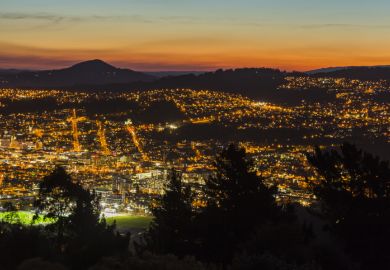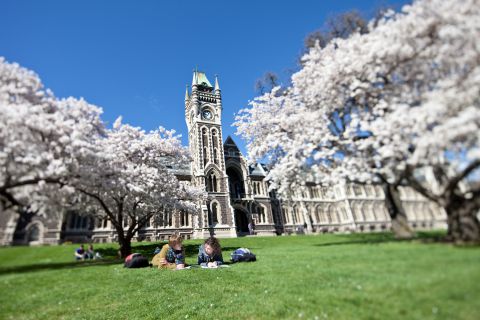
Students have been blamed for electricity grid failures in New Zealand’s chilly university city after maxing out free power deals.
Radio New Zealand reported that households in Dunedin’s notorious student precinct were being left “cold and in the dark” after overloading the electricity supply, forcing dozens of repair crew callouts.
The region’s power distributor, Aurora Energy, said free electricity deals were increasing demand in the area between 9pm and midnight, and the network could not handle the spikes.
Some household power policies include gratis slots during off-peak periods. Retailer Electric Kiwi, for instance, allows customers to nominate 60 minutes of free supply during business hours or overnight.
“Not much is free these days, but all our plans include a free hour of off-peak power every day!” marvels an online explainer of the company’s “hour of power” deal. “All electricity used during that hour each day is free! Put on the washing machine, dryer and dishwasher all at once – it’s on the house.”
Price comparison site Powerswitch said students were overdoing it. “Clusters of student flats are getting on the free hour plans and then going nuts,” manager Paul Fuge told RNZ.
“It’s sort of like a smorgasbord, right? You’ve paid a set amount, and you can eat as much as you want. Just because it’s free, they can turn everything on. So they do. It’s the equivalent of…putting on 14 one-kilowatt heaters in your house – it would basically blow the fuse.”
Fuge said it was generally desirable for households to maximise their power use during off-peak times. “This is kind of an extreme case, and particular to the…students of Dunedin.”
Aurora told RNZ that householders should stagger usage, start later or cut back on heavy appliance use during their free hours. It said one retailer was now “on-charging” customers for callouts, which could cost hundreds of dollars, if they continued to cause outages.
“You have got to be kidding me!” raged Hamish Rennie, an associate professor of environmental planning at Lincoln University. “A company sets up a scheme to attract users. Then when the users use the scheme as designed, the company blames them for it not being able to deliver?”
Satirical website Pavlova Post said Dunedin’s student households had made “an important contribution to New Zealand energy policy” by pinpointing “the exact point at which free electricity becomes so successful it deletes itself”.
“Student flats have a long and distinguished history of treating any efficiency signal as a speedrun,” Pavlova reported. “A certain type of flat has seen the phrase free power hour and interpreted it not as a pricing incentive but as a personal challenge.
“A flat collectively concludes that the heater should be on, the washing should be done, the dryer should be going, the dishwasher may as well run, someone’s electric blanket can preheat, two laptops can charge, a shower can happen, and whatever mystery appliance lives beside the toaster should also be given a crack.
“The power industry may call this a demand spike. A Dunedin flat would call it getting organised.”
Register to continue
Why register?
- Registration is free and only takes a moment
- Once registered, you can read 3 articles a month
- Sign up for our newsletter
Subscribe
Or subscribe for unlimited access to:
- Unlimited access to news, views, insights & reviews
- Digital editions
- Digital access to THE’s university and college rankings analysis
Already registered or a current subscriber?