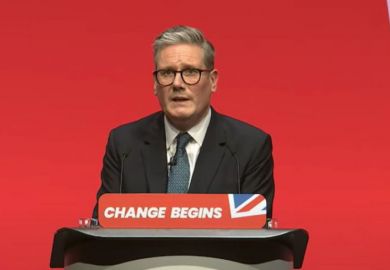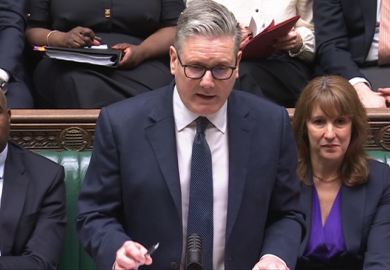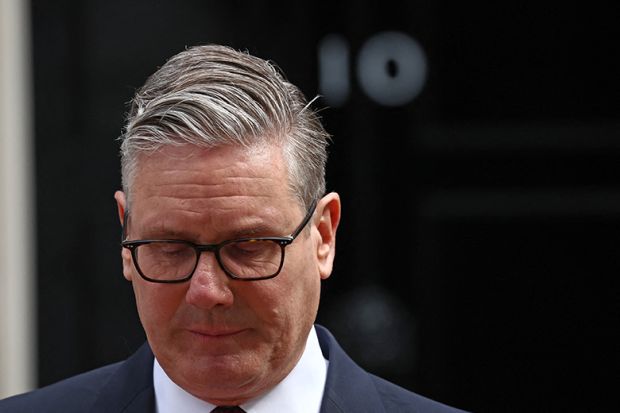
The departure of Keir Starmer is unlikely to bring much change for cash-strapped universities, with commentators suggesting the prime minister’s legacy will be marked by a lack of ambition for the higher education sector, despite his government’s bold rhetoric.
The UK prime minister announced his resignation on 22 June, laying the groundwork for a leadership contest that will see a new leader in place by September. Former Manchester mayor Andy Burnham is the current frontrunner, with ex-health secretary Wes Streeting having formally stepped aside.
Prior to his electoral victory in 2024, Starmer promised to create a “secure future” for the UK’s higher education sector as financial problems mounted.
But two years on, his government is widely seen as having prioritised other areas, including vocational education and youth unemployment, leaving universities to fend for themselves while adding to the sector’s financial problems through increases in national insurance, the creation of a new international student levy and cuts to direct funding for teaching.
“In many ways, for a Labour government whose base is incredibly graduate heavy and a lot of whose MPs represent university seats, it’s sort of almost the antithesis of what you’d expect them to do,” said Jonathan Simons, head of education at Public First, noting this was perhaps due to the party’s strategy of chasing non-graduate, right-wing-leaning voters.
Many of those voters are now widely seen as having shifted to support Reform, while much of Labour’s traditional urban, graduate base – who politicians had banked on having nowhere else to go – appear to be supporting alternative parties, including the Greens.
In October 2025, Starmer’s government released its long-awaited post-16 skills White Paper – a plan for reforming the tertiary sector that many hoped would offer a sustainable settlement for universities, or at least come up with an insolvency regime for bankrupt universities.
Although universities welcomed the unfreezing of tuition fee caps that was unveiled in the paper, Diana Beech, director of the Finsbury Institute at City St George’s, University of London, said “the sector’s underlying problems remain unresolved”.
“Starmer’s premiership was more about managing higher education’s problems rather than solving them,” she continued.
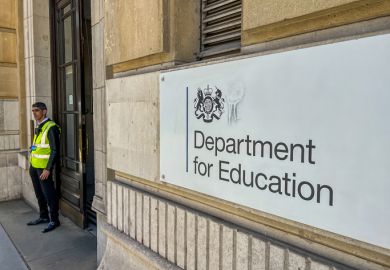
Nick Hillman, director of the Higher Education Policy Institute, noted that many in the sector were “disappointed by the level of ambition” in the paper and that it was stymied by the lack of a legislative vehicle, with the Department for Education (DfE) so far unable to secure any parliamentary time to pass the related legislation.
“More than six months on, the sector is not really talking about the White Paper all that much,” he added.
“In the end, Starmer’s legacy is likely to be one of continuity rather than change,” said Beech. “Yes, he bought universities some more time, but he did not bring them any answers.”
Hillman added that, in recent weeks, the DfE has started to hint at some “harder-nosed policies”, including exploring introducing minimum entry standards for universities.
Hours before Starmer’s resignation, the department also shared a statement saying ministers will “unveil plans to crack down on poor‑quality university courses and shift investment further towards youth apprenticeships”.
It is unclear whether these plans will move ahead or be paused until a new leader is in place, but policy experts said it was unlikely Starmer’s successor will take a drastically different stance on higher education.
The next government is expected to continue prioritising alternatives to degrees and tackling rising youth unemployment – both issues Burnham has been vocal about.
Simons said while “a bit more money” might find its way into the sector under Burnham, “there won’t be a massive shift because the fiscal environment is still the fiscal environment and the political strategy is still the political strategy”.
Beech added: “Whatever happens in the Labour leadership contest over the summer, universities are unlikely to leap up the list of national priorities ahead of issues such as the economy, public services and immigration.”
Register to continue
Why register?
- Registration is free and only takes a moment
- Once registered, you can read 3 articles a month
- Sign up for our newsletter
Subscribe
Or subscribe for unlimited access to:
- Unlimited access to news, views, insights & reviews
- Digital editions
- Digital access to THE’s university and college rankings analysis
Already registered or a current subscriber?