Latin American students increasingly want to study in Spain amid growing political uncertainty in the US, the head of one of Europe’s leading business schools has said.
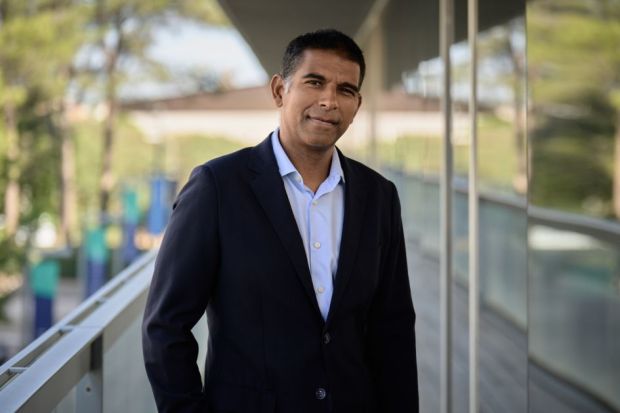
“We’re seeing a lot of interest from students from Latin America, who are going to Madrid and Barcelona because America has become more closed off and less accepting,” Daniel Traça, director general of Esade Business School, told Times Higher Education.
Traça said Esade, a business and law school with campuses in Barcelona, Sant Cugat and Madrid, is actively positioning itself to capitalise on the rising interest from students who would have otherwise chosen North America.
The school is also seeing more students and academics arriving from the US itself, drawn to cities like Barcelona and Madrid at a moment of political turbulence back home.
“Everything is messy, uncertain, and becoming toxic,” Traça said. “[Barcelona and Madrid] are large, growing cities with amazing lifestyles, with a sense of freedom and social conscience. We’re going to see less, just purely geographic moves but more of a notion of looking to be at a place that is intellectually and socially free.”
Spain, like many European countries, has moved quickly to capture this shift. The government’s “EduBridge to Spain” initiative, launched in September 2025, offers students at all academic levels a streamlined route to transfer from US institutions to Spanish ones. It is a scheme aimed at those affected by US visa restrictions.
Esade has about 15,700 students in total, with international students making up between 60 and 70 per cent.
Traça says Madrid is a particular focus for growth. “We need to build up in Madrid, which is becoming a European megahub,” he said.
But not all markets are growing. Traça pointed to a decline in Chinese students at the school. “There used to be this big flow of students from China, but we are no longer getting those numbers. China has extraordinary institutions of its own now,” he said.
Indian students, meanwhile, are increasingly returning home after graduating, drawn by expanding opportunities on the subcontinent.
But Traça stressed that the Iberian Peninsula was emerging as a new hub for students and professionals seeking stability, adding that instability in eastern Europe, driven by security concerns, was adding further momentum.
Beyond student recruitment, Traça, who has been at the helm for nearly two years, said the school was focused on rethinking business education. “We are rethinking everything,” he said, in response to pressures of artificial intelligence, geopolitical upheaval and what he sees as a long-overdue reassessment of the purpose of business education.
“We’re trying to reassess this idea that business schools are just marketing, finance and so on,” he said. “In terms of skills we need to provide three layers. One is the business and law side, the core of what we’re doing, and then touching on the tech side and on the geopolitical and social side, to understand where we’re going and how we can fix it. And also focusing on humanities.”
The school recently launched a bachelor’s degree in business and AI and a degree in global governance.
“Business schools are really at a fundamental transformation point. We need to change a lot of the presumptions we’ve had about where we’re going, what our role is and what our relevance is,” he said. “I believe a future where business schools do not coalesce around this goal [of contributing to the betterment of society] will be a very challenging one for them.”
Register to continue
Why register?
- Registration is free and only takes a moment
- Once registered, you can read 3 articles a month
- Sign up for our newsletter
Subscribe
Or subscribe for unlimited access to:
- Unlimited access to news, views, insights & reviews
- Digital editions
- Digital access to THE’s university and college rankings analysis
Already registered or a current subscriber?