There is no doubt that Norland is rather different to most other higher education institutions. But the success of Bath’s highly specialised school for nannies could teach the wider sector the value of breaking the mould.
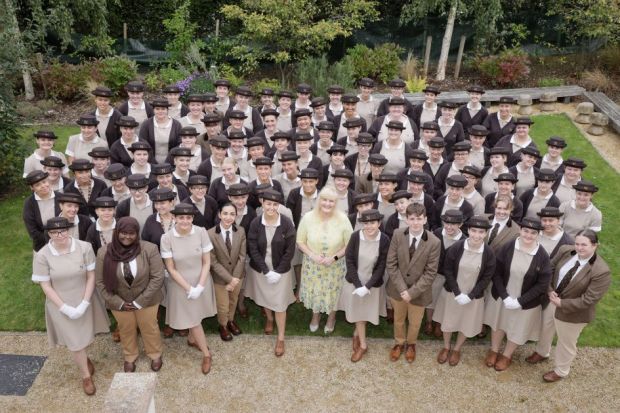
When Times Higher Education visited on the cusp of exam season, students in blue uniform – the iconic beige outfit associated with the Norland nanny (or “Norlander”) is reserved for special occasions – flitted between lessons in neuroscience and cooking and sewing.
A class on baby massage led by an outside expert demonstrated the difference between Indian and Swedish milking techniques. Another looked at the issue of inclusiveness in children’s books and how titles such as My Grandma Has Dementia and What’s in Your Tummy, Mummy? can help negotiate family change. Over lunch, third-year students compared notes on the – utterly exhausting – pleasures of working with triplets.
Founded by Emily Ward in 1892, Norland claims that it was the world’s first educational establishment to offer childcare training. About 100 students a year now come to study for two qualifications in parallel, a BA in early childhood development and care and the professional diploma. The principal, Janet Rose, is well aware that Norland nannies have “a slightly old-fashioned, Mary Poppins-type image” and has set out to change this “to reflect the fact that it’s a highly skilled, complex role. One of the things we like to tell our students is that we are brain architects, not babysitters.”
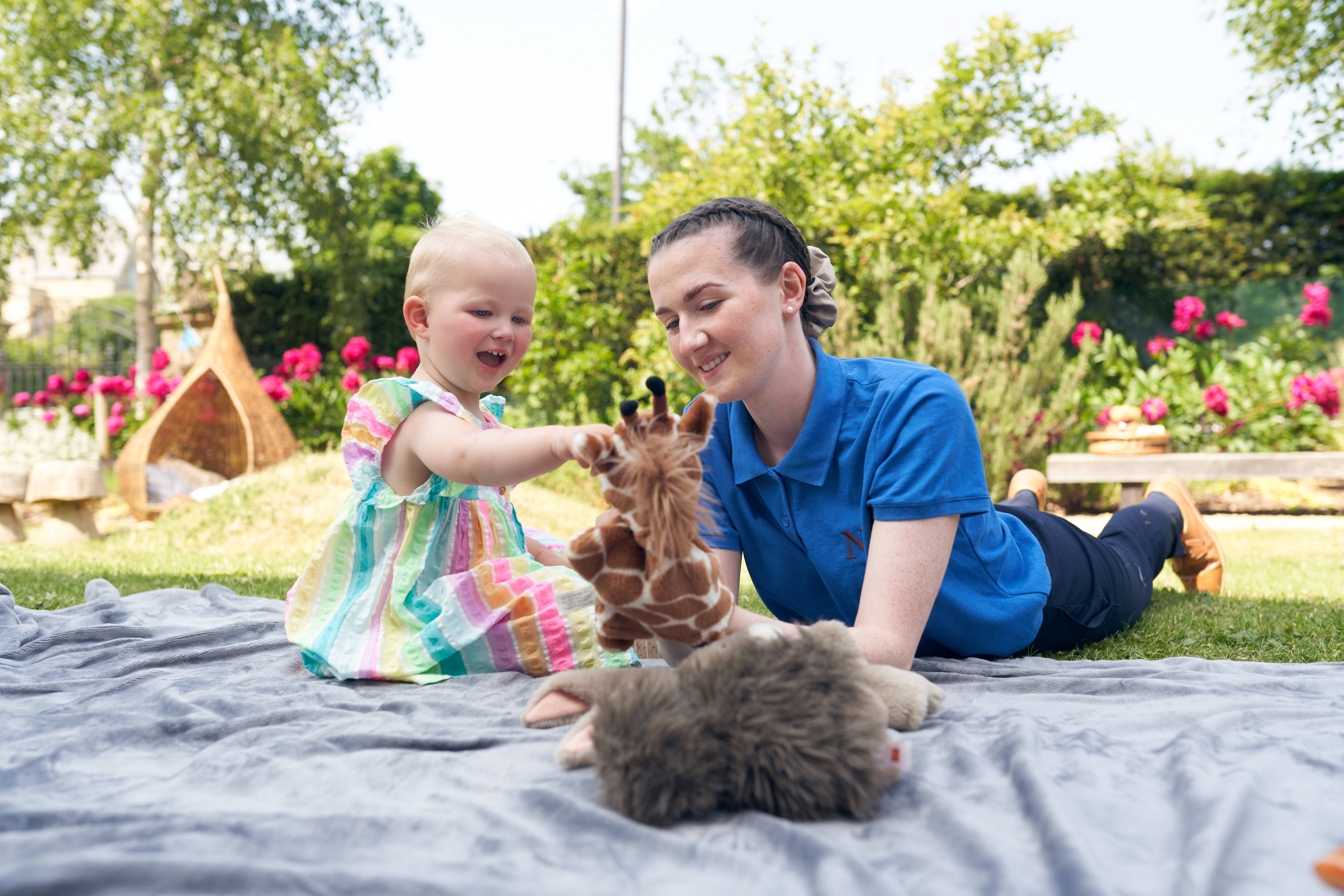
This means that the academic elements are fully integrated with the skills modules and 1,200 hours of placements in at least eight different settings, including nursery schools and hospitals as well as with families. Students learn about “the theory and the research relating to sleep, feeding and brain development”, explained Pollyanna Whitehead, lecturer in early years, and then how to “set up the cots” and “make weaning meals”. A further element is a third-year dissertation, where students are “encouraged to do research in their placement homes”. One current student is looking at “how parents engage with parenting topics on social media”, while another is working with an infant “co-researcher”, using photography to explore “how he sees his community and what is important to him”.
Asked about the value of such assignments for future professional life, Whitehead argued that “nannies do need to engage with new research and literature”, for example, when parents present them with unreliable information they have found online. “As a Norlander, I can say how those skills of criticality and analysis have been important in ensuring my standards of best practice.” Furthermore, “Students have to be able to manage difficult conversations with parents, so we practise those and discuss them in a really structured way while they are on placement.”
After three years of such practical learning, students spend a final paid placement year as a newly qualified nanny in a family home with at least one child below school age. This makes “a very nice feed into employment”, said Elspeth Pitman, head of graduates, placements, employment and alumni, since the students are supported by a dedicated team of six mentors and are visited once on site by a tutor. They are assessed through “the daily diaries, menu plans and documentation tracking the children’s learning” which they are required to submit.
Norland acquired degree-awarding powers in 2019, which were made indefinite in 2025, and hopes to be granted university status later this year, to call itself Norland University of Early Childhood – and so become the first specialist university focused on this stage of life. So how does it deal with the challenges facing all British universities?
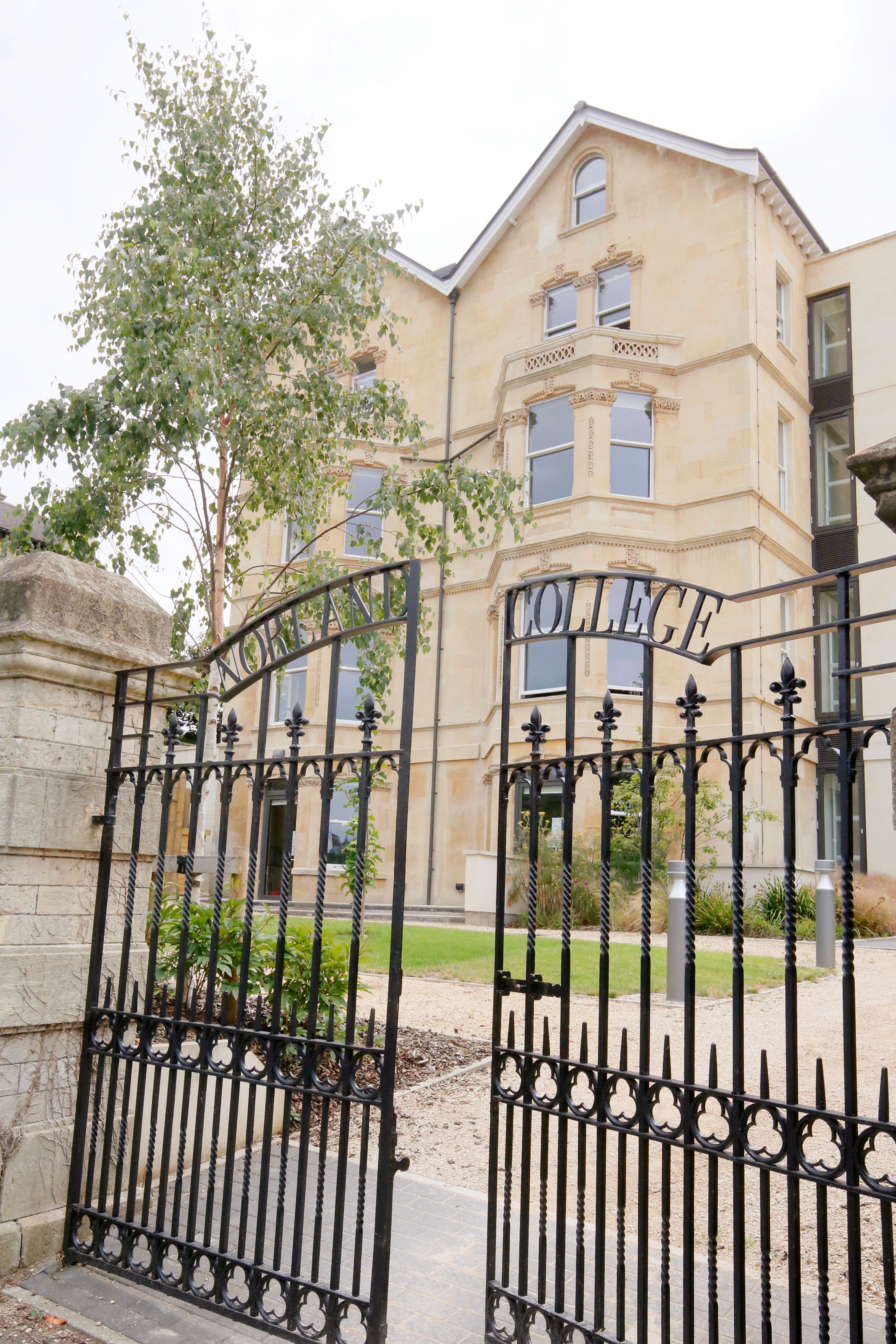
Employability is simply not an issue. Since it has incorporated an employment agency from its founding and demand for Norlanders always outstrips supply, rewarding work (in a field unlikely to be replaced by AI) is almost guaranteed. In 2023-24, the average salary for a new graduate placed through the Norland Agency in the UK was just under £58,000, nearly double the average graduate starting salary of £30,030.
Although the return on investment is very clear, running what Rose calls “two resource-heavy courses” with a staff-student ratio of 1:10, “where 80 per cent of the teaching is done in groups of 15 to 25”, does not come cheap: £17,884 per year for UK students (and £21,014 for international students) joining in September. Although she acknowledged that finance can be a barrier for many applicants and that Norland’s intake is “still predominantly white females”, it has “a strong outreach programme all over the country and internationally, not least because there is a great demand for our nannies in the US, Asia and Middle East. About one in four students receives some sort of bursary,” amounting to about £1.2 million over the past five years. The vast majority of students now come from state-funded schools. The first two male Norlanders qualified in 2019 and men now make up 2 to 3 per cent of the student body. And, since assessment methods are very varied rather than just paper-based, a relatively high proportion of students (about 45 per cent) have a declared disability.
Future plans for Norland include the launch, this September, of a two-year, online MA in Early Childhood Education and Care. All teaching staff are research-active and, in 2023, Norland launched its Norland Educare Research Centre and the open-access, online Norland Educare Research Journal. Its particular expertise in children’s development from birth to three and infant well-being also means that it is well placed to offer guidance on some important policy issues.
The government’s Best Start in Life initiative makes it likely that more children will attend early daycare, said Rebecca Digby, vice-principal and head of learning, teaching and research. This has led to a lot of discussion, for example at the Department of Education’s Early Years Stronger Practice Hubs, about “what provision should look like”, where Norland is “very much engaged in the debates and has a voice”.
Register to continue
Why register?
- Registration is free and only takes a moment
- Once registered, you can read 3 articles a month
- Sign up for our newsletter
Subscribe
Or subscribe for unlimited access to:
- Unlimited access to news, views, insights & reviews
- Digital editions
- Digital access to THE’s university and college rankings analysis
Already registered or a current subscriber?