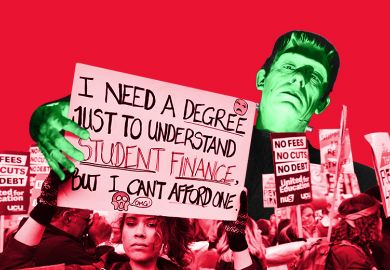
More than half of student loan holders would not borrow money for higher education again “knowing what they do now”, according to a UK survey that found frustration with the current system on a “massive scale”.
The vast majority said the impact of paying back loans was “worse than expected” and was having a material effect on their planning for the future. More than 90 per cent said the interest and repayment terms attached to their loans were unreasonable.
Current loan holders and prospective students were polled as part of the House of Commons Treasury Select Committee inquiry into student finance. It received 52,000 responses – one of the highest response rates ever recorded. Most were based in England but there were also responses from Wales and Northern Ireland.
Although the sample was self-selecting, the committee chair Meg Hillier said the “massive scale and strength of frustration and upset is powerful” and MPs “must listen”.
Of the 1,300 respondents who did not have a loan but were thinking about getting one, 59 per cent said they were less likely to do so because of the recent negative coverage.
But despite the attention on loans, the majority of this cohort still feel uninformed. Sixty-six per cent said they did not feel they had enough information about the terms and conditions, interest rates and repayments attached to the loans and 66 per cent said they did not feel confident making a decision about whether to take one out or not.
This was mirrored in the respondents who already have loans, 60 per cent of whom had taken out a controversial Plan 2 loan that has been the focus of much of the debate in recent months because of the higher rate of interest that higher earners must pay.
Asked if they felt sufficiently informed about the terms and conditions before they took the loan out, 57 per cent said no. This figure was higher – 59 per cent – among those who had Plan 2 loans.
Respondents were almost unanimous about whether the level of interest was “reasonable” – 92 per cent of all loan holders said no, rising to 95 per cent among the Plan 2 cohort.
On financial impact, 81 per cent said the burden of repaying the loan had been worse than expected and 70 per cent said it had had a material impact on their financial planning for the future.
Asked “Would you take out a loan again knowing what you know now?”, 51 per cent said no and just 21 per cent said yes.
Hillier said that it was “imperative for the prosperity of our country that people currently in their 20s and 30s feel incentivised to work hard and build successful careers”.
“Unfortunately, what these findings tell us is that far too many young people feel over-burdened and demoralised by their student debt.”
The committee will investigate the “different options available to the government before making some recommendations for change”, Hillier promised. The first hearing of the inquiry is set to take place on 2 June.
Reacting to the findings, Ollie Gardner, the founder of Rethink Repayment – a group that has led much of the recent campaigning against the current system – said a “clear message” had been sent to politicians that “the punitive student loan system is holding young people back, and it urgently needs reform”.
Alex Stanley, vice-president of the National Union of Students, said the data “paints a picture about how damning the situation is”.
“We were not well informed of what paying off our loans would look like when we signed on to a debt as big as a mortgage at just 17.
“Governments have repeatedly changed the terms, in a move that no bank could do, making the conditions worse while we have no option but to take the financial hit. These loans were necessary to invest in our education, but now they are freezing our futures.”
Register to continue
Why register?
- Registration is free and only takes a moment
- Once registered, you can read 3 articles a month
- Sign up for our newsletter
Subscribe
Or subscribe for unlimited access to:
- Unlimited access to news, views, insights & reviews
- Digital editions
- Digital access to THE’s university and college rankings analysis
Already registered or a current subscriber?