Next month’s changes to English rental laws “could not have occurred at a worse time” for a student housing market already in flux, according to new analysis.
Despite rising undergraduate student numbers, and the return of the Erasmus+ programme, demand for university accommodation is falling amid a rise in students commuting to campus.
After years of warnings, Martin Blakey, former chief executive of student housing charity Unipol, said data shows there has been an “unmistakable shift” in recent years.
The proportion of full-time students choosing to live at home has risen from 32.9 per cent in 2015-16 to 35.2 per cent in 2024-25.
In a blog published by the Higher Education Policy Institute, Blakey said this might not seem like a big change but it will result in demand falling by about 24,000 bed spaces annually – and 72,000 across three years.
According to Higher Education Statistics Agency data, the proportion of students renting fell from 55.1 per cent in 2023-24 to 53.6 per cent last year.
Blakey warned that the two key trends – rising numbers of first-year undergraduates and commuter students – are not being felt evenly across all institutions.
“Generally, post-92 universities have sought to sustain their undergraduate intake by recruiting more students locally, whilst Russell Group universities have recruited the vast majority of their students from those who will need accommodation.”
For example, Leeds Beckett University has seen students from Yorkshire and Humberside increase from 45 per cent of their total undergraduate acceptances in 2016 to 55 per cent in 2025.
But Blakey said during the same period there has been no discernible shift towards more commuting in London, where a significant proportion of home students have always lived at home.
“If the trend of recruiting more local students continues, this will have important regional connotations for those local economies that rely on ‘importing’ students. It also has implications for universities whose local population is small, restricting growth in that way.”
Blakey said the purpose-built student accommodation (PBSA) market for richer international students is still growing in London – but is shifting elsewhere as a result of the changing source countries of students.
“Students from these new growth countries [such as Pakistan and Nepal] are much more cost-conscious than the pre-Covid students from China, and the affordability of student accommodation is an issue.”
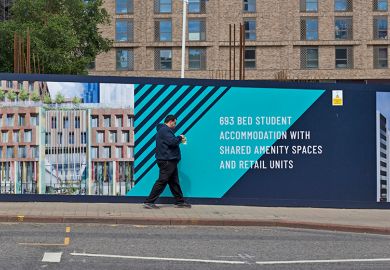
Evidence of a struggling market is clear – student accommodation giant Unite recently scrapped a 605-bed scheme in London, and another 500-bed project in Bristol.
Blakey said the “new build pipeline is drying up”, with any new beds either in London or reflecting projects already in development, and investors increasingly looking to Europe.
With occupancy rates falling and students becoming increasingly aware that they can wait to rent accommodation later in the year, the introduction of the Renters’ Rights Act in May is likely to have a further impact.
PBSA is mostly exempt but Blakey said there are still risks for the sector – with renting from off-street landlords potentially becoming much more cost-effective and flexible for students.
“As the PBSA sector becomes nervous about falling occupancy levels, these legislative changes – which may have real impact on the sector – could not have occurred at a worse time.”
With strong headwinds against PBSA, the analysis warns that decades of good returns for investors are coming to an end, with future accommodation supply likely to be much more dependent on formal links with universities.
“The days when speculative buildings were constructed, with no links to any educational institution, are, with the possible exception of London, likely to be over.
“As student demand has fallen, this gives the student accommodation sector an opportunity to take a development pause and take stock.”
Register to continue
Why register?
- Registration is free and only takes a moment
- Once registered, you can read 3 articles a month
- Sign up for our newsletter
Subscribe
Or subscribe for unlimited access to:
- Unlimited access to news, views, insights & reviews
- Digital editions
- Digital access to THE’s university and college rankings analysis
Already registered or a current subscriber?