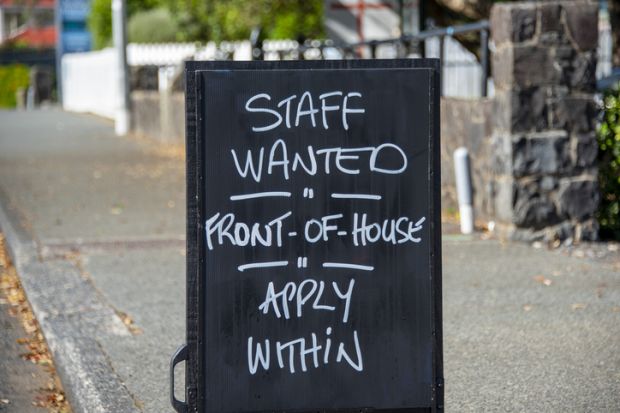
Paid work is proving increasingly elusive for international students at a time when cost-of-living pressures make them ever more reliant on in-country earnings, Australian research suggests.
A survey of almost 2,200 overseas students, conducted in late 2025, found that 74 per cent had underestimated the difficulty of obtaining suitable work, up from 57 per cent when a similar questionnaire was circulated a year earlier.
The research, by an arm of insurance giant Allianz, identified cost of living as “the defining pressure of the student experience”. Eighty-five per cent found it significantly more expensive than expected, up from 62 per cent in 2024.
Fewer than one in eight respondents described themselves as financially secure and almost half relied on personal savings or family support. Over one-quarter said they had considered withdrawing from their courses and returning home because of cost-of-living pressures.
Respondents reported frustration with the 48-hour fortnightly cap on paid employment during study periods – a threshold raised from an earlier 40-hour ceiling, after rules limiting working hours were scrapped during the coronavirus pandemic.
Chris McHugh, CEO of Allianz Partners Australia, said students often arrived in the country with no idea of the “true” living costs despite visa conditions requiring many of them to have access to A$29,710 (£15,504) in financial backing. “As a consequence, the need to work becomes more pressing,” he said.
“The inflationary impacts across the country for full-time working people, let alone part-time working students, has been hugely impactful. [It is] very difficult…for [students to] cover a 20 per cent increase per annum in accommodation costs and things of that nature. Their ability to forecast in the current period is incredibly difficult, if not impossible.”
The survey found that visa restrictions – particularly the cap on working hours – were considered the principal barrier to employment, cited by 61 per cent of respondents, while 45 per cent blamed a lack of professional networks and 20 per cent mentioned language difficulties.
International students already do almost as much paid work, on average, as Australians of all ages. Policy reform advocacy organisation FORE Australia has recommended that foreign students be allowed to do 30 hours a week of paid work because they cannot earn enough to support themselves under the current limit. This forces many to work extra hours off the books, leaving them vulnerable to employer exploitation.
However, many experts argue that an almost full-time load of paid work is incompatible with full-time study, and risks undermining the reputation of international education – ultimately increasing the likelihood of political backlash.
McHugh said 24 hours of work plus full-time study was “not a small impost” on students. He said visa restrictions were far from the only impediments to their employment, which included language skills and “natural barriers around confidence”. Students with good academic English may nevertheless lack the “conversational” abilities required in the workplace, he said.
McHugh said the surveys’ findings implied a need for “more planning and funding upfront”. The purpose of the research was to inform institutions and “hopefully government” to “bring these issues to bear. If we can bring a light to the circumstances that students face in Australia, that is the primary objective.”
The survey found that 62 per cent of respondents reported not having a balanced diet, of whom about 80 per cent skipped meals due to cost or time pressures. Thirty-four per cent of respondents said they were “struggling” with their mental health, although 39 per cent reported mental health improvements since arriving in Australia. Female international students were particularly unlikely to report satisfaction with their personal relationship, free time and energy levels.
Respondents also exhibited limited health literacy, particularly around sexual issues. McHugh said students’ awareness of sexual health varied with their age, gender, culture and region of origin. “[We should not] assume that any students have access to foundational sexual health education prior to arrival.
“This is what the report’s for. Let’s identify these things and…influence the system so we can improve their experience and ensure they’re getting the support they need.”
Register to continue
Why register?
- Registration is free and only takes a moment
- Once registered, you can read 3 articles a month
- Sign up for our newsletter
Subscribe
Or subscribe for unlimited access to:
- Unlimited access to news, views, insights & reviews
- Digital editions
- Digital access to THE’s university and college rankings analysis
Already registered or a current subscriber?