Leaders of universities in China increasingly have more academic qualifications and international experience, but political control remains central to their appointment, according to a new study.
The analysis of leadership trends across China’s top universities between 2013 and 2023 found that doctoral degrees are now “nearly universal” among presidents, rising from 82.1 per cent in 2013 to 93.7 per cent in 2023, coinciding with China’s push to build world-class universities.
Chinese institutions typically have two leaders; the president, who oversees academic and administrative affairs, and the party secretary, who provides political and ideological leadership. The share of party secretaries with PhDs also increased from 73.2 per cent to 88.5 per cent, the study found.
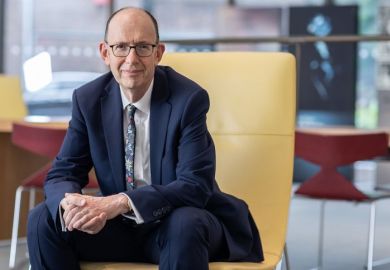
Futao Huang, professor at the research institute for higher education at Hiroshima University and author of the study, told Times Higher Education that the trend reflects the “increasing professionalisation and academicisation of university leadership in China”.
“Academic credentials have become an important signal of scholarly authority and institutional legitimacy,” he said.
At the same time, leadership appointments continue to be shaped by political considerations.
“Leadership selection in Chinese universities typically combines academic qualifications with political reliability,” Huang said, adding that “political trust remains essential because universities are also key public institutions within the state governance system”.
The findings suggest China’s universities are becoming more similar to institutions in other parts of the world but remain tightly controlled by the state. The paper describes this as a “hybrid governance model in which professional modernisation coexists with centralised political control”.
International experience has also become a more prominent in the backgrounds of leaders. The share of leaders with overseas research or study experience rose from roughly one-third in 2013 to about half by 2023.
Huang said this reflects China’s growing global ambitions in higher education. “Overseas experience helps leaders better understand international academic norms, collaboration networks and global competition,” he said.
However, most leaders still gain this exposure through short-term visits or collaborations rather than taking full degrees abroad, suggesting that international experience complements rather than replaces domestic academic training.
The study also identifies a shift in disciplinary backgrounds, with a growing proportion of leaders coming from science and engineering fields. In some groups of universities, the share of leaders with science and engineering backgrounds rose from 47 per cent to 64 per cent over the decade.
This, Huang said, is “closely linked to China’s national innovation strategy and its emphasis on technological development and industrial upgrading”.
At the same time, leadership pathways appear to be becoming more dynamic. The proportion of presidents with cross-institutional experience increased from 39 per cent in 2013 to 57 per cent in 2023, while the share among party secretaries rose from 44 per cent to 62 per cent.
Huang said this suggests “a more dynamic national leadership pool”, although appointments remain “strongly coordinated by governmental and party authorities rather than driven by a fully open market”.
Despite these changes, gender imbalance persists. Female representation among presidents rose only modestly, from 8.3 per cent in 2013 to 11.4 per cent in 2023.
Huang attributed this to “structural and cultural factors”, including the under-representation of women in STEM fields and a limited pipeline into senior leadership roles.
Overall, the findings suggest that China’s higher education system is changing but remains distinct from Western models.
“The ‘hybrid model’ reflects the coexistence of managerial professionalisation and strong political oversight,” Huang said.
“Compared with many Western systems that emphasise institutional autonomy and managerial governance, Chinese universities operate within a framework where party leadership plays a central coordinating role.”
Register to continue
Why register?
- Registration is free and only takes a moment
- Once registered, you can read 3 articles a month
- Sign up for our newsletter
Subscribe
Or subscribe for unlimited access to:
- Unlimited access to news, views, insights & reviews
- Digital editions
- Digital access to THE’s university and college rankings analysis
Already registered or a current subscriber?