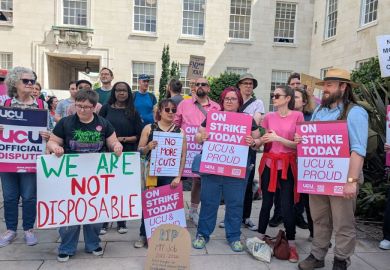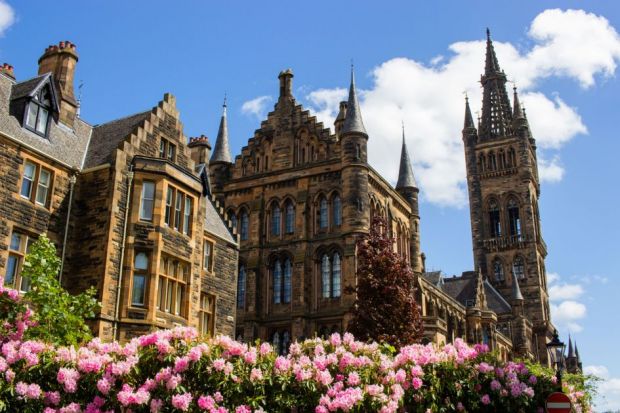
A strike ballot has opened at the University of Glasgow over planned job cuts, with the University of Lincoln also facing walkouts over its own restructuring plans.
The University and College Union (UCU) has called the ballot at Glasgow in response to the opening of a voluntary redundancy scheme in August. UCU said that the university management has confirmed its intention to undertake an organisational change project, which the union said will involve cuts to staff numbers. While it has not confirmed how many jobs it is looking to cut, the institution has not ruled out compulsory redundancies, according to UCU.
The union said that promotions for academic staff have also been cancelled for the current academic year. The ballot will run from 6 October until 10 November.
The news follows a report by the Scottish Funding Council which found nearly half of the country’s universities are forecasting deficits in the coming years, sparking further concerns over the Scottish sector after the government spent tens of millions of pounds bailing out the University of Dundee.
If staff vote in favour of strikes, they would join several other UCU branches across the UK who have embarked on lengthy industrial action over planned restructures, including staff at the universities of Dundee and Edinburgh.
Duncan Lowther, UCU branch president at Glasgow, said “we want to engage with management and resolve this dispute, but to do so the principal and his management team need to rule out the use of compulsory redundancies and give colleagues a level of certainty about their futures”.
“We’ll work with managers to find alternative savings, but we know that fundamentally the university is in a financially strong position with reserves among the highest in the country.
“Glasgow University means a lot to the city, and just a year into his post for the principal to be overseeing these unnecessary cuts risks potential strikes and the disruption that will ensue. He needs to reconsider urgently.”
Jo Grady, UCU general secretary, noted that union branches “across Scotland are taking part in strike action at the moment as the jobs crisis hits hard”.
“Up till now, Glasgow University has managed to avoid this. I’m appealing to the principal and university senior management to take a step back, and to rule out compulsory redundancies. If they won’t then their actions will leave staff with no option other than to take industrial action with the resulting disruption to the teaching, research and student support the university is renowned for.”
The University of Glasgow has been approached for comment.
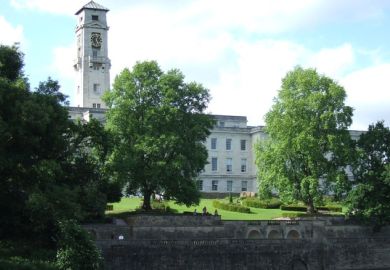
Meanwhile, union members at Lincoln have voted in favour of strike action, in their own dispute over job cuts.
Some 85 per cent of participating UCU members voted in favour of taking industrial action, on a turnout of 60 per cent, while 88 per cent voted in favour of action short of a strike.
It is understood that 192 people participated in the ballot, representing 11 per cent of the university’s total staff team.
It follows plans by the university which originally put more than 140 staff put at risk across the schools of humanities and heritage, engineering and physical sciences, social and political sciences, chemistry, geography, and design and architecture, as well as the Lincoln Business School, where 25 staff members have already left this year. The union said that this is the fourth year of job losses in a row.
Grady added that strike action was the “last resort” for staff, “but this yes vote shows Lincoln staff have had enough and are ready to fight to save jobs”.
“Slashing jobs do untold damage to both the student experience and academic reputation at Lincoln. Our members are fighting for their jobs, their students and the community they serve. After this fourth round of cuts, the university must change direction and work with us to save jobs, in order to avoid disruption in the coming months.”
A university spokesperson said the institution “has made, and will continue to make, deliberate choices to ensure it remains sustainable and well placed for the future, while continuing to deliver high-quality teaching, strong student outcomes and its vital contribution to Lincolnshire and beyond”.
“We have no current plans to run a severance scheme or make redundancies. At the same time, we are continuing to invest in areas where there is strong student demand and opportunities for growth. This includes our new BSc in Dental Hygiene and Therapy, which welcomed its first students last month following unprecedented strong demand for places.
“Our focus will always be on putting our students first. Should industrial action take place, we have plans to minimise any potential disruption to teaching and assessment and to protect the wider student experience.
“We remain committed to meaningful dialogue with UCU and to engaging constructively with our recognised trade unions. Like universities across the sector, we continue to navigate significant shifts in student demand, demographic change and increasing competitive pressures, while making the decisions needed to ensure Lincoln is sustainable and successful for the future.”
Register to continue
Why register?
- Registration is free and only takes a moment
- Once registered, you can read 3 articles a month
- Sign up for our newsletter
Subscribe
Or subscribe for unlimited access to:
- Unlimited access to news, views, insights & reviews
- Digital editions
- Digital access to THE’s university and college rankings analysis
Already registered or a current subscriber?