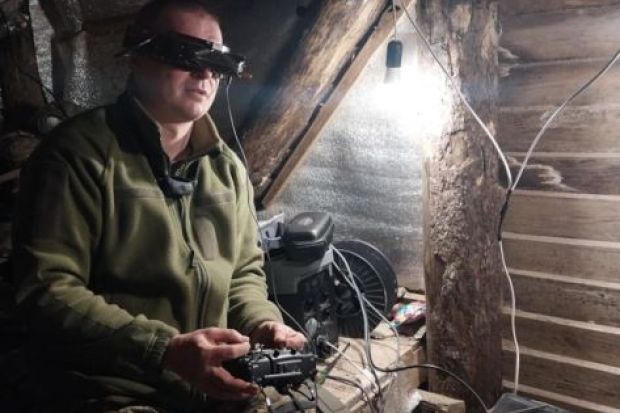
Shortly after Ukraine was invaded by Russia in 2022, Sergiy Sylantyev put his academic career at the University of Aberdeen on hold, and the British-Ukrainian neuroscientist joined the armed forces defending the country.
He returned to the UK in autumn last year, but not for long. A few months later, he found another opportunity to go back – this time to the lecture hall instead of the battlefield.
Sylantyev, a researcher at Aberdeen’s Rowett Institute, is one of 10 UK-based academics who were selected to take part in a Ukrainian government scheme that invites scientists to teach at universities in the country.
The programme is part of Ukraine’s wider efforts to maintain its universities during the war, now in its fourth year, by continuing the teaching, research and international partnerships that will be needed for the country’s recovery.
“[Earlier] I defended Ukraine on the front line. Now I’m trying to help Ukrainian defence in a different way,” he said, adding that he sees a focus on universities and science as an investment in the future and a way to build resilience.
Sylantyev travelled to Ukraine in May to teach at Odesa I.I. Mechnikov National University, where he earned his master’s degree. He taught neurophysiology and neuropharmacology to classes of between 50 and 80 students until early June, when he returned to the UK.
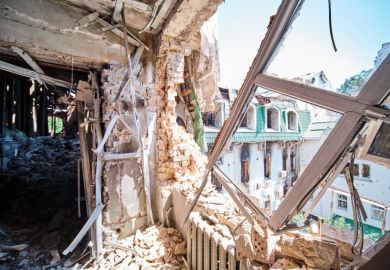
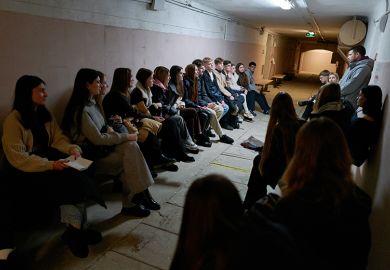
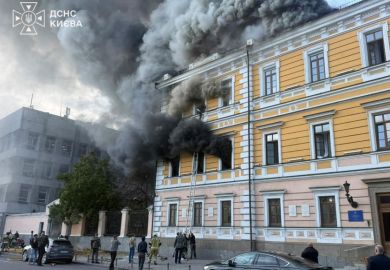
The university has changed considerably since his student days, he said. Teaching now switches between in-person and online learning as missile attacks continue. The university has adapted since the early war days, but disruption is a regular feature.
“If you live in a city that’s under missile attacks every week…you can’t plan too far ahead. You can’t build any long-term programmes, and this has a huge impact on education and science,” he said.
“Students and lecturers who still continue to [show up] deserve high respect,” he said, stressing their bravery and resilience. “While the level of danger in Odesa is not as big as it is on the front lines, for people who don’t have real combat experience, it’s still quite dangerous.”
Universities face a lack of resources because much of the country’s national funding is directed towards the war effort, he explained.
For Sylantyev, science offers an important way to contribute to Ukraine’s future. Supporting the country’s universities was not entirely separate from supporting the country’s security, he said. “Science and education are the basis for military power.”
The programme that brought him back to the country is expected to continue after attracting far more interest than organisers initially expected. There are plans to repeat the call in the autumn.
“It received approximately three times more applications than anticipated, requiring an additional selection stage,” he said. He sees the interest as evidence that international academic links remain strong despite the risks inherent in teaching in a war zone.
Sylantyev said his experience of war has changed his understanding of what matters.
“My experience on the front line made me realise how few things I need to be happy. Imagine, you wake up in the morning, you’re alive, you have something to eat and the guys around you are also alive,” he said. “You realise, you don’t really need much more than this.”
Register to continue
Why register?
- Registration is free and only takes a moment
- Once registered, you can read 3 articles a month
- Sign up for our newsletter
Subscribe
Or subscribe for unlimited access to:
- Unlimited access to news, views, insights & reviews
- Digital editions
- Digital access to THE’s university and college rankings analysis
Already registered or a current subscriber?