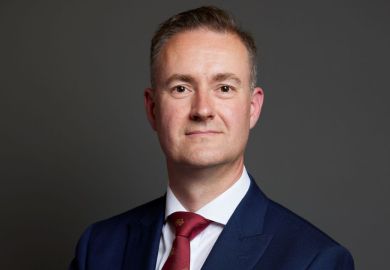
The UK’s science minister has suggested that more of the government’s R&D budget will be devolved into the regions, saying the two already announced plans to redistribute innovation spending “give an indication of the directional of travel”.
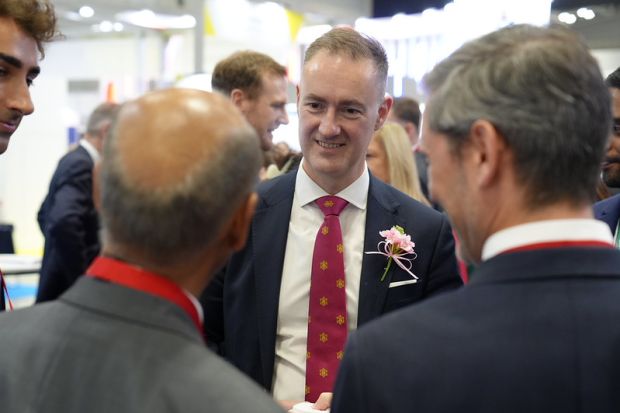
Speaking to journalists at the BioIndustry Association’s International Investor Summit, Chris McDonald stressed that “devolution is a big part” of the prime minister’s ambitions to rewire the state.
Andy Burnham previously announced that £1 billion of UK Research and Innovation will be diverted to back regional clusters and that mayors will take earlier control of a £500 million Local Innovation Partnerships Fund (LIPF).
“I think that kind of gives an indication of the direction of travel,” he told reporters. “The clustering approach is… about investing in local strengths in places wherever they happen to be,” he said. He also noted that more announcements on “rewiring the state” will come “this side of Christmas”.
McDonald responded to fears that the devolution of more research and innovation funding could lead to money being funnelled away from universities into the hands of mayoral authorities. “Change always brings concerns, I can understand that”, he said.
“I think universities are and will always be, important, central… to our science and innovation infrastructure”, McDonald said, adding that “there is no stronger advocate of a university in the place than the people who live in that place”.
“But there is certainly scope within the total of money that we spend on research and innovation to allow for more local control,” he said. He told journalists that doesn’t automatically mean that it will come from within the budget for UKRI.
The budget for UKRI, which funds university research, is only about 40 per cent of the total government spending on R&D, McDonald said. There is a lot of the R&D budget within government that “could enable greater local control in different places,” he added.
Since becoming science minister in July, McDonald has addressed the sector once at a Universities UK conference. “One thing that I'm keen to do is that ensure that [in] whatever changes we make, we encourage greater collaboration as well, because that’s obviously key to ensuring that we get good science,” he said.
He said he wants to focus on “greater collaboration between areas and to continue focus on excellence as well”.
Asked if he wanted to focus on excellence across the board, McDonald said, “I mean excellence in British research, of course, the whole gamut of research,” ranging from science, social sciences, the arts and humanities.
During his UUK speech, McDonald said he wanted to drive greater efficiency within the nation’s research funding system by reducing the time academics spent on administration tasks.
Giving an update, he said: “That’s part of the conversation that I’m driving through at UKRI, to see how we can deploy some of the new [artificial intelligence] tools that are available or take a different approach to enable researchers to spend more time doing the thing that they want to do. That drives them, gets them out better in the morning, which I doubt is filling in forms.”
Before entering politics, McDonald was a chemical engineer and scientist heading up a research laboratory for Tata Steel.
“I used to work with the chemical sector and there is just so much around duplication of paperwork. And it might sound fairly tedious, but, of course, that then limits the opportunity for investment in research, in science and skills, alongside government as well,” he said.
frances.jones@timeshighereducation
Register to continue
Why register?
- Registration is free and only takes a moment
- Once registered, you can read 3 articles a month
- Sign up for our newsletter
Subscribe
Or subscribe for unlimited access to:
- Unlimited access to news, views, insights & reviews
- Digital editions
- Digital access to THE’s university and college rankings analysis
Already registered or a current subscriber?