The University of London is facing mounting unrest among member institutions about the federation’s direction as the suspension of its vice-chancellor stretches on for nearly a year.
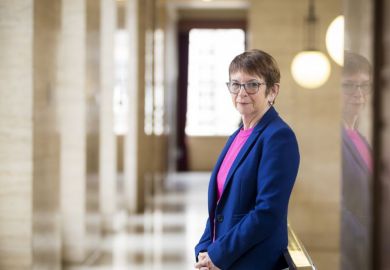
Wendy Thomson, who had led the 17-member federation since 2019, was suspended in May 2025 pending an independent investigation, reportedly relating to allegations of bullying and poor leadership. Deputy vice-chancellor David Latchman has been in charge at Senate House since then.
Leaders of member institutions are mainly in the dark about the case against Thomson but say their concerns about the university’s strategy date back much further.
Times Higher Education has spoken to the vice-chancellors of several member institutions who recognised the power of the London brand internationally and in some cases appreciated the federation’s role in online delivery but questioned whether it had delivered on the imperative for greater collaboration and coordination amid a sector-wide funding crisis.
Some claimed that London had become too focused on its central institutes rather than the interests of members and wanted to see a much greater focus on addressing shared financial challenges, for example through shared delivery of courses, collective rationalisation of estates or joint activities such as procurement and staff development.
There was widespread agreement that the leadership hiatus was not helping to address these issues.
Anthony Finkelstein, president of City St George’s, University of London, said the federation possessed “the capacity to be a leader in UK higher education”.
“It has global reach and is arguably the world’s leading university federation. Yet for a very long period it has fallen very far short of its potential,” Finkelstein told THE.
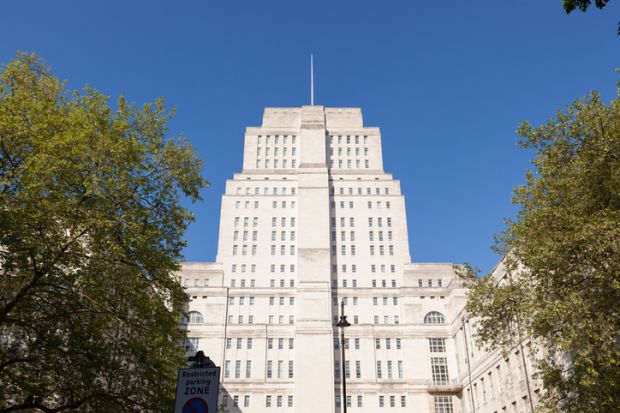
“At a moment when the sector needs collective strength, when regional alignment is required – indeed is government policy – the University of London is absent. It has focused its attention on Senate House and the central activities, a sideshow, rather than enabling the members. It has institutionalised a misconception of what the University of London is and should be about.
“Because I care passionately about the university, I firmly believe this cannot be allowed to persist.”
Several leaders recognised that London had taken steps towards developing a more coordinated offering, including last month’s announcement that learners would be able to “stack” postgraduate modules from member institutions and build up “portfolio” degrees over time.
But several felt that collaborative delivery was yet to reach a scale that could make an appreciable difference for members battling financial challenges.
Another vice-chancellor of a member institution, asked for their view of how the federal university delivered for them, simply replied: “My parents taught me that if I don’t have anything nice to say about someone, don’t say anything.”
Speaking to THE about the concerns, Latchman emphasised that the federal university’s central activities – which include its worldwide programmes, the School of Advanced Study and its accommodation services – are primarily there to support the members.
“The university exists primarily for the benefit of the members but, in my view, not exclusively for the benefit of the members,” he said. He added that the university offers “lots of services” that save smaller members money, but that shared services aren’t always appealing to larger members that might prefer to handle things themselves.
On Thomson’s continued absence, he said “matters are proceeding forward, but they have to proceed in a way which is fair to everybody, and that means it takes rather a long time”.
He said that over the past 10 months London had proceeded with university activities “as if the situation didn't exist”.
“There’s nothing that we’re not doing because of the situation,” he said, adding that the university is consulting with all its members on the ongoing development of a new strategy. “That is ongoing, and I think that will produce a strategy which will be much more appealing to the members.”
London’s most recent financial statements confirm that Thomson was paid her full salary – £356,493, including payments in lieu of pension contributions – in the year to July 2025. A section titled “Total remuneration of the vice-chancellor waived in year” was left blank.
Media reports at the time of Thomson’s suspension indicated that she had not responded to the bullying allegations at that point but had submitted her own complaint regarding governance and staff issues, and maintained that the complaint against her did not warrant disciplinary action.
Her suspension came at a time of significant leadership upheaval at the university, with Mark Lowcock resigning as board chair the week before, although he continues to serve as a trustee. Two other trustees, Paul Boursican and Andrew Ratcliffe, stepped down in the same month.
Kavita Reddi, the former vice-chair, who reportedly chaired the board meeting that voted to suspend Thomson, was appointed chair in October.
Two key executive posts, chief finance officer and university secretary, are currently filled by interim hires.
But not all leaders THE spoke to were critical, with institutional perspectives sometimes varying according to size and proximity to the federal university’s Malet Street heart.
Sally Wheeler, vice-chancellor of Birkbeck, University of London, said her own institution’s collaborations with other members would have been “much more difficult” without the framework of the federation and questioned whether sharing services was always as straightforward or successful as some people assumed.
She said that the federal university had been “very consultative” during the ongoing development of its new strategy and praised acting vice-chancellor Latchman – her predecessor at Birkbeck – as someone who understood “very much…what the colleges do, what the colleges can do together, and what the University of London can do to help the colleges do things together and federally”.
Latchman added that a decision had been taken two years ago to reduce the number of meetings of the Collegiate Council – on which all the vice-chancellors of the member institutions sit – “which has meant, especially in the current situation, they feel not very well informed about the overall vice-chancellor situation”.
The university is currently undergoing a governance review and Latchman said he had asked reviewers to look at ways to ensure members are “properly represented” on the board of trustees. Currently, four member institution leaders sit on the board.
“There needs to be some mechanism by which those heads or some other heads are basically working between the board of trustees and the collegiate council,” he said.
“I have the members and the members have their own activities,” he continued. “My role is to try and say, ‘what can the university do for you?’”
Register to continue
Why register?
- Registration is free and only takes a moment
- Once registered, you can read 3 articles a month
- Sign up for our newsletter
Subscribe
Or subscribe for unlimited access to:
- Unlimited access to news, views, insights & reviews
- Digital editions
- Digital access to THE’s university and college rankings analysis
Already registered or a current subscriber?