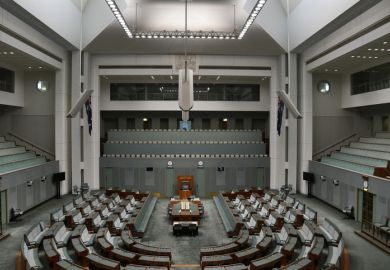
Australia’s university funding overhaul is bogged down in parliament’s upper house, after the opposition introduced a raft of amendments to the “Opening the Doors of Opportunity” bill.
Amendments to be moved by a Liberal Party senator would remove the education minister’s powers to impose conditions on universities’ teaching grants, while institutions would no longer face penalties for inadvertently exceeding their domestic enrolment quotas by improving their retention rates.
The amendments would also require the Australian Tertiary Education Commission (Atec) to publish the criteria it uses to determine each university’s quota. Atec would also be obliged to consult independent colleges on the allocation of places for international students.
The opposition motions would also revive shadow education minister Julian Leeser’s efforts to embellish the “National Tertiary Education Objective” in the Atec Act, so that it mentions factors including research, teaching, learning, scholarship and student experience.
Most controversially, Liberal senator Matt O’Sullivan will introduce a suite of amendments effectively obliging universities to adopt the contentious International Holocaust Remembrance Alliance definition of antisemitism.
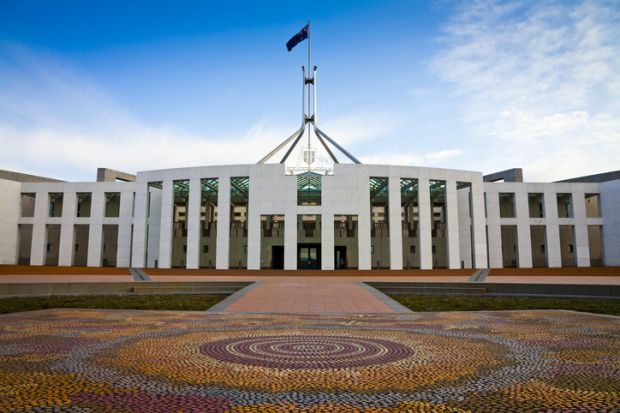
The opposition flagged another possible amendment during a press conference at Parliament House, saying top-up funding for education in the regions should not be available to programmes administered in the bush but delivered in the city.
Sam Birrell, deputy chair of the House of Representatives education committee, said this could help underscore the viability of non-metropolitan courses. “It’s critically important that regional students get access to tertiary education,” he told journalists. “We just want to make sure that any legislation ensures that regional means regional.”
It was unclear when the amendments would be discussed. The legislation was introduced into the Senate on 7 September without debate. The bill has not been listed for debate since. Parliament sits until 17 September before taking a three-week recess.
Education minister Jason Clare said the bill was crucial to his ambition for more people from the bush and poor neighbourhoods to “get a crack” at university. “The hard part isn’t saying it,” he told the Australian Centre for Student Equity and Success policy symposium. “The hard part is doing it, bending the system to make it fairer.
“It means changing the whole education system, not just universities, and it sometimes means doing things that not everyone likes. The legislation in the parliament right now is a good example of that. Hopefully in the next few days or weeks, it’ll become the law.”
The amendment removing the minister’s power to impose funding conditions appears set to be approved by the Senate. Independent senator David Pocock has proposed the same change. The amendment to water down penalties for over-enrolments is also likely to garner support.
Register to continue
Why register?
- Registration is free and only takes a moment
- Once registered, you can read 3 articles a month
- Sign up for our newsletter
Subscribe
Or subscribe for unlimited access to:
- Unlimited access to news, views, insights & reviews
- Digital editions
- Digital access to THE’s university and college rankings analysis
Already registered or a current subscriber?