Ministers in England should look at unfreezing the repayment threshold and handing more support to disadvantaged students if they want quick wins to address mounting public discontent with student loans – but such measures won’t solve anything without a reassessment of state support for teaching, experts have said.
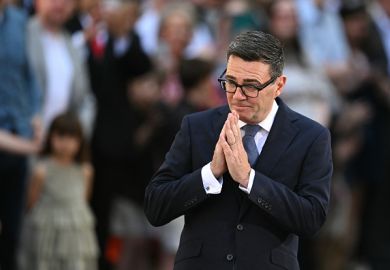
After months of criticism, new education secretary Lucy Powell has stressed that addressing student debt is “at the top of my in-tray”, signalling that the new Andy Burnham government could potentially move quickly to offer support to younger voters – a key demographic for the Labour party.
Under Keir Starmer, then-chancellor Rachel Reeves announced that the repayment threshold for Plan 2 loans would be frozen at £29,385 for three years from April 2027 – a move campaigners said added to anger over the burden the loans place on graduates.
Plan 2 loans apply to students who started undergraduate courses between September 2012 and July 2023. Graduates repay 9 per cent of earnings above the threshold.
In April, the previous government also said interest on some student loans in England, including Plan 2, would be capped at 6 per cent.
Ollie Gardner, founder of campaign group Rethink Repayment, said the most urgent step would be to abandon plans to freeze the Plan 2 repayment threshold. “They need to show that they are serious about fixing the problem in the first place and addressing the threshold is probably their best starting point…It’s like an immediate cost-of-living intervention,” he said.
Gardner stressed that ultimately ministers should go further by reducing the 9 per cent repayment rate to about 5 per cent and limiting interest to around the rate of inflation, which would help address the “psychological burden” on graduates who continue to see the total value of their debt increase.
Rethink Repayment was more optimistic about reform under the Burnham government than its predecessor, he added. “We’ve seen a change in their communication style, a bit more of an appreciation and recognition of the problem.”
Nicholas Barr, one of the architects of England’s income-contingent loans system introduced under Labour in 2006, said the country had the “right system, but the wrong parameters”.
“The original sin was the abolition in 2012 of taxpayer support for the arts, humanities and social sciences,” said the professor of public economics at the London School of Economics, referring to reforms introduced under the Conservative-Liberal Democrat coalition which saw direct government funding for teaching cut and the tuition fee cap rise to £9,000.
“As a result, students through their fees have to pay pretty much the entire cost of higher education. Since raising fees is politically difficult, they haven’t kept pace with the cost of educating students. So universities are broke. But at the same time, because fees are so high, the loans are too large and it’s causing political aggravation,” he said.
Without restoring some direct taxpayer funding for teaching, other reforms risked merely “shifting deckchairs around on the Titanic”, he added. “Given the fiscal situation, I realise this is not going to be a short-run policy.”
Barr said the government should also lower interest rates and introduce a repayment rate that rose with earnings, from about 2 or 3 per cent for lower earners towards 9 per cent for higher earners.
With major new spending difficult in the short term, he suggested ministers could instead offer more generous support to poorer students, including maintenance grants or even a free first year for some disadvantaged students.
Barr acknowledged, however, that restoring substantial taxpayer funding would be difficult in the current climate, with pressures on the NHS and defence.
Simon Marginson, professor of higher education at the University of Bristol and emeritus professor at the University of Oxford, described the way higher education has been funded since 2012 as “unworkable, obsolete, and the fundamental obstacle to adequate financing of higher education”.
He said England was “unusual” in providing so little direct public subsidy for most undergraduate teaching, leaving students to shoulder too much of the cost through fees and loans. “The level of UK fees is, in international terms, uniquely high for publicly regulated institutions. This is not a badge of honour,” he added.
“The wheels are now rapidly falling off the 2012 funding system,” he said, adding that he believes the Treasury has shown “no sign of awareness or concern about the devastation of the nation’s capacity in higher education”.
Marginson said ministers should now “make a firm commitment to solving the problem and put a timetable on it”.
“Keeping their options open might give them more political and fiscal flexibility but it is in no one else’s interest and will undermine the PM and Cabinet in the end,” he added.
Register to continue
Why register?
- Registration is free and only takes a moment
- Once registered, you can read 3 articles a month
- Sign up for our newsletter
Subscribe
Or subscribe for unlimited access to:
- Unlimited access to news, views, insights & reviews
- Digital editions
- Digital access to THE’s university and college rankings analysis
Already registered or a current subscriber?