Australian universities’ research and development spending has increased by one-sixth over just two years, signalling a resumption of “normal” activity following the coronavirus pandemic – but highlighting one of the downsides of a government crackdown on international education.
Higher education expenditure on R&D reached A$16.4 billion (£8.7 billion) in 2024, 17 per cent more than in 2022 and 51 per cent more than in 2016, according to newly released Australian Bureau of Statistics (ABS) figures.
Over half of the outlay, some A$8.6 billion, was derived from “general university funds” sourced primarily from the sector’s A$13 billion international education earnings.
Tom Lay, ABS head of business statistics, said higher education spending constituted 0.59 per cent of Australia’s gross domestic product in 2024, up from 0.54 per cent in 2022 – the first such rise since before the pandemic, reflecting “a return to more normal operations”.
Lay said the recovery had been supported by the return of international students, which had increased universities’ revenue streams and staffing levels.
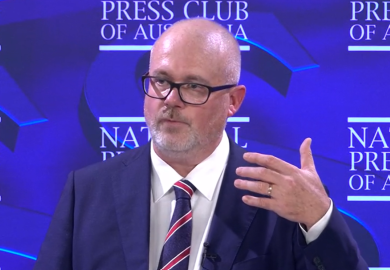
Universities Australia CEO Luke Sheehy said the figures showed that university research was rebounding strongly. But they highlighted the “hard truth” that the nation’s universities were funding most of their own research work.
“That’s only possible because universities have historically been able to reinvest revenue from international education back into research, innovation and national capability. If Australia wants to remain serious about productivity, medical breakthroughs [and] future industries, we need stable policy settings that support both research and international education.
“You can’t weaken one without weakening the other.”
The international education sector has been reeling from record visa rejection rates and signs that overseas students are being deterred by steep visa application fees, which last year rose to A$2,000 – the highest in the world.
There is speculation that policy changes and migration settings to be announced in the 12 May federal budget will further disadvantage the sector.
The ABS figures show that applied research accounted for 58 per cent of R&D spending by higher education institutions in 2024, with pure basic and strategic basic research each constituting about 16 per cent. Over two-thirds of the activity occurred in the largest states of New South Wales and Victoria, along with the Australian Capital Territory.
Competitive Australian government grants covered just A$2.4 billion or 15 per cent of university R&D efforts, with other federal funding programmes bankrolling A$2.7 billion. Business contributed A$882 million and philanthropy pitched in A$605 million.
Higher education R&D claimed almost 86,000 “person years of effort” in 2024, up from 79,000 in 2016.
Register to continue
Why register?
- Registration is free and only takes a moment
- Once registered, you can read 3 articles a month
- Sign up for our newsletter
Subscribe
Or subscribe for unlimited access to:
- Unlimited access to news, views, insights & reviews
- Digital editions
- Digital access to THE’s university and college rankings analysis
Already registered or a current subscriber?