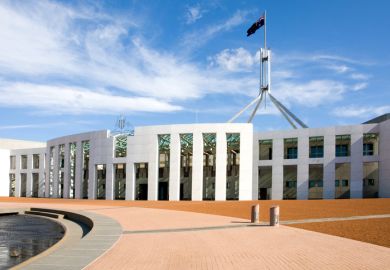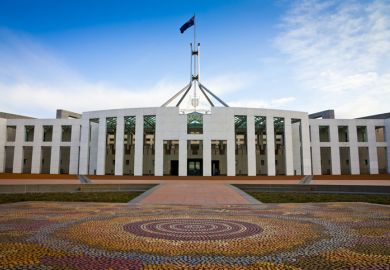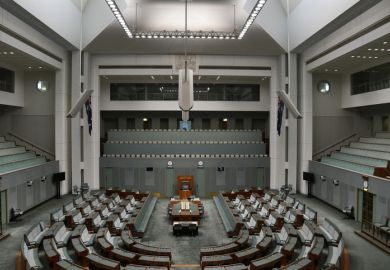
Australia’s university funding overhaul lies marooned in parliament after the Senate rose before voting had concluded.
The “Opening the Doors of Opportunity” bill appears destined to become law when politicians reassemble in Canberra in about a month. Jess Walsh, the early childhood education minister, told the Senate that the government would be supporting amendments tabled by both the Australian Greens and the Liberal-National opposition.
Mehreen Faruqi, the Greens’ education spokeswoman, indicated that the Labor government had agreed to all 12 amendments she tabled on 16 September. The Greens occupy 10 seats in the 76-seat chamber, giving the Labor government – which has 30 – more than enough votes to secure the legislation’s passage with or without the opposition’s support.
Changes to the bill’s explanatory memorandum show that the government has already implemented some of the Greens’ changes.
Labor introduced an amendment of its own to address an anomaly that would have given the education minister the power to fund fewer overall university places than in previous years. This could have put the Australian Tertiary Education Commission (Atec), which will be obliged to allocate each institution at least as many places as in previous years, in an impossible position.
David Pocock, an Independent senator, tabled another 13 amendments after forensically analysing the bill during a Senate committee inquiry. Walsh said some of his recommendations had been “covered” in amendments from both the government and the Greens.
The Senate had time to consider – and reject – just three amendments before voting was adjourned: a Greens proposal to wipe student debt and abolish tuition fees; a Pocock proposal to “urgently review” the Job-ready Graduates funding settings; and a One Nation proposal to allocate “needs-based” funding directly to students rather than “bloated” universities.
Progress on the bill is now suspended until at least mid-October, when both houses sit for another four days. Two further sitting weeks remain before the end of the year.
Monash University policy expert Andrew Norton said that with the bill all but certain to become law, the delay in its passage was undesirable. “The unis want to know with certainty what their position is for 2027,” he said.
“For good or bad, it’s better to have…certainty about the rules [so] you can proceed with your planning. They’re not going to sign on the dotted line until the official legislation is in place.”
Register to continue
Why register?
- Registration is free and only takes a moment
- Once registered, you can read 3 articles a month
- Sign up for our newsletter
Subscribe
Or subscribe for unlimited access to:
- Unlimited access to news, views, insights & reviews
- Digital editions
- Digital access to THE’s university and college rankings analysis
Already registered or a current subscriber?