The Canadian botanist who discovered the ‘wisdom of trees’ reflects on the growing enthusiasm for her work and why scientists should get emotional about their research
Only a handful of UK universities maximised their public profiles during the pandemic because press officers were diverted towards internal crises or social media engagement, says Fiona Fox
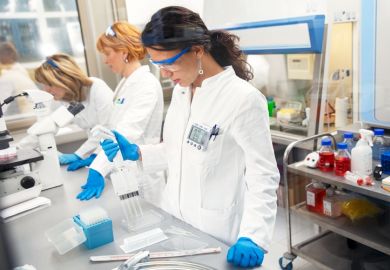
As the pandemic increases public scrutiny of science, the UK Parliament is holding another inquiry into the long-running issue of reproducibility. Five of its contributors give their views on how sloppy science can be eliminated and trust be more firmly rooted
Coyness, contention and competing agendas all hamper historians and sociologists of sex. Matthew Reisz speaks to those who choose, nevertheless, to probe this most sensitive and intimate of subjects
A push to end the habit of assessing researchers by their publication metrics is gaining momentum. But are journal impact factors really as meaningless as is claimed? And will requiring scientists to describe their various contributions really improve fairness and rigour – or just bureaucracy? Jack Grove reports
Spending commitments on Aria, Horizon Europe and UKRI should be welcomed – as should the Treasury’s growing scrutiny of UK and EU research structures, says John Womersley
With academic conferences on hold, novel ways of collaborating have taken off – from preprints and digital networks to AI-backed matchmaking, writes Jack Grove
Researchers in developing countries could be frozen out by high article charges unless wider publishing reform is undertaken, say four Brazilian researchers
Academics’ reading lists are increasingly directed by algorithms. But are the recommendation services of platforms such as Google Scholar, ResearchGate and Mendeley distorting science? And might AI ultimately lead it to a disastrous echo chamber? David Matthews reports