Reason in a Dark Time: Why the Struggle Against Climate Change Failed – and What it Means for our Future, by Dale Jamieson Steven Yearley on the economic and ethical reasons for why attempts to prevent climate change have failed 31 July
Time in Powers of Ten: Natural Phenomena and their Timescales, by Gerard ’t Hooft and Stefan Vandoren Considering different timescales is a fun way to digest serious science, finds Graham Farmelo 24 July
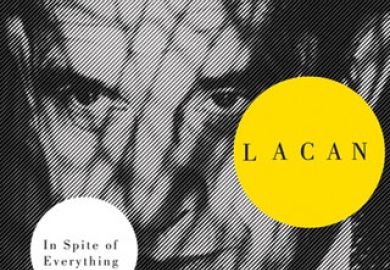
Lacan: In Spite of Everything, by Élisabeth Roudinesco Shahidha Bari on a deliberately ‘marginal’ life of the grouchy great man of psychoanalysis 10 July
The Cosmic Cocktail: Three Parts Dark Matter, by Katherine Freese Virginia Trimble on the search for the mysterious, magical secret ingredient of the universe 10 July
The Story of Pain, From Prayer to Painkillers, by Joanna Bourke Brian Hurwitz on the inadequacy of language when it comes to describing physical suffering 10 July
Missing Microbes: How Killing Bacteria Creates Modern Plagues, by Martin Blaser Overuse of antibiotics is upsetting the balance of our internal ecosystems, finds Jon Turney 3 July
Tambora: The Eruption That Changed the World, by Gillen D’Arcy Wood Alison Stokes on a 19th-century volcanic eruption that caused a global climate disaster 26 June
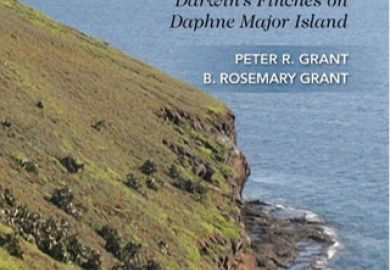
40 Years of Evolution: Darwin’s Finches on Daphne Major Island, by Peter R. Grant and B. Rosemary Grant Tim Birkhead advocates long-term scientific studies, particularly for natural selection observations 19 June
Embryos Under the Microscope: The Diverging Meanings of Life, by Jane Maienschein Sally Lowell on our understanding of embryonic development and the possibilities and responsibilities that have arisen 19 June
Infinitesimal: How a Dangerous Mathematical Theory Shaped the Modern World, by Amir Alexander Robyn Arianrhod on a compelling tale of Jesuits, geometry and heresy in the turbulent 17th century 19 June
Cracking the Particle Code of the Universe, by John W. Moffat A former Higgs boson sceptic is a formidable guide on the hunt for the elusive particle 12 June
The Americanization of Narcissism, by Elizabeth Lunbeck Robert Reynolds on how US cultural critics in the 1970s ignored the upside of championing oneself 5 June
How Not to Be Wrong: The Hidden Maths of Everyday Life, by Jordan Ellenberg Tony Mann enjoys a fresh application of complex mathematical thinking to commonplace events 5 June
Nuclear Dawn: F.E. Simon and the Race for Atomic Weapons in World War II, by Kenneth McRae Life history of physicist illuminates undervalued Britons behind the Bomb 29 May
The Drunken Monkey: Why We Drink and Abuse Alcohol, by Robert Dudley Tiffany Taylor on a thought-provoking exploration of alcoholism from an evolutionary perspective 29 May
Malthus: The Life and Legacies of an Untimely Prophet, by Robert J. Mayhew Niall O’Flaherty on a penetrating and nuanced account of Malthus’ insights and the consequent responses 22 May
One Hour in Paris: A True Story of Rape and Recovery, by Karyn L. Freedman Lynne Segal on an analytic philosopher’s first-hand account of sexual violence and its aftermath 22 May
War! What is it Good for? Conflict and the Progress of Civilization from Primates to Robots, by Ian Morris Jeremy Black on the provocative thesis that war has permitted the creation of peaceful societies 22 May
The Psychopath Whisperer: Inside the Minds of Those Without a Conscience, by Kent Kiehl Luna Centifanti welcomes a disentanglement of popular confusions over brain and behaviour 8 May
Risk Savvy: How To Make Good Decisions, by Gerd Gigerenzer A good grasp of basic statistics will help us to make the right life choices, finds Omar Malik 1 May
Publishing and the Advancement of Science – From Selfish Genes to Galileo’s Finger, by Michael Rodgers Jon Turney on an editor whose work with popular science writers helped to re-establish the genre 24 April
Notebooks, English Virtuosi, and Early Modern Science, by Richard Yeo William Poole on how a culture of literary commonplacing gradually gave way to one of scientific record-keeping 24 April
The Nine Elements of a Sustainable Campus, by Mitchell Thomashow A US approach to environmental integrity offers useful pointers for the UK, says David Maguire 17 April
The Starry Sky Within: Astronomy and the Reach of the Mind in Victorian Literature, by Anna Henchman Advice from an astronomer would have benefited this exploration of connections between two subjects, says Virginia Trimble 10 April
The Depths: The Evolutionary Origins of the Depression Epidemic, by Jonathan Rottenberg Joanne Dickson on innovative mental health approaches to the understanding and treatment of a global problem 10 April
Ten Thousand Birds: Ornithology Since Darwin, by Tim Birkhead, Jo Wimpenny and Bob Montgomerie Claire Spottiswoode on the history of modern ornithology and how it has contributed to our understanding of evolution 10 April
Deconstructing Dignity: A Critique of the Right-to-Die Debate, by Scott Cutler Shershow Sigrid Sterckx on a Derrida-inspired analysis of calculation, incalculability and ending life 10 April
A Philosophy of Walking, by Frédéric Gros Laurence Coupe admires scholarly insights of a kind the REF could never hope to measure 10 April
Neanderthal Man: In Search of Lost Genomes, by Svante Pääbo Simon Underdown on a gripping account of the reconstruction of the first genome recovered from an extinct human species 3 April
Walden Warming: Climate Change Comes to Thoreau’s Woods, by Richard B. Primack Jules Pretty salutes an account revealing an unnerving alteration in a place and its ecosystems 3 April
The Knowledge: How To Rebuild Our World From Scratch, by Lewis Dartnell What will we need to know to reboot civilisation after the apocalypse?, asks Alison Stokes 3 April
Synthetic Aesthetics: Investigating Synthetic Biology’s Designs on Nature, by Alexandra Daisy Ginsberg, Jane Calvert, Pablo Schyfter, Alistair Elfick and Drew Endy Jon Turney on the possibilities, real and imagined, of engineering the building blocks of life 20 March
The Gap: The Science of What Separates Us From Other Animals, by Thomas Suddendorf Eric Michael Johnson is gripped by an evaluation of what it is to be human and our place in nature 20 March
Romania’s Abandoned Children: Deprivation, Brain Development and the Struggle for Recovery, by Charles A. Nelson, Nathan A. Fox and Charles H. Zeanah A study of children in institutions offers a perspective on the cognitive benefits of parenting, find Mary K. Rothbart and Michael I. Posner 13 March
The Erotic Doll: A Modern Fetish, by Marquard Smith An exploration of mannequins as objects of lust makes fascinating reading for Laura Frost 13 March
Reading Darwin in Arabic, 1860-1950, by Marwa Elshakry Steve Jones considers a reflection on the Origin of Species’ influence on everything (except biology) 13 March
Beautiful Geometry, by Eli Maor and Eugen Jost Tony Mann admires a book where art and mathematics are in perfect harmony 13 March
The App Generation: How Today’s Youth Navigate Identity, Intimacy, and Imagination in a Digital World, by Howard Gardner and Katie Davis Tara Brabazon ponders an exploration of youth and new technology 6 March
The Monkey’s Voyage: How Improbable Journeys Shaped the History of Life, by Alan de Queiroz Are tales of incredible animal excursions nonsense or did they shape our world? asks Tiffany Taylor 6 March
The Tell: The Little Clues That Reveal Big Truths About Who We Are, by Matthew Hertenstein Steven Schwartz on using physical attributes to predict people’s personalities and behaviours 27 February
Are We All Scientific Experts Now?, by Harry Collins Athene Donald agrees that scientists, although not infallible, do know better about some things 27 February
Our Mathematical Universe: My Quest for the Ultimate Nature of Reality, by Max Tegmark An intellectual adventure that seeks to explain everything through maths captivates John Gribbin 13 February
Wizards, Aliens and Starships: Physics and Math in Fantasy and Science Fiction, by Charles L. Adler Her Star Trek dream dashed, Noel-Ann Bradshaw is still delighted by the science of impossible tales 13 February
Social: Why Our Brains Are Wired to Connect, by Matthew D. Lieberman Tristan Bekinschtein welcomes a work showing that research into who we are can be based on science 30 January
Going Beyond Google Again: Strategies for Using and Teaching the Invisible Web, by Jane Devine and Francine Egger-Sider Search differently, says Sarah Ison 23 January
The Alzheimer Conundrum: Entanglements of Dementia and Aging, by Margaret Lock When is a disease not a disease? asks Rose Anne Kenny 16 January
Ecovillages: Lessons for Sustainable Community, by Karen T. Litfin Reconnecting to the land grounds us, says Steffen Böhm 16 January
Life Beyond Earth: The Search for Habitable Worlds in the Universe, by Athena Coustenis and Thérèse Encrenaz The astrobiology is up to date but the subbing needs work, says Lewis Dartnell 16 January
Was Hitler a Darwinian? Disputed Questions in the History of Evolutionary Theory, by Robert J. Richards Nazi ideology may not have adopted evolutionary theory wholesale, but it certainly used its ideas, says Yvonne Sherratt 16 January
Sonic Wonderland: A Scientific Odyssey of Sound, by Trevor Cox David Toop is charmed by an exploration of the pains and pleasures of the noises around us 16 January
Moral Tribes: Emotion, Reason and the Gap Between Us and Them, by Joshua Greene Is utilitarianism the best way to resolve disputes in the global village? Natalie Gold investigates 9 January
Wicked Intelligence: Visual Art and the Science of Experiment in Restoration London, by Matthew Hunter William Poole enjoys the insights but prefers his prose less florid 9 January
Down to the Sea in Ships: Of Ageless Oceans and Modern Men, by Horatio Clare Philip Hoare on the global market’s manifest destiny 2 January
The End of Plagues: The Global Battle against Infectious Disease, by John Rhodes Helen Bynum on the history of vaccination 12 December
The Nostalgia Factory: Memory, Time and Ageing, by Douwe Draaisma Alan Collins considers the ‘reminiscence effect’ 12 December
An American Bride in Kabul: A Memoir, by Phyllis Chesler Shahidha Bari would like more light and shade in this personal account 5 December
The Dynamics of Disaster, by Susan W. Kieffer Alison Stokes on natural catastrophes and the need to use collective wisdom to cope with them 28 November
The Hamlet Doctrine, by Simon Critchley and Jamieson Webster Peter J. Smith on non-Lit Crit efforts to find the method in the Danish prince’s madness 28 November
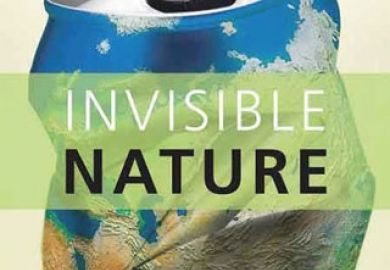
Invisible Nature: Healing the Destructive Divide between People and the Environment, by Kenneth Worthy Laurence Coupe on a grand indictment of the ‘Western epistemological error’ 14 November