The Jacobean Grand Tour: Early Stuart Travellers in Europe, by Edward Chaney and Timothy Wilks Colourful travellers’ accounts move the start date for a rite of passage, discovers Claire Jowitt 20 March
First World War: Still No End in Sight, by Frank Furedi The conflict takes a backseat to questions about the state of ideological and cultural thinking, says Angela K. Smith 13 March
Aleister Crowley and the Temptation of Politics, by Marco Pasi Clive Bloom praises an admirable introduction to the magical and political connections of a controversial figure 6 March
Franco’s Crypt: Spanish Culture and Memory Since 1936, by Jeremy Treglown Mercedes Camino on a cultural analysis spanning seven decades 27 February
The Burden of Female Talent: The Poet Li Qingzhao and her History in China, by Ronald C. Egan Eva Shan Chou lauds an original, erudite portrait of a writer whose courage matched her creativity 20 February
Literature in the First Media Age: Britain between the Wars, by David Trotter Gary Day on an exploration of new technologies’ effects on artists’ representation of the world 20 February
Rebellion: Britain’s First Stuart Kings, 1567-1642, by Tim Harris Ronald Hutton praises a tour de force on the causes of the English Civil War 20 February
Reclaiming American Virtue: The Human Rights Revolution of the 1970s, by Barbara Keys Marilyn Young on the development of human rights as an important issue in the US 13 February
Following the Leader: Ruling China, from Deng Xiaoping to Xi Jinping, by David M. Lampton Jonathan Mirsky on a selective view of the Chinese political elite 13 February
Will China Dominate the 21st Century?, by Jonathan Fenby Jonathan Mirsky on a merciless dissection of a seemingly unstoppable country 6 February
Country House Society: The Private Lives of England’s Upper Class after the First World War, by Pamela Horn A. W. Purdue on the changing social lives of the aristocracy and gentry between the wars 6 February
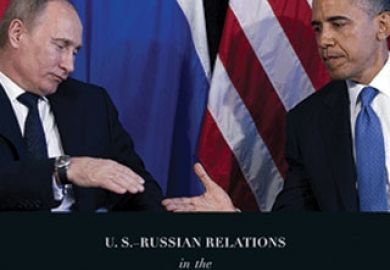
The Limits of Partnership: U.S.-Russian Relations in the Twenty-First Century, by Angela Stent Elizabeth Cobbs Hoffman on the give and take between the two superpowers since the Soviet collapse 6 February
Mixed Emotions: Beyond Fear and Hatred in International Conflict, by Andrew A. G. Ross Gregory Kent explores the affective consequences of war 30 January
The Children’s War: Britain, 1914-1918, by Rosie Kennedy A. W. Purdue on how children shared in the nation’s experience of the First World War 30 January
Goodbye to All That? The Story of Europe since 1945, by Dan Stone Post-war history from East and West perspectives creates vivid impressions for Roger Morgan 30 January
Walter Benjamin: A Critical Life, by Howard Eiland and Michael W. Jennings Beset by turmoil, an inimitable critic wrote as if from the future. Joanna Hodge on a material force 23 January
Writing Faith and Telling Tales: Literature, Politics, and Religion in the Work of Thomas More, by Thomas Betteridge Peter Gwyn finds an attempt to put More’s writings into historical context less than clear 23 January
Acts of Union and Disunion: What has Held the UK Together and What is Dividing it?, by Linda Colley Violence, accident and luck have all made this young federal union, says Donald MacRaild 23 January
George Orwell: English Rebel, by Robert Colls Sheila Rowbotham on a great writer whose contrary aspects are impossible to sum up 16 January
The Book of Common Prayer: A Biography, by Alan Jacobs Willy Maley on one of the most important works in the English language 16 January
Myth, Memory, Trauma: Rethinking the Stalinist Past in the Soviet Union, 1953-70, by Polly Jones Lara Cook on coping with the man of steel’s legacy 16 January
Was Hitler a Darwinian? Disputed Questions in the History of Evolutionary Theory, by Robert J. Richards Nazi ideology may not have adopted evolutionary theory wholesale, but it certainly used its ideas, says Yvonne Sherratt 16 January
Archduke Franz Ferdinand Lives! A World Without World War I, by Richard Ned Lebow Richard J. Evans considers the comfort of the counterfactual 9 January
The Drama of Reform: Theology and Theatricality, 1461-1553, by Tamara Atkin With the stage set for passionate religious argument, Helen Smith takes her seat 9 January
Fragments: Transcribing the Holocaust, by Frances Rapport with Anka Bergman, Terry Farago and Edith Salter Robert Eaglestone on an attempt to capture barbarism in poetry, not prose 9 January
Wicked Intelligence: Visual Art and the Science of Experiment in Restoration London, by Matthew Hunter William Poole enjoys the insights but prefers his prose less florid 9 January
Sino-Japanese Relations After the Cold War: Two Tigers Sharing a Mountain, by Michael Yahuda Jonathan Mirsky on the politics and economics of the relationship between rapidly developing China and stagnating Japan 2 January
Down to the Sea in Ships: Of Ageless Oceans and Modern Men, by Horatio Clare Philip Hoare on the global market’s manifest destiny 2 January
A Union Forever: The Irish Question and U.S. Foreign Relations in the Victorian Age, by David Sim It was Civil War not Fenianism that prompted Anglo-American tensions, argues Donald M. MacRaild 2 January
Pagan Britain, by Ronald Hutton Sarah Semple on the ritual and romance of this island story’s early chapters 2 January
Why Can the Dead Do Such Great Things?, by Robert Bartlett A thread of celebrity weaves through a masterful study of cults of Christian icons, Helen Fulton finds 19 December
The Making of the Modern British Home: The Suburban Semi and Family Life between the Wars, by Peter Scott Grace Lees-Maffei on the sights and sounds of the suburbs 12 December
Ezra Pound’s Fascist Propaganda, 1935-45, by Matthew Feldman Richard Bosworth on an exploration of Pound’s activism before and during the Second World War 12 December
Armed with Expertise: The Militarization of American Social Research during the Cold War, by Joy Rohde Michael Patrick Cullinane on the military-academic complex 5 December
The City and the King: Architecture and Politics in Restoration London, by Christine Stevenson Harriet Harriss on an age when ‘form followed fealty’ and politics triumphed over economics 5 December
The Pleasure’s All Mine: A History of Perverse Sex, by Julie Peakman Alison Oram on changing attitudes to sexual perversions 5 December
The First Bohemians: Life and Art in London’s Golden Age, by Vic Gatrell Clare Brant revels in a compelling evocation of non-conformists in the capital’s cultural ‘heart’ 5 December
The Triumph of Human Empire: Verne, Morris and Stevenson at the End of the World, by Rosalind Williams Tom Wright on a study of how three late 19th century writers contemplated humanity’s impact on the environment 5 December
The Confidence Trap: A History of Democracy in Crisis from World War I to the Present, by David Runciman A. W. Purdue on the risky belief that participatory government can always muddle through any crisis 5 December
Speaking of Flowers: Student Movements and the Making and Remembering of 1968 in Military Brazil, by Victoria Langland Sarah Sarzynski on an analysis of student activism during Brazil’s military dictatorship 28 November
Abandoned to Ourselves, by Peter Alexander Meyers Biancamaria Fontana on a mannered criticism of Enlightenment thought 28 November
Housewives and Citizens: Domesticity and the Women’s Movement in England, 1928-64, by Caitriona Beaumont June Purvis discusses conservative contributions to gender equality 21 November
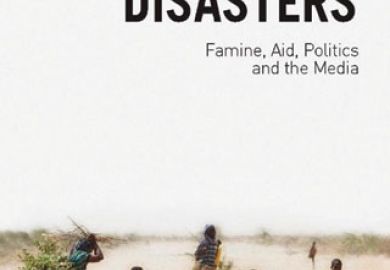
Reporting Disasters: Famine, Aid, Politics and the Media, by Suzanne Franks Sally Feldman on an alternative interpretation of the media reporting and government responses to the Ethiopian famine in 1984 14 November
Red Fortress: The Secret Heart of Russia’s History, by Catherine Merridale Lara Cook on how different leaders have made and remade the Kremlin 14 November
The Long Shadow: The Great War and the Twentieth Century, by David Reynolds Alex Danchev on how Britain has remembered and misremembered the First World War 7 November
Crossing the Bay of Bengal: The Furies of Nature and the Fortunes of Migrants, by Sunil Amrith Caroline Osella on a page-turning survey of people and politics in a region once at the heart of global trade and imperial histories 7 November
Nature’s Noblemen: Transatlantic Masculinities and the Nineteenth-Century American West, by Monica Rico Peter Messent on why upper-class men felt at home on the frontier 31 October
The War that Ended Peace: How Europe Abandoned Peace for the First World War, by Margaret MacMillan Roger Morgan on the reasons why so much blood was shed 24 October
The Collaboration: Hollywood’s Pact with Hitler, by Ben Urwand Philip Kemp on the cooperation and acquiescence demonstrated by LA film studios to the Nazis 24 October
The Art of Listening in the Early Church, by Carol Harrison Ursula King on how the new Christian message was communicated by listening to the spoken word through teaching and preaching 24 October
The Tragedy of Liberation: A History of the Chinese Revolution 1945-1957, by Frank Dikötter Jennifer Altehenger on a compelling account of the Communist involvement in the Civil War and of the first eight years of Communist rule 24 October
Maori heads return to New Zealand The University of Birmingham is returning to New Zealand its collection of Toi moko, tattooed heads preserved by Maoris to venerate a loved one or mock a defeated enemy. By Matthew Reisz 18 October
Wounded: From Battlefield to Blighty, 1914-18, by Emily Mayhew A. W. Purdue is moved by the stories of the medical personnel who saved lives at the Western Front 17 October
Menstruation and the Female Body in Early Modern England, by Sara Read Helen Fulton looks at social attitudes to women’s monthly cycle in the 16th to 18th centuries 17 October
Redefining Rape: Sexual Violence in the Era of Suffrage and Segregation, by Estelle B. Freedman Joanna Bourke on a meticulous analysis of the responses of civil rights movements to sexual violence against women and girls 17 October
Working Lives: Gender, Migration and Employment in Britain, 1945- 2007, by Linda McDowell Pat Thane on a book that provides important insights into the experience of female immigrants 10 October
Churchill’s Bomb: A Hidden History of Science, War and Politics, by Graham Farmelo A. W. Purdue on the leader who saw the nuclear future but let it slip 10 October
The Beau Monde: Fashionable Society in Georgian London, by Hannah Greig Clare Brant on the truly dedicated followers of 18th-century fashion 3 October
The Republic: The Fight for Irish Independence 1918-1923, by Charles Townshend Marianne Elliott on the bloody foundation of a modern state 3 October
The Bombing War: Europe 1939-1945, by Richard Overy Jill Stephenson praises a study of terror from the skies 19 September