As the “big four” anglophone study destinations, the US, UK, Canada and Australia, all crack down on international students, it is striking that many of their main source markets in Asia are aiming not only to retain more of their own students but also to recruit many more international students of their own.
The big four’s virtually unprecedented move to all crack down on international enrolments at once, amid increasingly hostile public attitudes towards immigration, has come on the back of a global pandemic that severely disrupted international student flows. This has already led to marked changes in Asian students’ migration patterns. Analysis after analysis have shown that they are steadily withdrawing from anglophone destinations.
For instance, a recent report by Common App, an NGO focused on US college admissions, found that the number of Indian students applying to US colleges fell 15 per cent in 2025-26 compared with the previous academic year. The Trump administration’s intention to hike the price of sponsoring an H-1B skilled worker visa to more than $100,000, if successful, is sure to suppress demand further, as are proposals to restrict international students to a maximum four-year stay from September.
In the UK, recent figures released by the Home Office show that sponsored study visa applications for the year ending July 2026 are down 11 per cent compared with the previous year. Australian statistics show that foreign student numbers fell by 0.5 per cent last year, due to a 15 per cent decline in new enrolments. And international enrolment in Canada is estimated to have dropped nearly 30 per cent in 2024-25 alone.
Intra-Asian student migration is not a new phenomenon. There are already concentrations of Asian international students in certain countries within the continent. South Korea is especially attractive for Vietnamese students, for instance. Singapore serves as a regional hub for Indians and Indonesians, and Malaysia draws many Bangladeshis and Pakistanis.
But several countries, particularly in the Asia-Pacific, have set themselves ambitious targets to expand their international intakes. Before the Covid lockdowns, China got close to meeting its 2010 target to host 500,000 international students by 2020, while neighbouring Hong Kong has recently raised the cap on international enrolments in the territory to 50 per cent of the total. Earlier this year, South Korea met its 300,000 international student enrolment target two years early, while last year Japan surpassed its government target of hosting 400,000 international students by 2033 a full eight years early and recently said it would allow selected faculties at three national universities to exceed approved enrolment quotas by up to 5 per cent.
But as they enjoy Western levels of success in international recruitment, might Asian nations also face Western levels of public unease about it? Are Asia’s historically monocultural populations embracing the social benefits of increased multiculturalism, the economic benefits of global talent and the political benefits of expanded international influence? Or will they, as in the West, start to baulk at the pressure imposed by international students on local infrastructure, increased competition for graduate employment and supposed threats to local and national identities?

Several factors have collided to make Asian students more inclined to look closer to home for an international study place, according to Hamish Coates, executive dean at the Holmes Institute in Australia and formerly a tenured professor at Tsinghua University.
First, Asian countries with “very advanced innovation economies” have invested significantly in their own higher education sectors, improving the quality of domestic options. Between 2021 and 2024, for instance, the Chinese government poured £395 billion into higher education, accounting for 3.6 per cent of the country’s total general public budget expenditure.
Moreover, many East Asian countries, such as Japan, South Korea, Taiwan and Singapore, are facing a demographic decline in their working populations, with birth rates well below replacement levels. The resulting labour shortages make it imperative for such countries to chase skilled young graduates from abroad, Coates said.
But each country has its own specific dynamics. Despite the long closure of its borders during the Covid era, China’s volume of international students had bounced back to 380,000, from 191 countries and regions, by the 2024-25 academic year, according to figures quoted by a government official at the 2026 China Study Abroad Forum in Beijing. Asian students made up the largest share of the total (61 per cent), followed by Africans (16 per cent). That split partly reflects the fact that China’s huge investments in its vast Belt and Road international development and influence initiative are largely concentrated in those two continents.
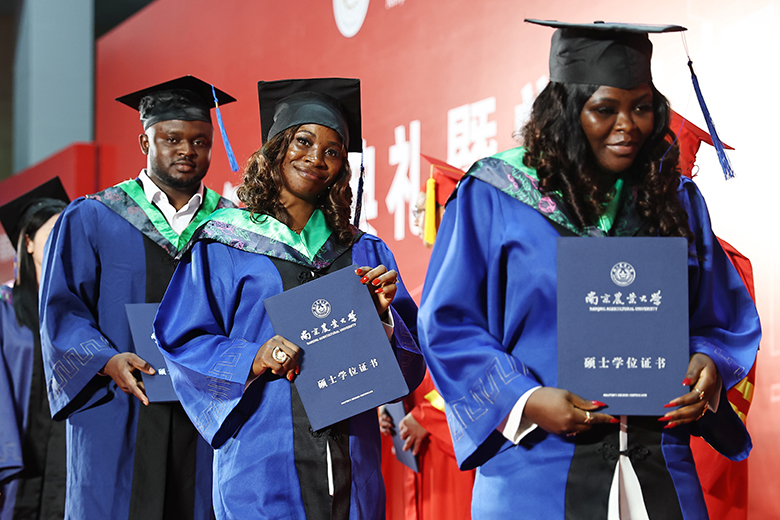
Ming Cheng, professor of higher education at Sheffield Hallam University, said that Asian students increasingly choose China owing to its “rising academic quality, lower costs [than the West], cultural familiarity and booming regional job markets”.
Those lower costs reflect the fact that China does not take a commercial approach to international education and instead subsidises international students heavily, she added. In common with Japan and South Korea, many international students in China have scholarships funded by the host country, Cheng explained.
In line with its economic development, China has also “introduced more convenient pathways for internships, work permits, and residence extensions for outstanding international graduates, particularly in STEM and other priority fields”, according to Futao Huang, professor at the Research Institute for Higher Education at Hiroshima University in Japan. Last year, for instance, it launched a new “K visa” for young science and technology specialists, following moves to restore student mobility after Covid-related restrictions.
But China’s economy has – by its own recent standards, at least – struggled in recent years because of the bursting of a property bubble, leading to an increase in graduate unemployment. The resulting decrease in family income is another reason that fewer Chinese students are heading to expensive Western destinations.
That oversupply of domestic graduate labour may partly explain why, at the end of last year, China introduced a new standardised exam, the China Scholastic Competency Assessment (CSCA), which, from 2028, all international applicants to Chinese universities will have to sit. According to Huang, the move signals that China is becoming “more selective and strategic in attracting and retaining international talent”. It is also evidence of a more “quality-oriented approach” specifically to higher education, he argued, which aims at making China’s universities even more competitive.
“The focus is now on increasing the proportion of degree-seeking students (especially at the master’s and doctoral levels), strengthening quality assurance and academic standards, and applying more consistent management to both Chinese and international students,” he said.
Huang considers it “unlikely” that China would significantly cut its overall numbers of international students in the way that Western nations have recently done. However, it is likely to remain very selective about who it allows to remain in the country post-graduation; international students must navigate onerous post-study visa rules, including the requirement for bachelor’s graduates to have two years of relevant work experience outside China.
Nor is finding a job in China easy for international students even at the best of economic times, according to Gerry Postiglione, emeritus professor at the Faculty of Education at the University of Hong Kong. For one thing, proficiency in Chinese is “extremely important” – and “Chinese graduates who are born in China, who study in China, get their degrees in China…of course, they’re going to be far more proficient in Chinese,” he remarked.
Then, there is the question of scale. “You’re talking about a country with 1.4 billion people,” said Postiglione. “There’s a lot of talent there. How do foreign students compete? It’s not like the US, where a lot of people don’t go to college, don’t even care about college and so on.”
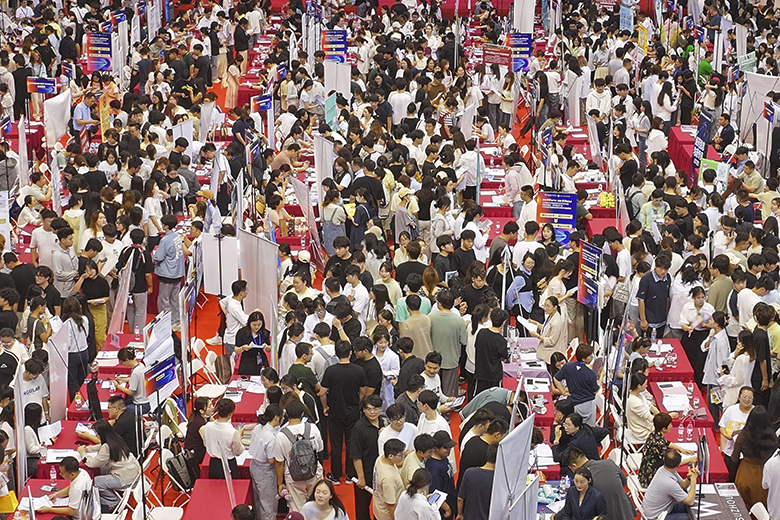
Just over the Sham Chun River, Hong Kong has long prided itself on being an international educational hub, with its Chinese and British heritage and its series of high-quality, largely anglophone universities. But the territory’s decision to allow international enrolment to account for as much as half of all enrolments from next year (up from the current 40 per cent) is striking.
On the other hand, it is important to note that Chinese students count as international in Hong Kong, and they make up the vast majority of those quotas, especially at postgraduate level. That is perhaps part of the explanation for Hong Kong’s relatively generous post-study work offer, which, despite the territory’s famous shortage of space, currently stands at two years. (The UK is reducing its offer from two years to 18 months next year.)
Joshua Ka Ho Mok, provost and vice-president (academic and research) and dean of the graduate school at the private Hang Seng University of Hong Kong, said that the raising of the enrolment cap was “productive” in terms of realising the Hong Kong government’s ambition to cement Hong Kong as “an international educational hub in Asia”. And the recruitment of overseas talent is “essential to sustain Hong Kong’s further development”, he added, especially in the face of an ageing population, a quarter of which are aged 65 or over, and a birth rate that, between mid-2025 and mid-2026, fell below 30,000 for the first time since official records began in 1962.
“Without the import of people from outside, we may not be able to sustain the longevity of the population,” Mok said.
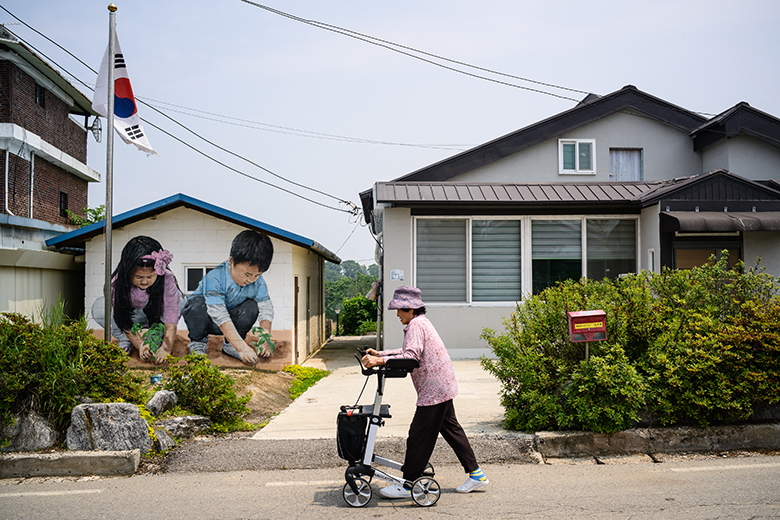
South Korea, too, is battling an ageing population. Its ability to meet its 300,000 international student enrolment target much earlier than anticipated was no doubt due in part to the country’s cultural popularity, as well as to its provincial universities’ desperation to retain recruitment levels amid demographic decline. As well as 115,000 Vietnamese students, the country also hosted nearly 80,000 Chinese, 21,000 Uzbeks and 19,000 Mongolians as of February this year.
However, according to Kyuseok Kim, director of IES Seoul, public concern in Korea has been rising about visa abuse – working illegally – and visa overstaying, particularly among Vietnamese students on Korean language courses. The number of students in illegal residency status rose from 8,200 in 2017 to 36,000 in 2023 – although only 6 per cent of those were on the visas meant for degree-seeking programmes.
Despite the demographic decline, international students in Korea face similar problems to those in China. Xinxin Zhao, a Japanese national of Chinese origin, went through “a lengthy job search” after graduating from Seoul National University in February 2026.
“Although Korean companies are becoming increasingly international and value candidates with multilingual skills and international backgrounds, foreign graduates still face a number of challenges,” she told Times Higher Education.
Zhao added that: “in addition to the high level of Korean proficiency required for most positions, some companies have limited experience with hiring foreign employees and handling work visa-related matters.”
“It is important not only to meet a company’s hiring expectations but also to satisfy immigration requirements. I spent considerable time researching visa policies and planning my career accordingly,” she said.
Zhao’s experience reflects the “complex reality” of retaining foreign talent in Korea, according to Theodore Jun Yoo, professor in the department of Korean language and literature at Yonsei University. While the country’s temporary migration programme, the Employment Permit System, has been successful in attracting international workers in certain fields, including agriculture and manufacturing, the nation has found it harder to recruit university-educated professionals in STEM and technology.
That is because, for all the international popularity of its own popular culture, Korea is “not yet fully prepared, either socially or structurally, to support genuine multiculturalism” within its own borders, according to Yoo.
“Current damunhwa (multicultural) policies have largely stalled because multicultural education has not been meaningfully integrated into the school curriculum,” he explained. “Rather than encouraging students to understand ‘Korea in the world’, the prevailing mindset often remains ‘Korea versus the world’.”
The effects of that insularity are felt, in particular, by non-white immigrants, Yoo explained. And “until systemic changes take place across educational, cultural, and social institutions, deep-seated prejudices against people from the Global South will persist,” he predicted. “As a result, integration remains far easier for white foreigners than for people of colour. This continues to be the difficult reality confronting efforts to internationalise South Korea and, more broadly, Asia.”

The Holmes Institute’s Coates concurred that many countries in Asia “simply don’t have the infrastructure to support large-scale foreign talent hiring”.
“If you look at other countries across Asia, it’s certainly not as easy to go and live there as it is to go and live in New York, London or Melbourne. These are global cosmopolitan cities that are used to having a very pluralist approach to employing people.”
To meet their internationalisation target and to reap the economic benefits of doing so, Coates said, Asian countries will have to “diversify how they make it attractive for people to go and work there”.
The test, Coates said, will be whether a country has internationalised its own culture in ways that make it “feasible not just to recruit foreign talent but to retain them…in the sense that people are happy to build a life there, happy to have a family there, happy to bring their parents across, happy to retire there”.
“If you look at very sophisticated and highly internationalised economies around the world, they’ve actively put in place steps for people to be able to do that.”
Register to continue
Why register?
- Registration is free and only takes a moment
- Once registered, you can read 3 articles a month
- Sign up for our newsletter
Subscribe
Or subscribe for unlimited access to:
- Unlimited access to news, views, insights & reviews
- Digital editions
- Digital access to THE’s university and college rankings analysis
Already registered or a current subscriber?