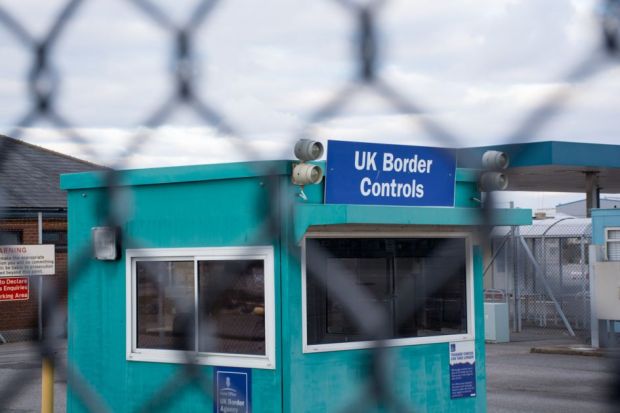
Campaign groups have accused the UK government of cruelty following its decision to stop issuing study visas to people coming from Afghanistan, Cameroon, Myanmar and Sudan in an attempt to reduce asylum claims.
The Home Office said it is applying an “emergency brake” to visas for the first time following a “surge” in asylum claims from people entering the country through legal routes.
Students from these countries are among the most likely to claim asylum once in the UK. According to government figures, the combined number of applications from the four nations grew by over 470 per cent between 2021 and 2025.
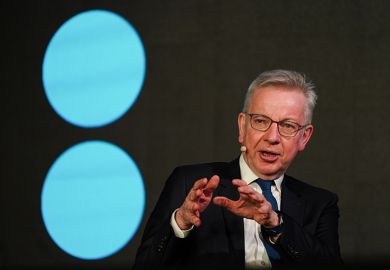
“Britain will always provide refuge to people fleeing war and persecution, but our visa system must not be abused,” said home secretary Shabana Mahmood.
“That is why I am taking the unprecedented decision to refuse visas for those nationals seeking to exploit our generosity.”
The brake will come into force on 26 March. The UK Council for International Student Affairs (UKCISA) said it was currently unclear if or how new students preparing to study in the UK or students already in the UK would be affected.
Human rights group Burma Campaign UK said the decision was “exceptionally cruel and short-sighted”.
“The opportunity to come to the UK to study is life-changing for the individual student but also an investment in the future of Myanmar, as people will use new skills to help their country in the future,” said programme director Zoya Phan.
“Instead of smashing the gangs, Shabana Mahmood is smashing the hopes and dreams of young people from Myanmar seeking a better future for themselves and their country.”
Phan herself claimed asylum in the UK 20 years ago after initially arriving in the UK on a study visa, following death threats from the military in Myanmar because of her human rights work.
UKCISA said there were “many genuine reasons that individuals may feel unsafe to return to their home country, and this should be acknowledged by the government”.
“Seeking asylum is a legal right and deciding to seek asylum has consequences for those who apply. It is an important and life-changing decision that requires specialist regulated advice, and there is no guarantee that any application will be successful.”
A spokesperson from Universities UK urged the government to move forward with its own proposals to create a specific visa route for refugee and displaced students to study in the UK.
“Today’s news will be concerning for many current and prospective international students, who make huge sacrifices to study in the UK, work hard and contribute significantly while here,” they added. “We will be asking to meet with the Home Office to discuss today’s announcement and clarify the implications for students.”
In total, there were 3,875 students from the four affected countries studying at UK universities in 2024-25, according to Higher Education Statistics Agency data. Of these, 2,665 came from Myanmar, 575 from Cameroon, 355 from Afghanistan and 280 from Sudan.
Claims by students from Cameroon and Sudan spiked by more than 330 per cent over four years up to 2025, which the government said poses “an unsustainable threat to the UK’s asylum system”.
Cameroon, Sudan and Myanmar are all in the midst of armed conflicts, while Afghanistan has faced a worsening humanitarian crisis since the Taliban takeover in August 2021.
Women and girls are forbidden to participate in education beyond primary level and there are concerns that Afghan women who have been educated abroad may be persecuted if they return to the country.
Between 2021 and 2025, the proportion of Afghan asylum claims to study visas issued was 95 per cent.
In 2025, 360 study visas were issued to Afghans, while 470 Afghan nationals on study visas claimed asylum.
Some universities have already paused the recruitment of students from Afghanistan over concerns they could breach visa compliance rules.
The Home Office said it has reduced student asylum claims by 20 per cent over the course of 2025, but those arriving on study visas still make up 13 per cent of all claims in the system.
The government added that Britain has offered sanctuary to over 37,000 Afghans through its two resettlement schemes since 2021, while 190,000 visas were granted on humanitarian routes in 2025.
There were also concerns about what the new policy meant for students on scholarships.
In particular, Times Higher Education understands that students from Afghanistan applying to the 2026-27 Chevening Scholarship – which is run by the Foreign, Commonwealth and Development Office – have been told their interviews are on hold.
Naimat Zafary, a PhD scholar from Afghanistan who first came to the UK under the Chevening scheme, said the announcement was of “deep concern”.
Register to continue
Why register?
- Registration is free and only takes a moment
- Once registered, you can read 3 articles a month
- Sign up for our newsletter
Subscribe
Or subscribe for unlimited access to:
- Unlimited access to news, views, insights & reviews
- Digital editions
- Digital access to THE’s university and college rankings analysis
Already registered or a current subscriber?