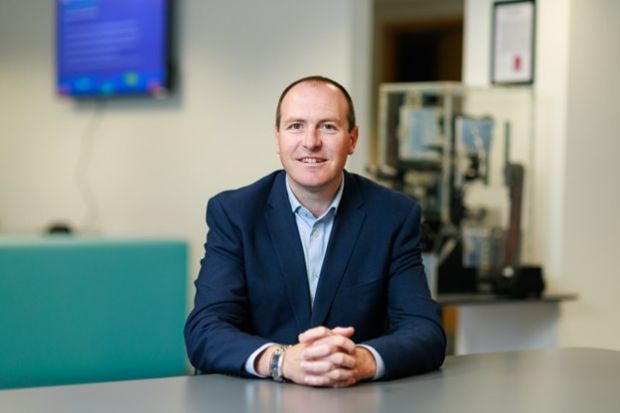
Further cuts to UK science initiatives will be announced in the next few months, UK Research and Innovation’s chief executive has warned, adding that there are “tough decisions” ahead for £9 billion-a-year funding agency.
In an open letter sent on 1 February, Ian Chapman explains the current restructuring of research council budgets which has led to a pause on multiple funding opportunities and the announcement of a “significant programme of savings” at the Science and Facilities Technology Council (STFC) reflected “hard decisions UKRI is making [which] will result in negative outcomes for some”.
“That is an unfortunate reality, of which we are acutely aware, but we cannot avoid,” writes Chapman.
“I know that periods of change and uncertainty are unsettling and so I wanted to write directly to you and be as clear as possible about what is happening,” he continues.
While UKRI’s overall budget is rising to almost £10 billion by 2030 – a “privileged position at a time of constrained public finances” – Chapman says UKRI leaders “have had clear direction from government that we need to focus and do fewer things better”.
“Making those choices means that some activities will benefit from increased investment, but other areas will unfortunately experience some reductions, and you can expect to see UKRI making more of these decisions in the coming months,” he continues.
“Unless we make those choices we will all lose out in the long run because we won’t be supporting anything at the critical levels needed to truly succeed,” Chapman adds in the letter.
The changes follow a shake-up of how UKRI allocates its budget, announced in December, which is designed to increase the amount of money spent on research focused on nine economic areas identified as priorities in the Labour government’s industrial strategy.
“To deliver this investment effectively UKRI is changing,” explains Chapman, adding that “where multiple councils have a significant interest in a field, like artificial intelligence, we will bring teams together and have one UKRI-wide targeted programme, instead of running multiple programmes from within several councils”.
Noting UKRI is now in a “review period to develop implementation”, Chapman says the organisation expected “to have fully transitioned to the new model by the start of the 2027 and 2028 financial year”.
“Moving to a new model, including creating new cross-council programmes and those aligned to national priorities, is a significant organisational change.”
“You may be aware of recent pauses to some programmes. For our curiosity-driven research programmes, headroom in funding will increase, as existing commitments continue to wind down and you can expect to see new opportunities opening later this year.”
Addressing the recent announcement of a “significant programme of savings” at the Science and Facilities Technology Council (STFC), Chapman insisted this council’s situation is “unique among the UKRI councils because its cost base has increased significantly due to the type of facilities and services it manages, the research it funds and some projects with higher costs than foreseen”.
“Over the previous Spending Review (SR) period, rising energy costs and unfavourable movements in foreign exchange rates increased STFC’s annual costs by over £50 million a year,” he says on the “unforeseen costs”, which, coupled with an “ambitious programme from the previous SR have increased the pressure on STFC’s budget”.
STFC’s core budget would hold “relatively flat from £835 million to £842 million” between 2026 and 2030, but the council “must make significant cumulative savings: a decrease of £162 million relative to our forecasts for their operational costs” by 2030, says Chapman.
“Instead, STFC needs to reshape its cost base over the whole SR period so that their budget is balanced by 2029 and 2030 and key facilities are funded properly and sustainably,” he says.
“That is not the situation at other councils and we do not anticipate equivalent measures will be necessary outside of STFC,” says Chapman, adding it “is important to understand that the specific measures STFC must take should not be confused with the broader changes taking place across UKRI”.
Register to continue
Why register?
- Registration is free and only takes a moment
- Once registered, you can read 3 articles a month
- Sign up for our newsletter
Subscribe
Or subscribe for unlimited access to:
- Unlimited access to news, views, insights & reviews
- Digital editions
- Digital access to THE’s university and college rankings analysis
Already registered or a current subscriber?