
What the ‘overseas elective’ can teach us about adapting student exchanges for 2026 and beyond


You may also like
Popular resources
The world is a big and often scary place. Even more so if you are a university student taking your first steps towards exploring it. But we have a mandate in higher education to nudge students to take on their fears and begin to discover the world. This means finding ways for students to “dip their toes” into the vastness, rather than expecting them to dive straight into the deep end of that pool of possibilities.
Throughout this series, I have explored the realities of outbound student mobility in 2026 and how universities might work to improve their offering so that more students benefit from international travel and study. A few considerations have emerged:
First, students are less willing to participate in overseas study trips than they were in the 2010s, driven by cost-of-living pressures alongside worries about global instability.
Second, the traditional model of semester-long exchanges as the default form of outbound mobility may no longer be sustainable because of diminished interest from students.
Third, international experiences are significant levellers for disadvantaged students, if they can access them, so we should facilitate their mobility in whatever ways possible.
Fourth, we ought to listen to what students want in relation to overseas study trips, while encouraging them to stretch themselves beyond their comfort zones.
To address these themes, we need to rethink some assumptions and structures relating to outbound mobility. The resulting changes may benefit all of us in higher education.
- Spotlight guide: Support student success in the multilingual classroom
- Make multiculturalism an enriching learning experience
- Why ethical internationalisation starts with listening
Student exchanges still work relatively well in much of the Global North, even after losing some popularity post pandemic. However, once we bring the Global South into the conversation, we are faced with a problem of numbers and a problem of attitude. This has always been a challenge, but it is even worse now.
Exchanges require reciprocity. With students from the Global North now more reluctant to venture out of their comfort zones and visit countries in the Global South, there is an imbalance that renders exchanges unsustainable.
Then there is the problem of attitude. If we accept this flow of people from the Global South coming to learn from the Global North, but do not create better pathways for learning to happen in the other direction, we reinforce an extractivist flow of knowledge.
Shorter exchange programmes between Global North and Global South institutions may help address these issues. Such programmes are common among North American universities but less so elsewhere in the world.
I would like to draw on a decade-long experiment run by my department, the Faculty of Law and Justice at UNSW Sydney, where we have run what we call “overseas electives”.
What does an ‘overseas elective’ involve?
An academic subject specialist takes a group of students to a partner institution for two weeks, where they attend a series of guest lectures, with the academic leading their trip remaining responsible for the pedagogical flow of the course and the assessment.
We generally pay an administration fee to the host institution to cover the use of facilities and their academics’ time. Some partner institutions prefer to waive the administration fee and instead create spots for their students to come to us on semester-long exchanges.
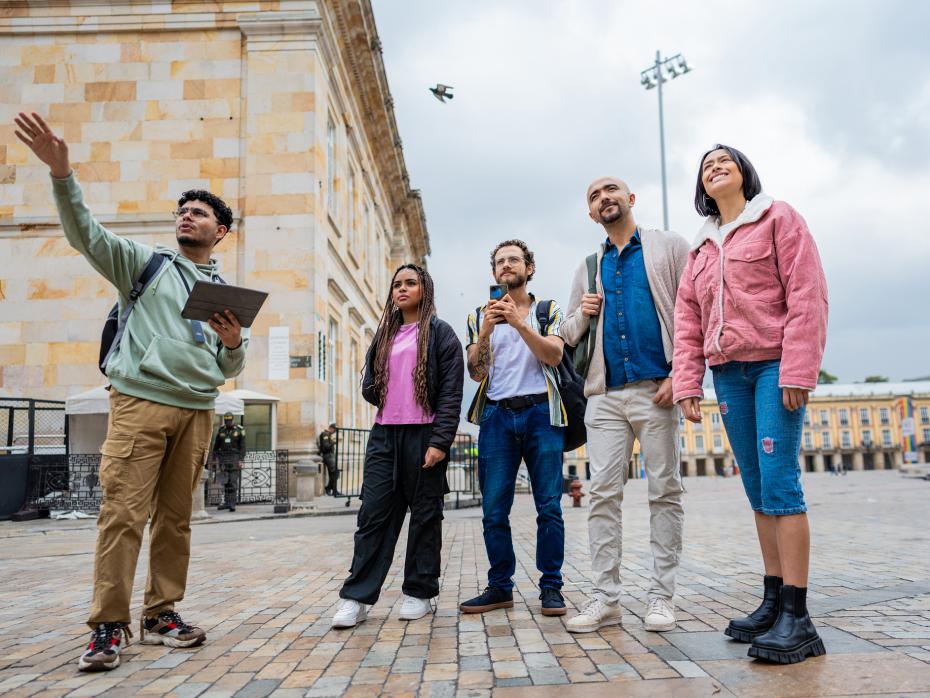
Overseas elective students benefit from being with other students and an academic from their home institution. The group nature of the trip provides stronger pastoral support and allays fears of the unknown, encouraging students to be more adventurous in their choice of location. In a major survey of our students, they said they wanted more of these opportunities, and that location was a secondary consideration to timing and career plans. This suggests that students would be open to being more experimental in where they go, given the right support and opportunities.
The course remains linked to the home institution, so students are not technically enrolled at another institution. However, it is important to create opportunities for incoming students to interact with local students, the way they would in a semester-long exchange. To accomplish this, ideally the host institution creates a mirror course on the same topic for their own students. Mixed cohorts, even for these short programmes, help develop cross-cultural communication skills at levels similar to semester-long exchanges, benefiting all students involved.
Not all subjects lend themselves well to this mixed cohort model. For courses that offer an introduction to a region of the world, local students may not be interested in having their own advanced knowledge and experience reflected back at them in an introductory fashion by foreigners. But when the subject allows for both cohorts to learn together on an equal footing, classroom magic can be conjured. One student who took part in one of these mixed cohort courses several years ago recently returned to the country they had visited to attend the wedding of a student they met during the course. These bonds are priceless, and a meta goal of academic exchange.
The benefits can be extended further if the two institutions are willing to alternate as course host and partner, with students from each institution visiting the other on alternate years. Doing so creates travel opportunities for students from each institution, as well as the chance for domestic students to meet incoming students from overseas.
The reduced cost of short-term international experiences like overseas electives, compared with a traditional semester-long exchange, makes it accessible for many more students. And the reduced time commitment makes it easier for those with caring responsibilities or jobs to participate.
Academics who have taken part in overseas electives have been able to develop research and further pedagogical collaborations during their time at the partner institution.
There have been discussions about how to introduce work-integrated learning to these shorter-term programmes, enabling students to, for instance, carry out part of their industrial training in another country. Doing so would mean bringing together the administrators responsible for careers and outbound mobility at each institution.
There is a lot of potential to short-term mobility. It requires effort, investment from university leadership and a rethink of the administrative frameworks that support outbound mobility. But the benefits are tremendous for students and academics alike.
Read the rest of Lucas’ series on outbound student mobility here:
Part 1: How can we revive the popularity of exchanges and study trips? Make students feel safe
Part 2: International study experiences can be great equalisers – but only if diverse students participate
Part 3: Can we work with students to ‘co-create’ international study experiences?
Lucas Lixinski is professor and associate dean (international) at the Faculty of Law & Justice, UNSW Sydney.
If you would like advice and insight from academics and university staff delivered direct to your inbox each week, sign up for the Campus newsletter.
