
Develop global citizens with virtual exchanges


Created in partnership with

Created in partnership with
You may also like
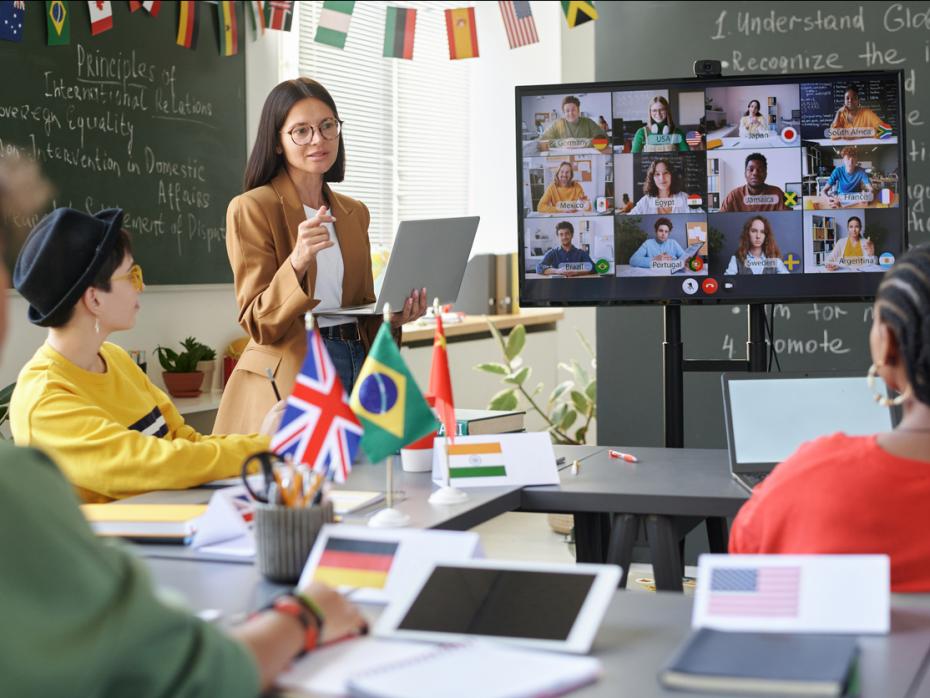
How can higher education develop global citizens, with open minds and hearts, capable of cross-cultural communication? There is a simple way for educators to do this: collaborate with an overseas lecturer to design online activities for students at both institutions. This way, students benefit from meaningful international interactions, with no (or minimal) associated expenses.
Internationalisation at home gives students the opportunity to engage with their peers from other socio-cultural contexts without overseas travel. While in-person exchange programmes offer authentic experiences, they often require resources that not all students or institutions can afford. Virtual exchanges, such as Collaborative Online International Learning (COIL), offer an accessible alternative, making intercultural engagement possible for all. Embedding online exchanges into courses ensures students benefit from internationalisation at home throughout their university education.
- The dos and don’ts of developing an international network in higher education
- Global learning: an emerging transferable skill for students
- Making global academic connections from your desk
At our department, the Department of Early Childhood Education, we have been implementing and documenting our ECE virtual exchange activities for over four years, supporting 25 faculty members in over 50 collaborations with partners from Asia, Australasia, Europe and America. Based on our experience, we have identified the key features that make online international exchanges successful.
Tips for successful internationalisation at home
1. Find a compatible partner for longer-term partnership
To find an overseas lecturer partner, express your interest to your institution’s international coordinator or colleagues with global connections. Often, through word of mouth, you can connect with another overseas lecturer who teaches the same course, or a similar one. Finding a virtual exchange structure that works may take time – whether pair work, group activities or whole group meetings, done synchronously or asynchronously, etc. Once the structure is established, you can refine the model each year, making it an integral and easy-to-implement part of your course(s).
2. Enthuse students through preparatory work and ice breakers
Set the stage by generating enthusiasm among your students. Share background information about the overseas group they will interact with and use icebreaker activities to explore their existing understanding of each other’s cultures. Icebreaking activities can include two-truths-one-lie, sharing a childhood photograph or having a Mentimeter quiz on each other’s cultures to see how much each group knows about each other.
3. Address language barriers with reassurance
Language proficiency should not be a barrier to a positive exchange. Reassure students that differences in English abilities are expected and that perfection is not the goal. Regardless of their language proficiency, language gaps can be bridged with patience and creativity, such as using translation tools or gestures.
Lecturers can also design activities to accommodate language differences. Try grouping students of differing second language ability in the same group, so one of them can translate to the other group, or by matching students across institutions according to their language abilities.
4. Design activities that promote intercultural understanding and prioritise student voices
Design activities that encourage students to learn about each other’s cultures while giving them a platform to express themselves. While formal lectures are valuable, students benefit most when they can exchange thoughts and experiences, so design open-ended tasks without “right” or “wrong” answers, allowing students to contribute original ideas based on their contexts. For example, assign a common task to both groups of students to be completed before class, and then host a joint session for students to present and discuss their findings.
5. Foster collaboration across borders involving back and forth dialogue
Encourage collaborative activities where students from different contexts work on shared tasks. Organise sessions where students are assigned to mixed groups to discuss common questions focusing on specific cases, followed by presentations to the whole group. Interacting in mixed groups gives students more intimate exchanges with another culture. Such dialogic activities can also occur asynchronously. In one of our ECE COIL exchanges, one group created visual artwork, while the other responded with music, dance, or drama.
Impact of internationalisation at home
Internationalisation at home activities are not difficult to implement, mainly requiring the enthusiasm of the lecturers involved. Yet their benefits are multifold, with students reporting that they enjoy these intercultural interactions, gain confidence in intercultural communication and develop deep insights into others’ and their own cultures and educational systems. Student testimonials said:
“I really enjoyed meeting people who are doing the same thing as me but from different countries. Being able to share my culture and the type of education we receive, as well as gaining insight into their culture and education systems, inspires me as an individual and enriches my education.”
“Although we come from different societies, we faced similar issues – society often views kindergarten teachers as babysitters rather than professionals. Unlike Mexico’s early education system, which emphasises socio-emotional development, Hong Kong focuses more on literacy development […] We need to take the best of both worlds and consider how to implement them effectively in our classrooms.”
Alfredo Bautista is professor and associate head (internalization) and Sofie Chua Shuyi is project officer, both at the Department of Early Childhood Education at the Education University of Hong Kong.
If you would like advice and insight from academics and university staff delivered direct to your inbox each week, sign up for the Campus newsletter.
