
Students are not just future graduates – they can serve society now


Created in partnership with
Created in partnership with
You may also like
Universities often speak about the impact of their students after they graduate. The jobs they take. The organisations they lead. The ventures they start. The public roles they assume. The alumni who return, donate, mentor and advise.
All that matters. A university should care about what its graduates become. But it is an oddly delayed way of thinking about impact.
Students do not become members of society after they collect a degree scroll. They already live in neighbourhoods. They depend on public institutions. They have views about fairness, obligation, service and country. They decide, often long before graduation, what sort of citizens they intend to be.
So, a university’s impact should not be measured only by what its graduates achieve after leaving campus. It is also what its students contribute to society while they are still there, through community service or volunteering, for example. The civic purpose of higher education needs to be understood as part of the university’s societal impact.
Beyond counting hours
University is a rare window in a young person’s life. It can connect service with learning, reflection and continuity at scale. A well-designed community engagement experience can help students see that social issues are not abstractions outside the classroom. They involve people, constraints, relationships and choices, which can be messy. And students can avail themselves of guidance and support from the university as they take on the serious responsibility of addressing pressing social issues.
- How to foster a civic mindset in the era of AI
- How to improve civic education through service learning
- Community-engaged learning: a pedagogic approach to civic outreach
Community service has long been part of education in Singapore; schools and universities have helped generations of students encounter needs beyond their immediate circles. And it has been part of undergraduate education at Singapore Management University (SMU) since its founding. All undergraduates complete at least 80 hours of community service before graduation. This has helped make service a visible and expected part of the student experience.
These service hours have helped establish a norm: education is not only about grades, credentials and career advancement; it should also involve some encounter with the wider society.
The next phase is to ask what that norm can make possible for students, for partners, and for the communities or causes they serve.
Public responsibility before graduation
Recent initiatives such as the SG Defence Volunteer Network and VolunteerInc are signals that service in Singapore is taking more varied forms. For universities, the question is not whether every student should be attached to a cause. That would be too tidy. The question is whether young people encounter public responsibility before they graduate in ways that are serious enough to matter.
Many already want meaningful ways to contribute. They should not have to wait until graduation to discover that society has claims on them.
The harder question is institutional. How do we make student contribution useful, sustained and respectful of the people and organisations involved?
Anyone who has worked with partners on the ground knows this: sheer goodwill is a fragile basis for serious work. Poorly designed projects waste time. They ask already-stretched organisations to brief every fresh batch of students. Students may gain exposure, but partners are left doing the holding work.
The better model is slower. Less photogenic. More demanding. Students return to the same issues or partners over time. Successive cohorts learn from those before them. Relationships deepen. Knowledge accumulates instead of evaporating at the end of every academic year.
Singapore cannot afford civic engagement that is casual, episodic or left to chance. We are too small, too exposed and too dependent on trust for that. Partnerships, not good intentions alone, should be the service model.
What this could look like
Project Espressivo is a model of what sustained civic engagement can look like. The SMU community service initiative, which launched in 2021 in partnership with Aphasia SG, harnesses the power of music to support persons with aphasia, a communication disorder that affects the ability to speak, understand, read or write. Through structured musical activities, student volunteers from SoundFoundry co-curricular activity provide therapeutic support for people on their recovery journey, commonly after stroke or brain injury. Participants in such activities can often access language and communication pathways that traditional speech therapy alone may not reach.
This project offers a broader lesson to universities: that success comes when a project has the ingredients of sustained contribution – a real partner, a clear need, prepared students and learning that can be carried forward.
If universities want student service to mean more than activity, they have to care about design. Who prepares the students? Who listens to the partner? Who carries the learning forward? Who notices when a project is no longer useful? Who can help change or deepen it?
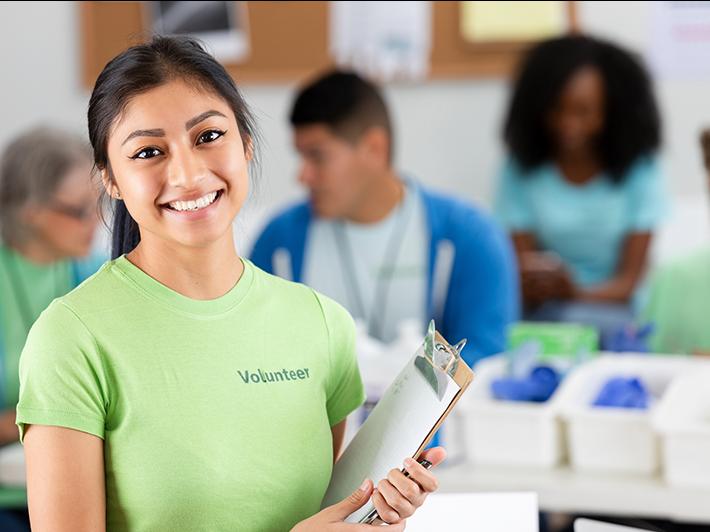
Those questions are less glamorous than a photograph of students in matching T-shirts. They matter more.
Universities as civic infrastructure
Universities bring something distinctive to community service. They have students with varied skills, faculty and staff who can guide projects, and research capability that can help clarify needs and evaluate outcomes. They also have institutional memory, which matters more than we sometimes admit.
Without that memory, too much depends on one committed student leader, one dedicated staff member or one project that shines briefly and fades. That fleeting enthusiasm is borrowed.
Universities today are expected to produce research, support innovation, contribute to policy and prepare graduates for the economy. These expectations are legitimate. But they should not crowd out another form of impact closer to everyday life. Universities can also be civic infrastructure.
They can help partners benefit from youthful energies without being overwhelmed by them. They can help students understand that public responsibility begins before graduation.
For this to happen, community engagement cannot be treated as a box to be checked. It has to be built as a system. Done well, student service is no longer only a co-curricular activity; it becomes a way a university contributes to society in the present tense.
If universities are serious about societal impact, they should look again at the students already in their care and see them not only as future graduates but as citizens who can contribute now. We should stop treating graduation as the starting line for civic life.
It is already under way.
Chew Han Ei is associate director of impact and Mark Chong is dean of students and professor of communication management (practice) at Singapore Management University.
If you would like advice and insight from academics and university staff delivered direct to your inbox each week, sign up for the Campus newsletter.
