
Looking for our environmental future in the poetic past


Created in partnership with

Created in partnership with
You may also like
The most thought-provoking resources for developing environmental literacy are not always in obvious places. If you teach literature – or if you are a teacher who wants to introduce a long timeline of environmental consciousness into a history, philosophy, languages or even geography curriculum – you can find important and engaging material in the more imaginative writings of both the distant and recent past.
This was brought home to me when a conversation turned to poetry, and specifically to Exeter Riddle 85, at a meeting about the relationship between university education and the Sustainable Development Goals. I didn’t know the poem, but I was moved when my colleague Mike Bintley, an expert in the cultures of early medieval Britain and environmentalism, read these 1,000-year-old lines (Bintley’s translation into an English of today):
My hall is not hushed, nor am I loud
about it; the lord made for us
our going together. I am swifter than him,
sometimes stronger, but he is the more enduring.
At times I rest myself, while he must run forth.
I dwell in him always as long as I live;
if we two are parted, my death is ordained.
Environmental literacy is a scientific, political and social matter. It is no less historical, cultural and emotional. Literary forms – by which I mean fiction, poetry and drama – are the places in which diverse modes of understanding the world meet and are played out in imaginative ways. This sometimes yields a clear message that changes the reader’s mind, or consolidates their values, or startles them into asking new questions, or surprises them into a new feeling. At other times, a story, poem or performance will invite us into fraught debate. Crucially, imaginative literature is a place that lets us inhabit many perspectives from across times and places. And in the act of reorientating ourselves, we can find a place – even a home – in ecological consciousness.
- Ease student climate anxiety through nature and community
- Using poetry to solve problems
- Give students the skills to communicate across disciplines
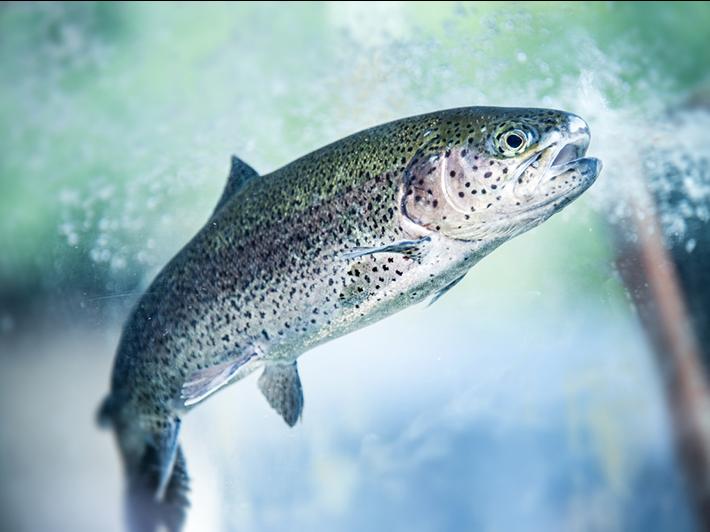
In a modern version, the poem’s riddle might be edited to end with: “What am I?” And you might answer: “A fish!” with either delight that you’d got it or a smiling groan because it isn’t, after all, so difficult to decode. Perhaps you would like to unravel the original. But more important than solving the riddle is the experience of a playful exchange across species and an extraordinary span of history and – from there – beginning to understand that environmental literacy is not a new concept.
The answer to the Exeter Riddle 85 also tells us about the power of literature more generally. It allows us to rest, run and dwell with a past that flows into the future. It is an empowering entry point into environmental literacy.
Becoming environmentally literate is not just about understanding information; nor is it only about understanding problems and solutions. It is also about developing the power to identify and criticise the narratives that hold most power in our world today.
Educators can embed opportunities to develop this critical literacy in the curriculum. Students can focus on environmental futures through study of utopias and dystopias; the impact of colonialism on the health of the ocean through study of postcolonial literatures; on land management through study of Romantic poetry; or on the relationship between environmental activism and literary cultures through their own writing.
In English at Southampton, for example, our students often take this approach to essays and creative writing within the context of modules about a period, genre or form of literature. More recently, we have used this embedded experience to develop a range of specialist thematic modules; for example, students can take a module on the importance of literature to understanding our relationship to fossil fuels or one about the significance of 19th-century cultural production for our understanding of the weather.
This means allowing time for students to debate the meaning and circulation of terms such as “development”, “sustainability”, “resilience” and “adaptation”. It means recognising that entering debates about the environment can be emotionally and intellectually challenging. But in my experience, these discussions are an energising way to move from emotional response to critical thinking about the key aspects of public and political argument about shared environmental futures.
Such classes can also take us – and this is crucial – from an overwhelmed or even helpless feeling to a more precise sense of our place in the world in time and history. Studying a poem or writing a story can be a profound step towards imagining a healthy planetary future. For example, studying the detailed world-making of Ursula K. Le Guin’s 1974 science fiction novel The Dispossessed provides an opportunity to feel and negotiate the tensions between social and environmental justice, and between individual freedoms and the good of a planet.
Analysing various forms of environmental consciousness, comparing ways of valuing nature, attending to the relationship between the human and the more-than-human within imaginative works enables environmental literacy. And developing the capacity to critique and the ability to formulate sensitive narratives about and for the environment is respected and necessary in many fields of work, from policymaking (local, regional and national) to the creative industries. Developing such meaningful skills can begin by feeling like a riddling 1,000-year-old fish.
Stephanie Jones is a professor of literature and law at the University of Southampton.
If you would like advice and insight from academics and university staff delivered direct to your inbox each week, sign up for the Campus newsletter.
Additional Links
For more articles related to this topic, see our spotlight collection Making the case for arts and humanities.
