
Four ways that study tours can put decolonisation into action


Created in partnership with
Created in partnership with
You may also like
We often discuss decolonisation in theoretical terms but its power emerges most clearly when those theories are lived. As a Sarawakian Bidayuh and a South Asian academic, we partnered to design a study tour that translated decolonial principles into practice.
The tour is led by Kam Kaur in Adelaide and hosted in Malaysia by Welyne Jeffrey Jehom. We developed a two-week programme anchored in On Country learning, community collaboration and embodied cultural engagement.
As academic Linda Tuhiwai Smith argues in her 2012 book Decolonising Methodologies, decolonisation must centre Indigenous relationships, respect for community knowledge and accountability to place. For Smith, decolonisation is not simply the removal of colonial structures or the inclusion of Indigenous perspectives within existing systems; rather, it involves restoring Indigenous authority over knowledge production, valuing relational ways of knowing and ensuring that research and practice are accountable to the communities and lands from which that knowledge emerges.
This requires researchers to work in partnership with Indigenous peoples, prioritise community aspirations and recognise that knowledge is inseparable from culture, history and Country. Our programme was built with this foundation at its core.
- Power and possibility: the role of universities in decolonisation
- Decolonising your learning resources: representation matters
- How to support academic staff starting the journey of decolonising the curriculum
From running this programme over three iterations, we identified four key practices that made decolonisation actionable for our students.
1. Begin with relationships with each other and with community
Before engaging students, we began by engaging each other. Our shared commitments to anti-colonial scholarship, Indigenous knowledge systems and decolonisation practices created the foundation for authentic collaboration.
This relationship-building was not incidental – it was the groundwork that shaped every decision that followed. Trust, shared purpose and reciprocal respect are essential when designing a programme centred on Indigenous knowledge. Only after establishing this foundation, did we extend relationship-building to the communities who graciously hosted our students. In decolonial practice, community is not an add-on; it is the starting point.
2. Engage communities as co-educators
The study tour relied on deep community engagement rather than classroom-based instruction. The majority of learning took place through On Country experiences, facilitated by local knowledge holders. Students participated in cultural activities, listened to stories in situ and reflected on how knowledge is transmitted within Indigenous contexts.
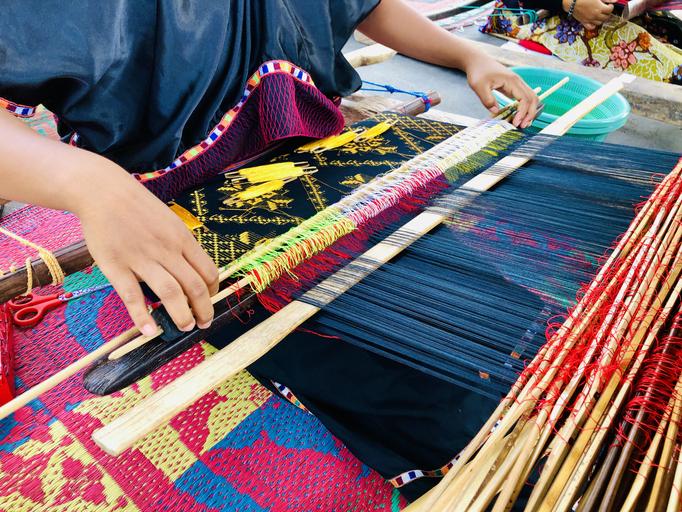
This immersion allowed students to experience epistemology, rather than just read about it. Many later described the learning as transformative: staying in a remote village, participating in cultural practices, such as weaving, dance workshops, walking country and hearing community narratives enabled them to feel the impact of colonial histories and ongoing imperial legacies.
Decolonial learning requires decentralising the academic as the sole expert. Communities became co-educators, and students recognised Indigenous knowledges as living, complex and authoritative.
3. Translate decolonial theory into embodied practice
We deliberately designed activities that embodied decolonial scholarship. Students engaged not only intellectually but emotionally, physically and relationally.
We found that unfamiliarising students from their usual environments helped them unlearn, question and relearn. In his1986 book Decolonising the Mind: The Politics of Language in African Literature, author and academic Ngũgĩ wa Thiong’o reminds us that decolonisation begins with reclaiming the embodied, linguistic and cultural terrain of the colonised. Through the tour’s immersive design, students encountered knowledge on its own terms through language, land, ritual and relationship.
At the same time, Spivak’s critique of the silencing of the subaltern was central: listening directly to community members, rather than filtering their voices through institutional or academic interpretations, allowed students to hear what is so often unheard.
Researchers Eve Tuck and K. Wayne Yang’s reminder that “decolonisation is not a metaphor” provided a constant guide. We wanted students to understand that decolonisation is not merely conceptual but material embedded in land, story, labour, language and community authority.
The endorsement by the Crown Prince of Pahang represented more than ceremonial approval; it indicated that the programme's emphasis on Indigenous knowledge and cross-cultural learning was recognised as an important contribution to educational diplomacy and mutual understanding between the two nations. The Australian High Commission in Malaysia commended it for strengthening cross-cultural understanding.
As Councillor Louisa Richey from the Australian High Commission noted: “This initiative not only provided students with valuable insights into Malaysia’s rich cultural heritage but also showcased a modern Australia with deep roots in its Indigenous past.”
Students themselves echoed this sentiment. A student in 2023 reflected: “Learning on Country was an invaluable way of truly understanding the impacts of colonisation, by creating a sense of connection that is unachievable within a classroom.”
4. Embrace flexibility and unlearn institutional rigidity
Perhaps the most unsettling and ultimately most liberating aspect for students was the programme’s flexibility. Although we planned activities carefully, they were intentionally fluid to honour community rhythms, weather, opportunity and circumstance. For example, at times, planned workshops were postponed so students could participate in community events or ceremonies that arose during the visit. On other occasions, learning shifted outdoors when local conditions or spontaneous invitations from community members offered richer opportunities for engagement than the original plan.
Many students initially resisted this, having been conditioned by rigid academic structures. But learning to adapt was itself a decolonial practice. It disrupted the expectation that knowledge must fit into predetermined timetables and measurable outcomes. In its place, students learned to be responsive, humble and present – qualities essential for engaging respectfully with Indigenous communities.
Decolonisation requires doing
Across three iterations, the study tour has shown that decolonisation is not a metaphor; it is a practice. Putting theory into action required:
- strong and reciprocal relationships
- genuine community engagement
- embodied learning experiences
- and a willingness to break free from rigid academic norms
Through these principles, students developed not only knowledge but a deeper, more human recognition of Indigenous ways of knowing, doing and being. This, ultimately, is what decolonial education aims to achieve.
Kam Kaur is lecturer at Adelaide University and Welyne Jeffrey Jehom is a researcher and senior lecturer at the University of Malaya.
If you would like advice and insight from academics and university staff delivered direct to your inbox each week, sign up for the Campus newsletter.
