Study in the US

Studying in the United States

Why study in the US?

Over a million international students choose to study in the US every year, attracted by the high-ranking universities, the career opportunities and the student experience. The United States is home to over 4,000 universities. Students can choose from a range of universities including private universities, public universities, liberal arts colleges, community colleges and historically black colleges and universities. 

The United States is where you can find the Ivy League, a group of some of the most prestigious universities in the world including Harvard University, Princeton University, Yale University, Columbia University and Cornell University. 

Student life in the US is varied and exciting with opportunities to join debate clubs, sports teams and fraternities and sororities. College sports, especially football and basketball, are a huge part of college life in the US. 

International students need a student visa to study in the US, usually an M1 or an F1 visa depending on the study programme. 

How much does it cost to study in the US?

There is a perception that studying in the US is expensive and this can be true. Domestic students in the US can pay up to $20,000 a year while tuition costs for international students can be up to $50,000 a year. There is no standardised fee system across the US so tuition fees vary across states, universities and courses. 

As the US is a large country, the cost of living is also varied. Some states such as New York, California and Massachusetts have a very high cost of living while states such as Oklahoma, Michigan and Kansas may be more affordable. 

What scholarships are available in the US?

Most universities will offer generous financial aid packages for students that can go towards tuition fees and study materials. Each university will also have their own scholarship and loan programmes, which can make studying more affordable. 

The Fulbright programme offers funding for students in more than 160 countries to study in the US. The Aga Khan Foundation also provides scholarships and funding for studnets in the US. 


More on studying in the US

Graduate employability: top universities in the United States ranked by employers 2026

Key statistics for studying in the US

4,000
universities in the US
$20,000
average tuition fee in the US per year
1.2 million
average international students in the US
$535
is the cost of the US student visa
14 per cent
is the average percentage of international students
14.2
is the average number of students per staff at a US university
23,740
is the average number of students at a US university
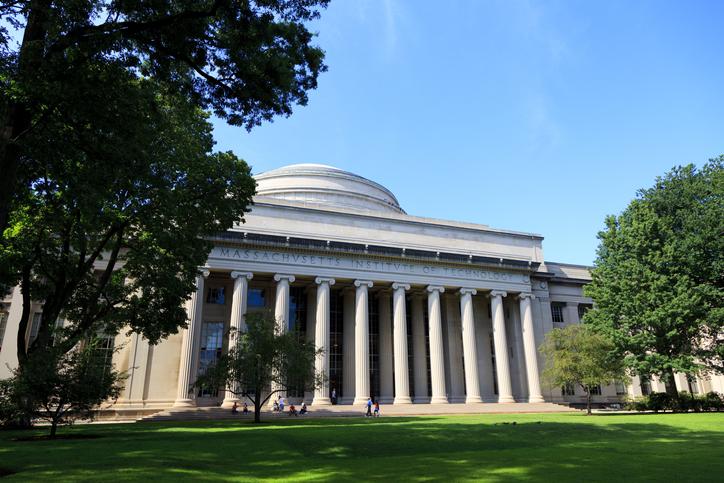
MIT
is the top-ranked university in the US

Why students love studying in the US

I learned to navigate life independently, embrace diverse perspectives and form friendships with classmates from all corners of the globe.


Le Dong Hai Nguyen

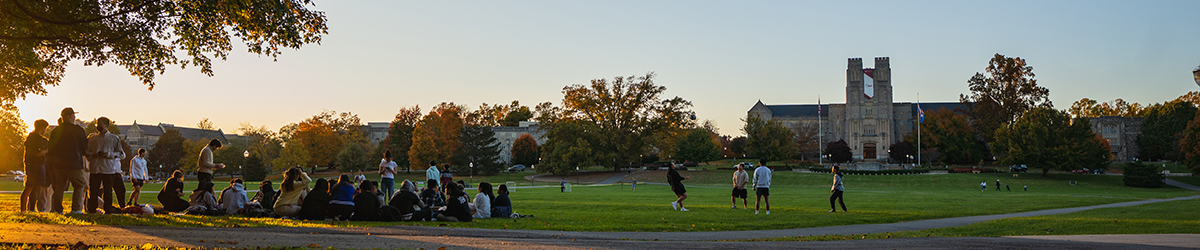
The American university experience is unlike any other in the world and very distinct from my home country, India.


Aditya Sharma

A week in the life of a university student in the US

Discover similar universities

Profile header default
Profile logo

Indiana University Indianapolis

Indianapolis, United States

Founded 

1969

Profile header default
Profile logo

Purdue University West Lafayette

West Lafayette, United States

Purdue University is the flagship institution of the Purdue University system, founded in 1869. The campus is located in the small city of West Lafayette – the most densely populated city in the state of Indiana.There are 13 academic colleges and schools offering more than 200 different undergraduate majors, 70 postgraduate programmes and vocational degrees. The very first PhD awarded by the university in 1897 was in agricultural, in line with the college’s long tradition in agricultural science and engineering. The first Bachelor of Arts degree was not offered until 1959.Even today, the engineering programme is still the most reputed and competitive, and the university has been influential on the history of aviation in the United States over the years.  The very first college credit in flight training and the first four-year bachelor programme in aviation were offered by Purdue. In 1934 Purdue University Airport was established as the first university-owned airport in the country.Twenty-three Purdue alumni have become astronauts, including Neil Armstrong – the first person to walk on the moon – and Eugene Cernan – the last person to walk on the moon.In 2010 the newest school was founded: The College of Health and Human Sciences, combining the School of Nursing, the School of Health Sciences, the College of Consumer and Family Sciences and psychology and hearing and speech pathology majors from the College of Liberal Arts.In addition to more than 400 research labs, the Purdue Research Park, established in 1961, enables the university’s experienced researchers to develop their work in collaboration with private business and high-tech industries.Four Purdue scientists have won Nobel Prizes while at the university: Herbert C. Brown for Chemistry in 1979, Ei-ichi Negishi for Chemistry in 2010 and Otto Doering together with Kevin Gurney for Climate Change research in 2007.Among public universities in the United States, Purdue enrolled the most international students as of 2014. Twenty-two per cent of the student population is international, hailing from 126 different countries.On campus, the only building still standing from the original six buildings is University Hall – built in 1871, then known as the Main Building. John Purdue, the benefactor of the university, was buried directly across from its main entrance.

Founded 

1869

Arizona State University (Tempe)

Tempe, United States

Arizona State University (ASU) began life as the Tempe Normal School in 1885 and was originally an institution for training teachers. It wasn’t until 1958 that it took the name it uses today.ASU is a comprehensive research university and one of the largest public universities in the United States, with more than 80,000 students. The Tempe campus is in downtown Tempe and is considered the university's original campus.It is seen as the prototype of the “New American University”, defined in its charter as “measured not by whom we exclude, but rather by whom we include and how they succeed; advancing research and discovery of public value; and assuming fundamental responsibility for the economic, social, cultural and overall health of the communities it serves”.A research-intensive institution, ASU was rated the most innovative university in 2016, and currently has two Nobel laureates working at the university – Leland Hartwell and Edward C. Prescott. Prescott, along with ASU’s third Nobel laureate Elinor Ostrom, won his Nobel prize as a faculty member of the university.The university also boasts 25 Guggenheim fellows, more than 10 National Academy of Sciences fellows and six Pulitzer prizewinners. Stephen Doig and Jacqueline Petchel for journalism and mass communication, and Bert Hoelldobler for social dynamics and complexity, are all current professorial staff.ASU is a university grounded in traditions. Since its early days, gold has been the institution’s prominent colour. It was chosen for the “golden promise, treasure and sunshine offered by the then Arizona Territory”. Around the same time, maroon and white were added to the scheme as part of the football team’s uniform. “The Inferno”, the name given to the student body attending ASU athletic events, all wear gold to show spirit and support. ASU sports teams play under the “Sun Devils” name, cheered on by the university mascot Sparky. ASU alumni are also dubbed “Sun Devils” and the easiest way to recognise a fellow “Sun Devil” is by seeing them sport the “Fork ’em Devils” hand sign – a universal symbol of ASU pride.The university’s sports obsession has seen numerous alumni make it to the professional arena, with golfer Phil Mickelson and baseball star Reggie Jackson standing out. More than 100 “Sun Devils” have made it to Major League Baseball.

Founded 

1885

Virginia Polytechnic Institute and State University

Blacksburg, United States

 Virginia Polytechnic Institute and State University – commonly referred to as Virginia Tech – was established in 1872 as a public land-grant research university. Its principal campus is in Blacksburg, Virginia and covers about 2,600 acres with with more than 130 buildings on site. It also has six regional facilities in Virginia state, a study-abroad site in Switzerland and a 1,800 agricultural farm near the Blacksburg campus. Virginia Tech offers more than 240 undergraduate and graduate degree programmes, taught by more than 1,400 full-time staff. Of its 30,000+ students, 83 per cent are undergraduates and about 17 percent are graduates.Virginia Tech has seven undergraduate colleges: Agriculture and Life Sciences, Architecture and Urban Studies, Engineering, Liberal Arts and Human Sciences, Natural Resources and Environment, Pamplin College of Business, and Science. These provide more than 90 bachelor’s programmes. There are more than 150 graduate courses on offer at the graduate schoool, the College of Veterinary Medicine and the School of Medicine. The Virginia Tech Corporate Reseach Center provides a space near the main campus for businesses to work with the university and allow entrepreneurs to innovate and develop their business skills. The center is home to more than 180 companies with about 2,900 employees. In 2014, the total amount raised for research progarmmes was $513m. Researchers tend to focus on agriculture, biotechnology, ICT, healthcare, energy management, sustainablity and many other areas in science and the humanities. In 2015, 34 patents and 25 licence option agreements were awarded.

Founded 

1872

Universities in United States

No universities found matching ""