
Academic rigour and growth opportunity: How The Hong Kong Polytechnic University is nurturing the next generation of leaders
Postgraduate education at The Hong Kong Polytechnic University goes beyond technical proficiency, encouraging learners to explore extracurricular activities and leadership roles
Sponsored by The Hong Kong Polytechnic University - Graduate School

The Hong Kong Polytechnic University (PolyU) equips its students with research expertise and the life skills to succeed. Established in Hong Kong almost 90 years ago, PolyU aims to produce graduates who are both academically excellent and socially responsible. Its motto is “to learn and to apply, for the benefit of mankind”.
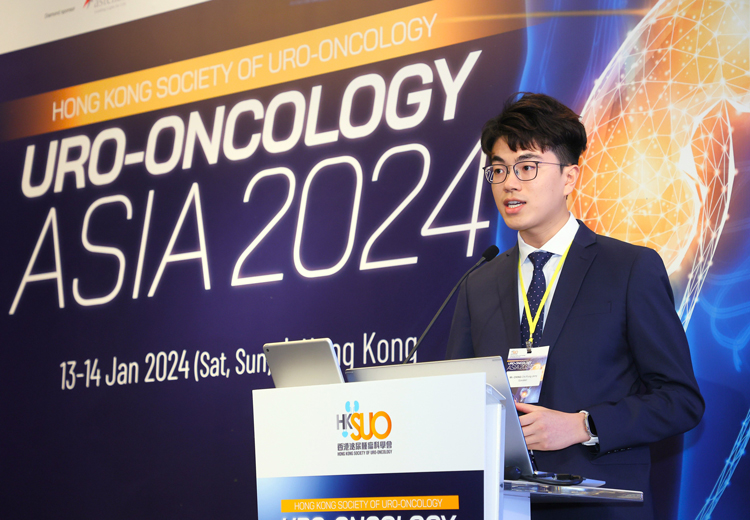
“What PolyU has granted me goes far beyond technical proficiency,” says PhD candidate Jerry Chi Fung Ching. Ching, who is based in the Department of Health Technology and Informatics, has applied that motto to his studies. He is developing AI models for personalised medicine that predict radiation-induced toxicity in prostate cancer patients. The model doesn’t require any additional laboratory tests or invasive procedures. With support from the university, he has successfully secured over HK$1.18 million (£112,000) in external research funding. Ching has also initiated and maintained collaboration with major hospitals across multiple regions.
Having undertaken a laboratory internship at PolyU during his undergraduate years, he was attracted to the university because of his department’s “strategic position at the intersection of academia and clinical practice”. “In radiotherapy research, access to real clinical data and partnerships with oncology professionals are pivotal,” he says. “PolyU has developed close collaborative relationships with hospitals both locally and across the Chinese Mainland, as well as internationally.”
The university’s multicultural interdisciplinary ethos has also enriched Ching’s experience. “Working alongside fellow research students and collaborators who bring complementary expertise, from medical physics to clinical oncology, has consistently sharpened my thinking and exposed me to perspectives I would not have encountered working in isolation,” he says. “That culture of interdisciplinary exchange is something PolyU cultivates deliberately and intentionally, and it has been one of the most enriching aspects of my doctoral training.”
Despite his rigorous academic schedule, Ching also dedicates time to continuous, long-term social service, something his supervisors support. “Balancing these commitments requires thoughtful planning, and I have found that my PolyU supervisors and the departmental culture genuinely value well-rounded development,” he says. His supervisors have encouraged him to pursue leadership and service opportunities alongside his research, “viewing them as complementary rather than competing demands”.
Ching has held numerous leadership roles during his time at PolyU. Within the university, he has served as a Graduate School student ambassador since 2024, representing the university at events. He has also been the postgraduate representative on two university-level committees, where he has contributed to policies that enhance students’ studying environment and learning experience.
He is particularly proud of his role in the HEROCARE programme, a service and education project that he co-designed with his PhD supervisor, starting at the ideation stage as a student co-lead. The HEROCARE, which stands for Holistic Empowerment in Radiation Oncology care, programme leverages customised immersive technology to prepare children who need radiotherapy for their cancer treatment. The programme aims to reduce their fear and anxiety through highly personalised preparatory workshops and treatment rehearsals.
“Since its launch, the programme has served over 82 young patients and their families, and data has shown that at over 84 per cent of participating children successfully completed radiotherapy without requiring anaesthesia. It’s a very encouraging result,” he says.
The programme is now self-sustaining thanks to the architecture that Ching and his PhD supervisor designed, allowing senior undergraduate radiography students to deliver workshops and nurture their juniors. The programme has involved over 400 students so far. “It has been a sound and salient testimony of how research, education and community impact can reinforce one another. It would not have been possible without the comprehensive ecosystem and infrastructure at PolyU,” Ching says.
Ching’s long-term goal as a clinician-scientist is to drive the development and use of personalised cancer treatment through innovative AI-driven tools and multi-regional, multidisciplinary clinical trials. “PolyU has equipped me with research expertise, collaborative skills and insights that I believe are essential for making a lasting contribution to society and my future endeavours.”
Find out more about Hong Kong Polytechnic University’s Graduate School.