
Developing new drug screening technology for precision medicine

Sponsored by
Sponsored by
UM is developing new drug screening technology for precision medicine
Imagine a future where cancer treatment is not a one-size-fits-all approach, but a plan tailored precisely to each patient based on their biological information and clinical signs and symptoms. In recent years, precision medicine has emerged as a hot topic in the medical field. Although genetic analysis has been a key component of this approach, researchers are increasingly recognising the need to go beyond genes and assess how a patient’s tumour responds to different drugs. A research team at the University of Macau (UM) is now advancing this goal with their pioneering drug screening technology.
To date, most precision medicine approaches have relied on identifying genetic abnormalities in patients to predict how they will respond to different drugs, and prescribe or avoid certain medications based on these markers. However, the effectiveness of this gene-based approach is limited by the complex interplay of the many genes involved in cancer. An alternative method is to conduct drug screening on primary tumour cells obtained from patient biopsies or tumour resection samples. This provides direct information on the drug susceptibility of the specific tumour. However, biopsy samples contain only a limited number of cells, which makes drug screening challenging. Furthermore, multiple biopsies carry an increased risk of cancer metastasis and are painful for patients.
To address this limitation, Yanwei Jia, associate professor in the Institute of Microelectronics at UM, led a research team in developing a microfluidic system for drug screening of primary tumour cells, which can offer individual cancer patients a tailored treatment plan that delivers the best therapeutic results. The system is expected to be used by clinicians in medication guidance, thereby realising the commercialisation of research results and facilitating technological innovation in the Guangdong-Hong Kong-Macao Greater Bay Area. The research, titled ‘Drug screening on digital microfluidics for cancer precision medicine’ was published in the internationally renowned journal Nature Communications (2024).
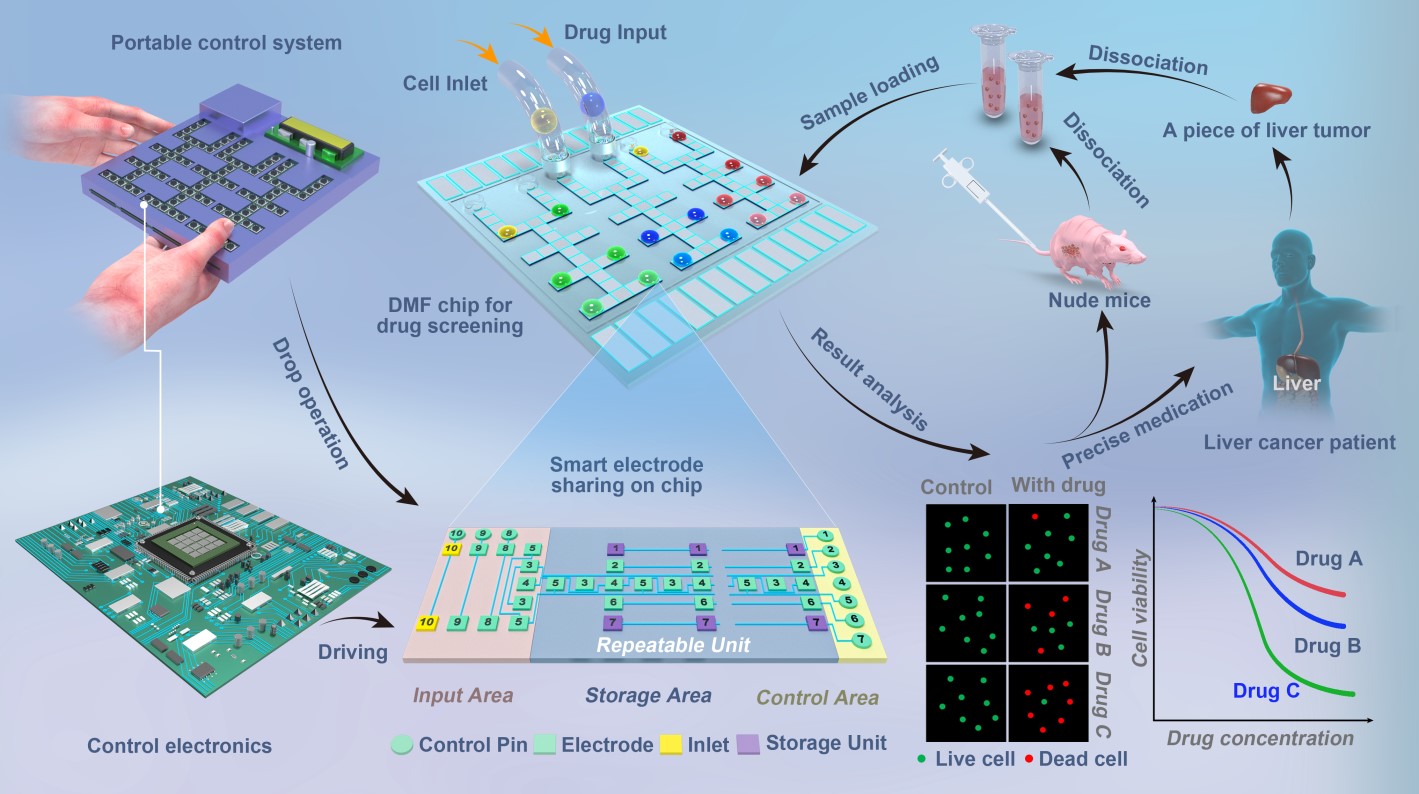
A schematic of drug screening on digital microfluidics for cancer precision medicine
The research team developed a novel, clinician-friendly drug screening device that enables the immediate collection of highly active cancer cells and on-site drug screening. The portable digital microfluidic (DMF) device has low power consumption and integrates all controls into a handheld box with user-friendly control panels, enabling the handling of tiny samples. A single biopsy containing a small quantity of cells is sufficient to produce drug screening results using the DMF chip, thus avoiding the risks and discomfort associated with repeated biopsies for patients. The device has been used to screen targeted drugs for clinical liver cancer samples. The results obtained are consistent with those derived from genetic sequencing and offer a more direct reflection of an individual patient’s response to the drug.
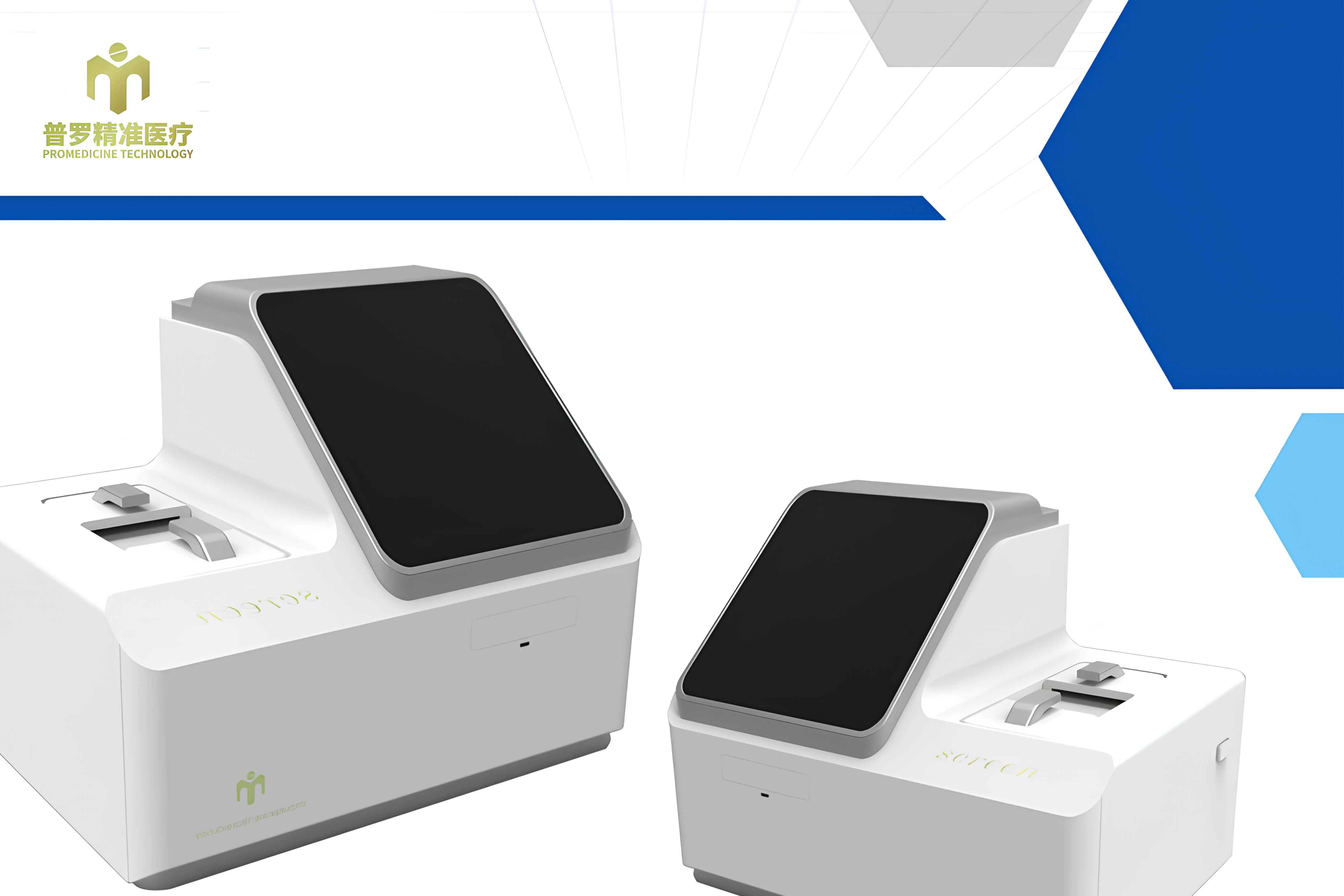
The portable digital microfluidic (DMF) device
According to the research team, compared with gene sequencing, DMF technology can provide clinicians and patients with reliable medication guidance at a low cost. It can enable the mass production of precision medicine for all. It also provides researchers with a platform for high-throughput drug screening, offering significant savings in terms of samples and reagents. This can help explore new therapeutic strategies and develop new drugs to further improve treatment efficacy. In addition, the commercialisation of DMF technology has led to the establishment of Promedicine Technology Co Ltd, a high-tech enterprise based in Zhuhai that specialises in the design, research and development, manufacturing, marketing, sales, and service of precision medical equipment. The company is driving technological innovation in the Greater Bay Area.
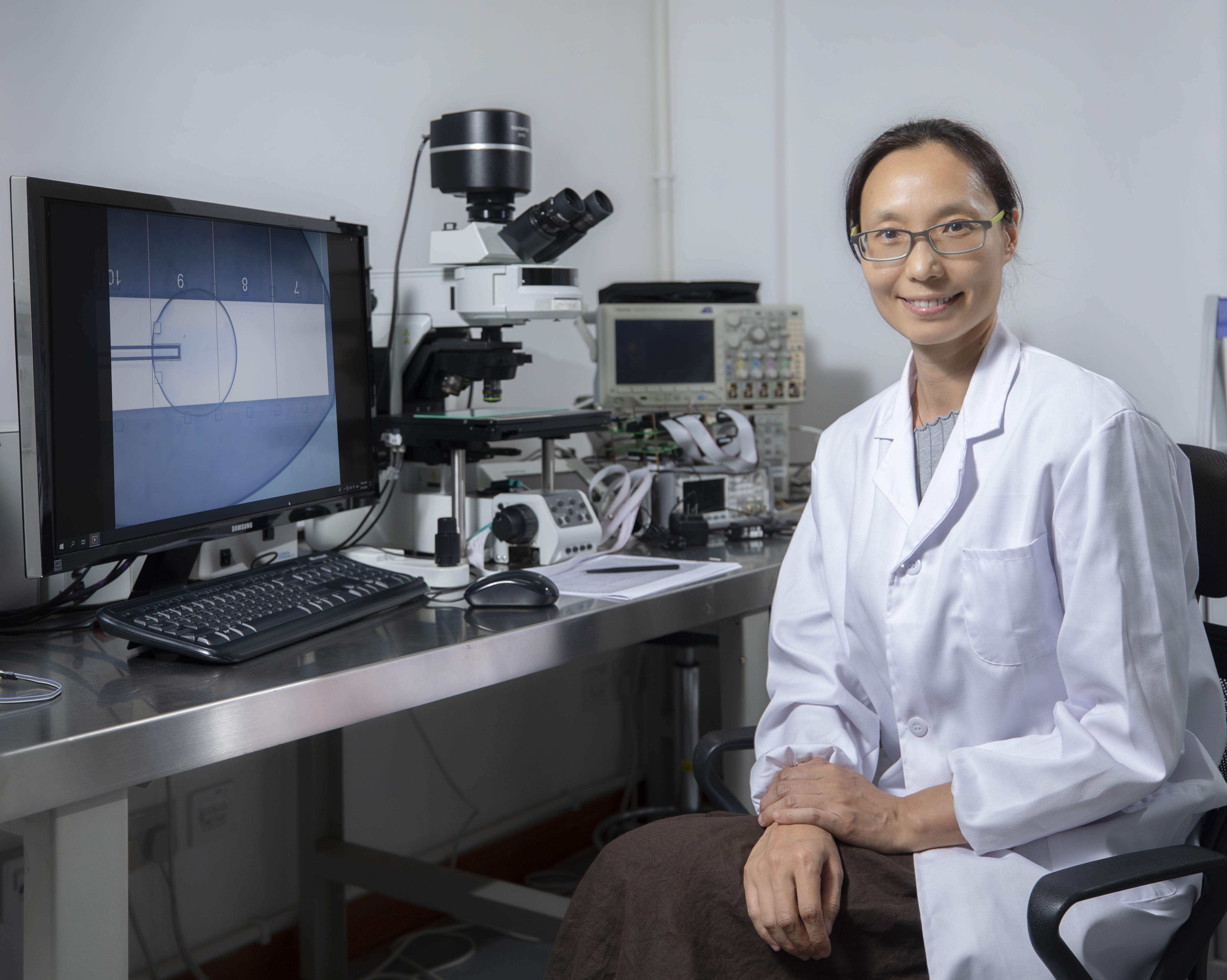
Prof Yanwei Jia
Looking ahead, UM envisions a future where DMF technology is widely accessible, making precision medicine a reality for all. With its low cost and ease of use, the DMF device has the potential to transform cancer care and improve the lives of countless patients.