
Building clean, low-carbon, and secure urban energy systems based on internet of things

Sponsored by
Sponsored by
Energy is the lifeblood of a city, and smart energy is a vital component of a smart city. The rapidly developing Guangdong-Hong Kong-Macao Greater Bay Area sees high levels of urban energy consumption. Macao, in particular, has a significantly higher energy load density than the regional average. This excessive energy consumption not only increases operational costs but also presents challenges to urban governance, such as high carbon emissions, environmental pollution, and the urban heat island effect. Furthermore, as a city become more dependent on energy, the operational safety risks associated with energy systems pose a greater threat to its normal functioning. Therefore, developing people-oriented, sustainable smart cities requires the establishment of clean, low-carbon, and secure smart energy systems that promote clean energy integration, reduce pollution, improve energy efficiency, and ensure energy security.
The Smart Energy Group, led by Yonghua Song, rector of the University of Macau (UM) and director of the State Key Laboratory of Internet of Things for Smart City, is dedicated to advancing clean, low-carbon, and secure urban smart energy systems through the development of foundational theories and technologies. Their research focuses on panoramic sensing and modelling, intelligent operation and control, and safety protection of integrated urban energy systems involving electricity, gas, and heating/cooling based on technologies such as the internet of things, big data, and artificial intelligence. These technologies have been successfully applied to real-world energy systems in the Macao SAR and Guangdong Province of China, achieving notable results in energy conservation, emission reduction, and energy system protection.
Digital twin of urban integrated energy systems
The research team has developed a method for creating detailed digital models of urban energy systems using data collected by a network of sensors. In partnership with Gree Electric Appliances, they have developed highly accurate sensors that can collect energy information. They have also developed new techniques to predict the output power of renewable energy sources, such as solar and wind power, by taking into account the variability and uncertainty of these energy sources over time. These advancements enable them to create realistic models that accurately reflect energy usage patterns across a city, and show how different energy sources can work together effectively.
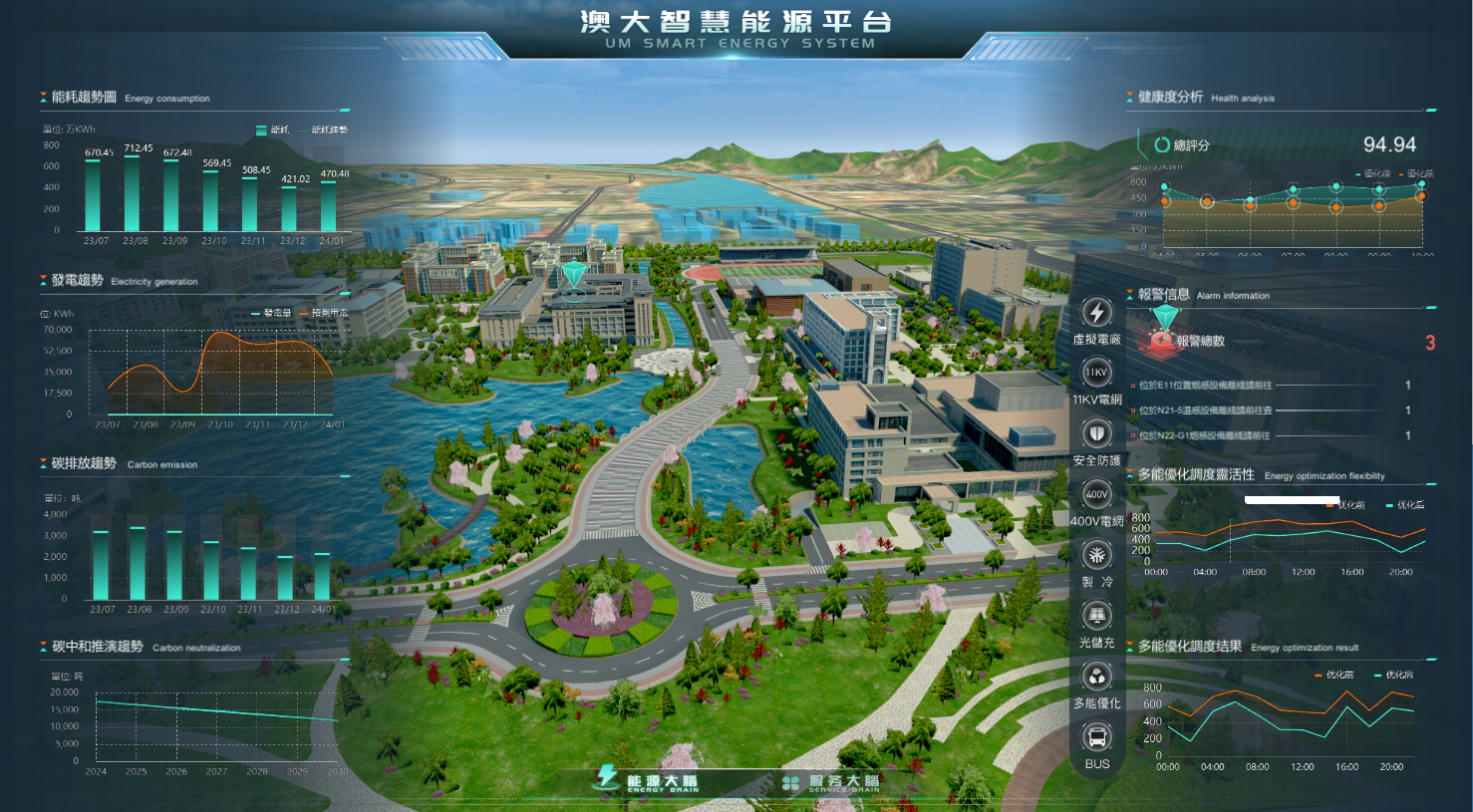
Using these technologies, the team has built a digital twin model for UM’s energy system. This model enables real-time monitoring of key parameters such as voltage, frequency, and energy consumption, providing a detailed, data-driven picture of the buildings, power grids, and equipment on campus. It also offers a robust foundation for the effective management and protection of the university’s integrated energy system.
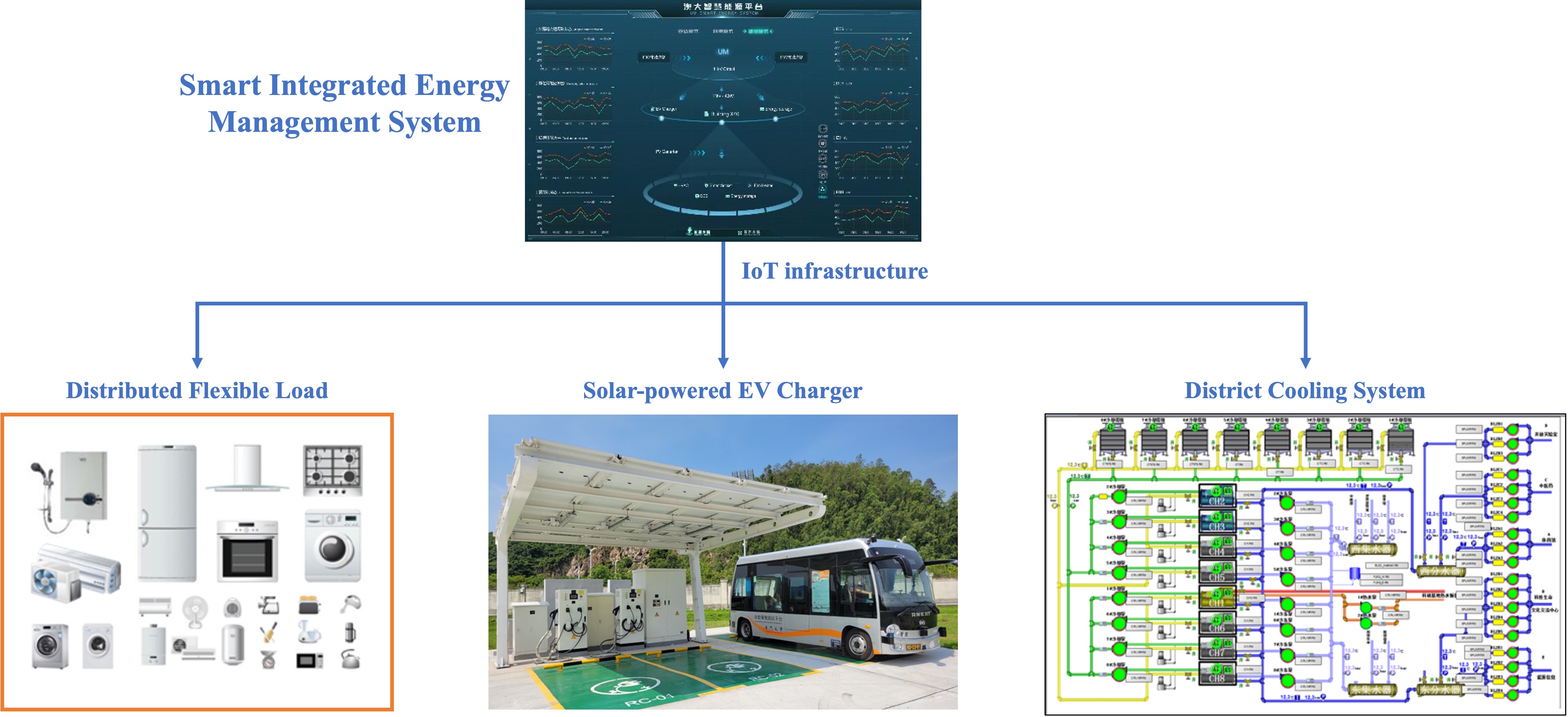
Framework of the UM Smart Integrated Energy Management System
Intelligent operation of urban integrated energy systems
The research team also focuses on developing smart energy management technologies that enable intelligent operation of urban energy systems. These technologies are designed to meet the specific needs of cities like Macao, which features high building density, heavy electrical loads, and many old buildings. In terms of demand-side loads, the researchers are exploring the integration of flexible load management into energy system operations to enable a dynamic, automated power supply for large electrical equipment, including distributed energy storage systems, electric vehicles, data centres, air conditioning systems, and district cooling systems.
Based on these technologies, the group has developed the ‘Smart Integrated Energy Management System’. This system enables real-time online monitoring and intelligent operation of energy systems. It has been successfully applied to the energy system on the UM campus, significantly improving its overall efficiency and reducing energy costs. In collaboration with State Power Investment Corporation, one of China’s major power generation companies, the system has also been applied to the district cooling system in Hengqin. A one-year trial on Energy Station #3 of the Hengqin district cooling system in 2023 demonstrated electricity savings of approximately 6% and cost savings of 11.76% compared to pre-optimisation performance. This serves as a good example of energy conservation and emission reduction in an urban setting.
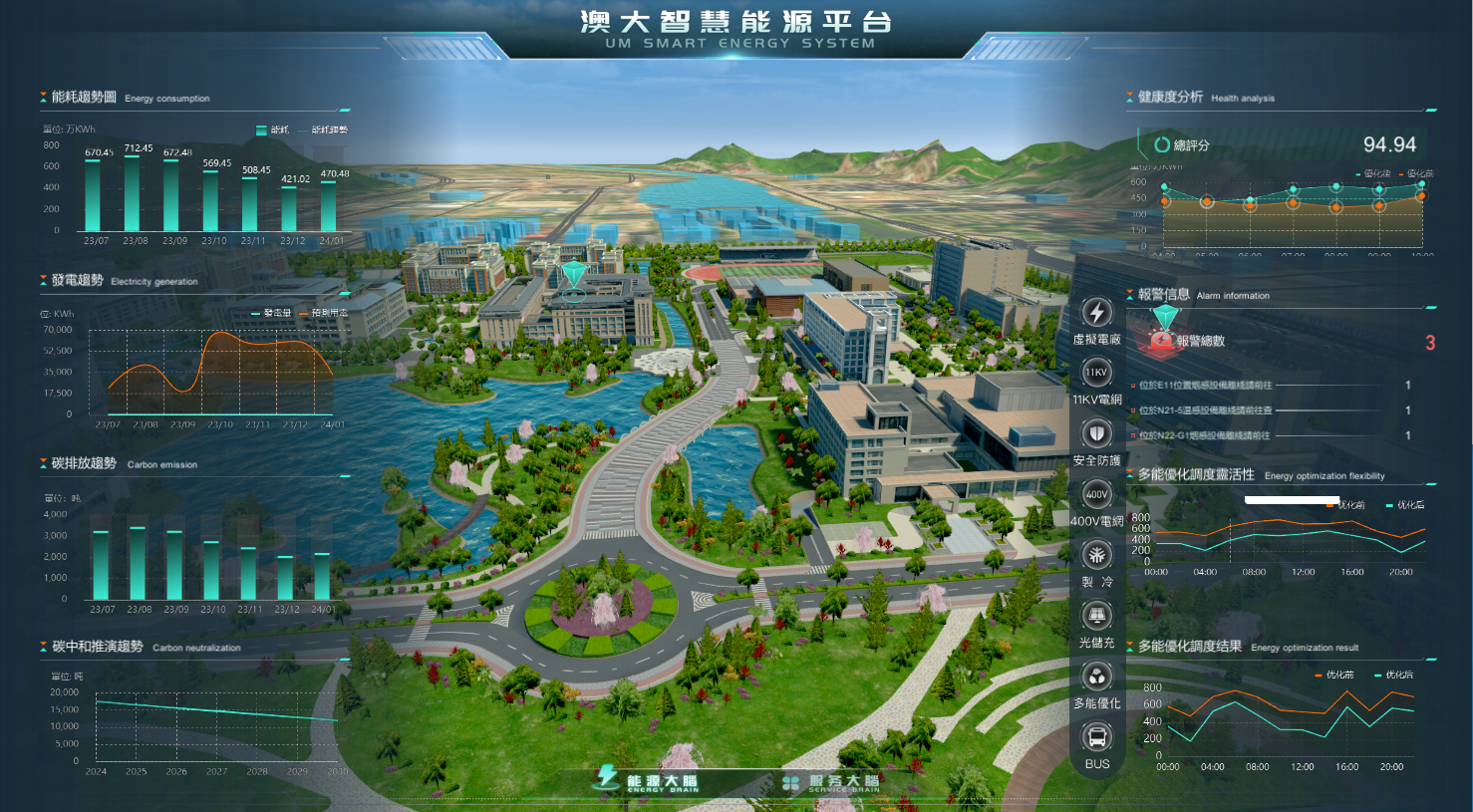
Screenshot of the UM Smart Integrated Energy Management System
Anomaly detection and protection for urban integrated energy systems
The research team has proposed security protection techniques for multi-source, multi-dimensional, heterogeneous energy internet of things systems. These techniques include anomaly detection and fault diagnosis under challenging conditions such as data anomalies and extreme weather. One of their projects focuses on the critical challenges faced by coastal cities like Macao with regard to their energy systems. In collaboration with Companhia de Electricidade de Macau, a public utility company in Macao, the team analysed and assessed the risk to substations in low-lying areas posed by typhoons and other extreme weather events. The substations were upgraded with artificial intelligence to enable real-time data monitoring and risk assessment, providing an early warning for disasters and enhancing the resilience of Macao’s energy systems against typhoons and other extreme hazards.
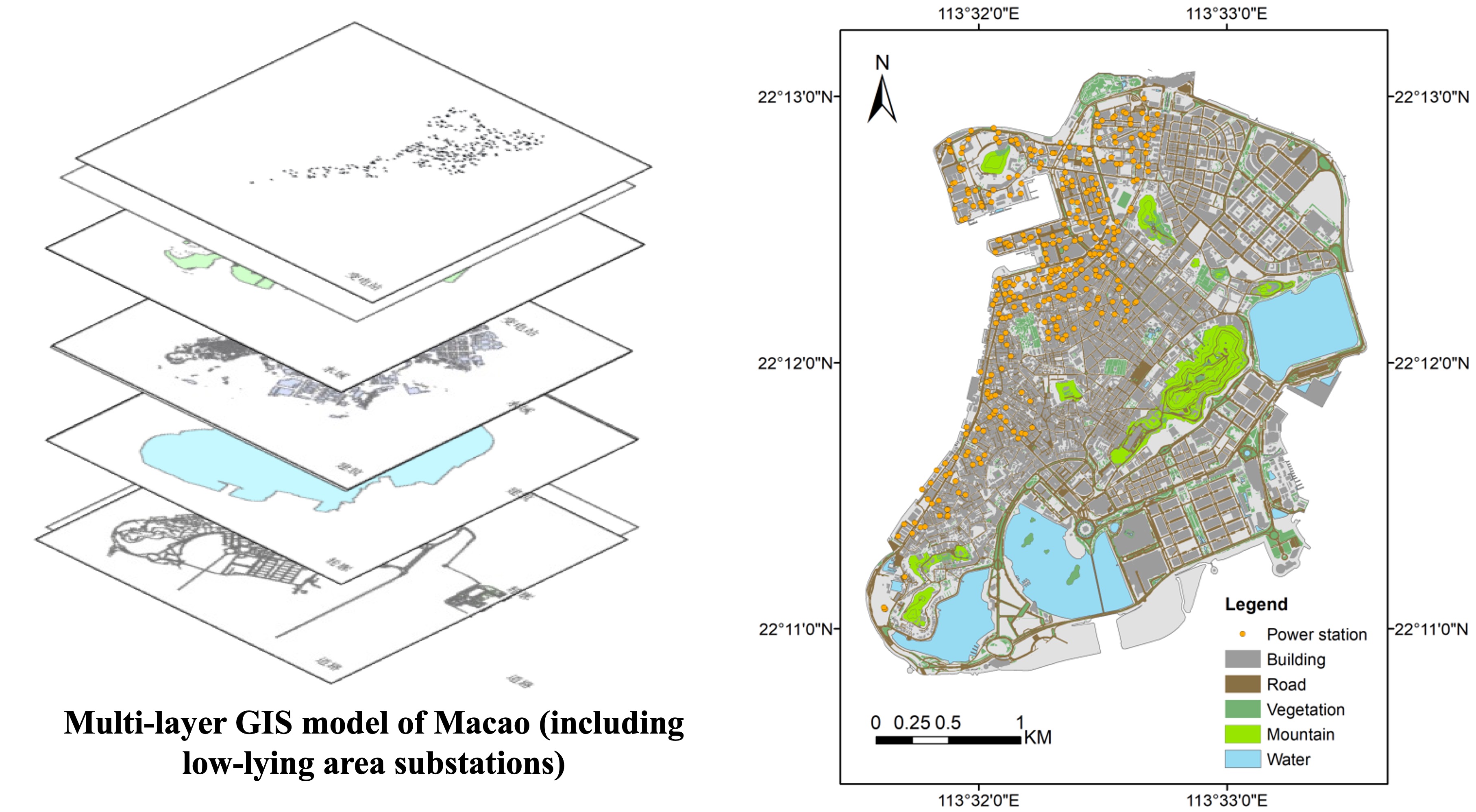
Flooding risk assessment for low-lying area power stations in Macao
Fostering smart energy innovations through industry-academia collaboration
The Smart Energy Group actively engages in close collaboration with leading energy enterprises in the Guangdong-Hong Kong-Macao Greater Bay Area, including local companies such as Companhia de Electricidade de Macau and Nam Kwong Petroleum and Chemicals, as well as major state-owned enterprises like China Southern Power Grid and State Power Investment Corporation.

Prof Yonghua Song
Notably, UM has established the Joint Laboratory of Smart Power and Energy for Carbon Neutrality with China Southern Power Grid, and the Joint Laboratory of Digital Intelligence Empowered New Power Distribution Technology with Companhia de Electricidade de Macau. Through these collaborative platforms, the Smart Energy Group works closely with industry partners to conduct joint research on urban power and energy systems, and promote the application of research and development outcomes, thereby accelerating innovation and development in the energy sector.